
Traditional methods for detecting delamination, such as the chain drag technique, have been in use for many years. While it can be effective in certain scenarios, the method has limitations that can impact the quality and accuracy of results.
What is the Chain Drag Method?
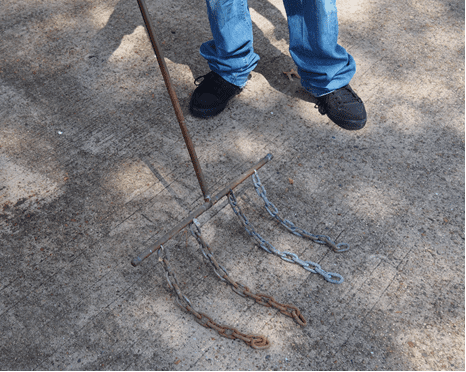
The chain drag method is a nondestructive testing (NDT) technique used primarily for inspecting bridge decks, and understanding the debonding of the wearing surface, it’s underlying concrete, and rebar. It involves dragging a chain across the surface of the deck and listening to the sounds it produces. The chain’s vibrations create different frequencies based on the structural integrity of the surface beneath it. This method is simple to implement and relatively inexpensive, but the results can be subjective and depend heavily on the technician’s experience.
How Does the Chain Drag Method Work?
A chain is dragged along the bridge deck surface, usually in a bi lateral pattern, to cover the entire area.The technician listens for changes in sound as the chain vibrates. The sound produced varies based on whether the substrate beneath the deck is sound or delaminatedA qualified technician must interpret the differences in sound. A high-pitched sound typically indicates a delaminated area, while a solid sound suggests a sound substrate.
Limitations of the Chain Drag Method
While the chain drag method can be useful, it comes with significant drawbacks:
- Subjectivity in Results: One of the major limitations of the chain drag method is its reliance on human interpretation. The technician must be able to identify subtle differences in sound, which can vary based on their experience and skill level. This subjectivity can lead to inconsistencies in identifying delaminated areas, resulting in less reliable data.
- Lack of Precision: The effectiveness of the chain drag method depends on the technician’s ability to cover every section of the bridge deck. However, it is difficult to ensure that every square inch has been thoroughly surveyed. If the chain is lifted or not dragged properly across certain sections, areas of potential delamination could be missed.
- Physical Demands: Chain drag inspections require considerable physical effort from technicians. The method involves constant bending, lifting, and dragging, which can be strenuous on the body. Over time, this physical strain can lead to fatigue, increasing the chances of errors during the inspection.
- Speed vs. Accuracy: While the chain drag method can be as fast as advanced technologies like XRsounder, the speed comes at a cost. The faster the sweep, the lower the resolution of the data collected. This increases the subjectivity of the method and could lead to the need for repeated sweeps or supplementary methods to ensure accuracy. These additional steps can raise costs and extend the inspection time.
Why XRSounder is the Better Solution
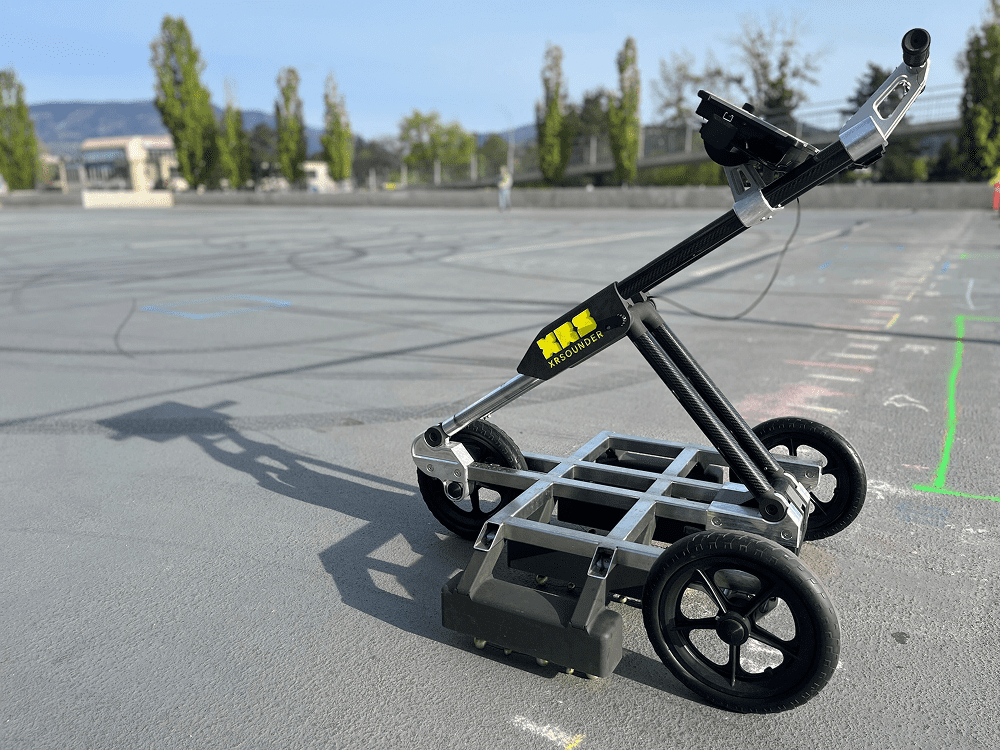
While the chain drag method may still be used in some cases, it is not the most reliable or efficient choice for modern bridge deck inspections. XRSounder, on the other hand, offers numerous advantages over traditional methods.
Key Benefits of XRsounder:
- Higher Accuracy: XRSounder uses advanced technology to provide more precise data on delaminations within a smaller area, and also without relying on subjective interpretation.
- Non-Contact Technology: Unlike chain drag, which requires physical effort and is prone to human error, XRSounder operates through non-contact means, ensuring a consistent and accurate survey.
- Faster Data Collection: XRSounder can cover large areas quickly while maintaining high resolution, reducing the need for repeated sweeps and saving both time and cost.
- Reduced Physical Strain: Technicians are not required to drag heavy chains across the deck, significantly reducing the physical demands of the job and improving overall safety.
While the chain drag method has been a staple in bridge deck inspections for many years, its limitations make it less reliable than newer technologies like XRSounder. The subjectivity involved in interpreting sounds, the physical demands placed on technicians, and the potential for missed areas make it a less optimal choice for modern bridge inspection projects. By opting for XRSounder, bridge inspection teams can achieve more accurate, efficient, and reliable results, ensuring the safety and longevity of our infrastructure.