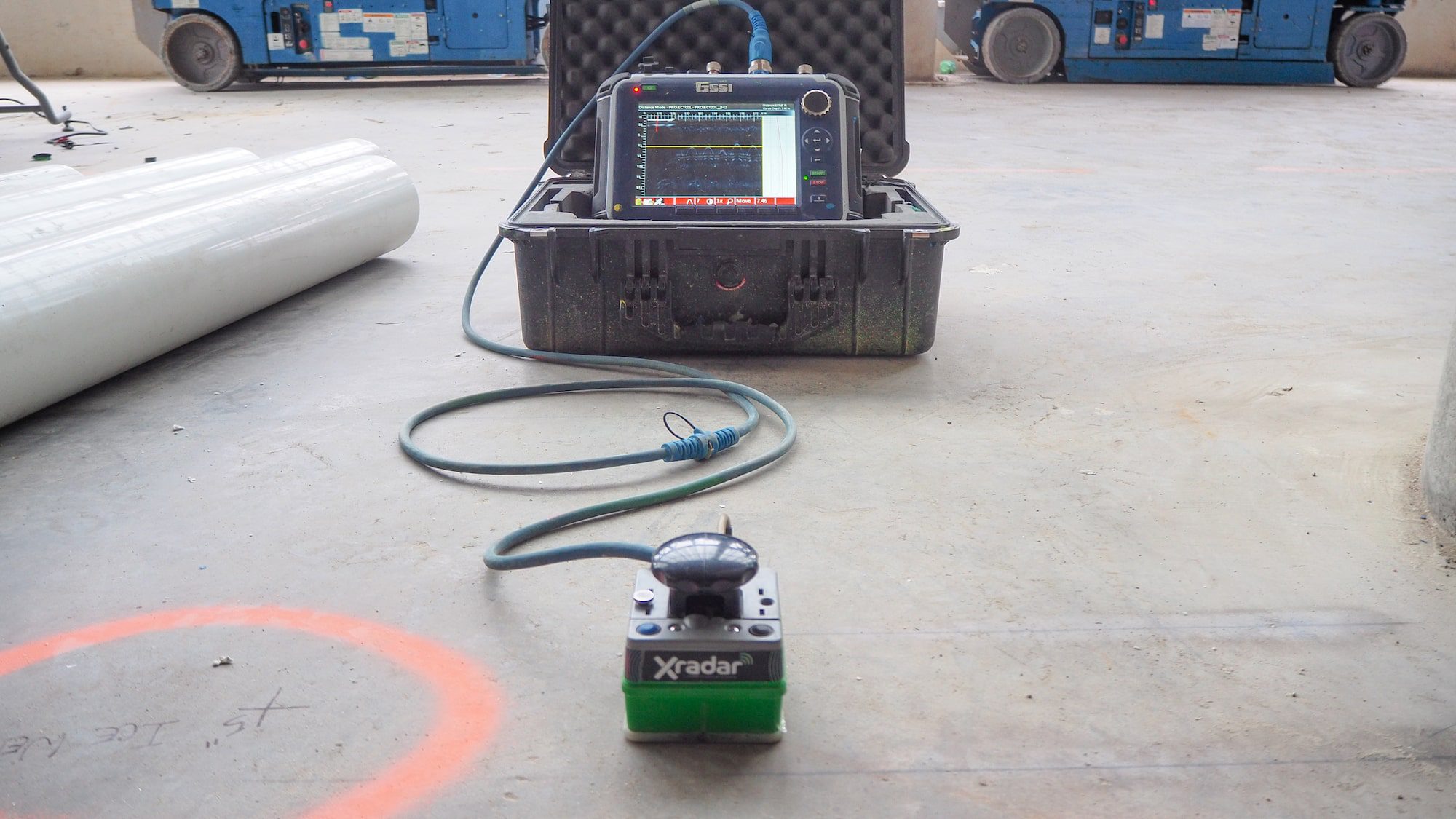
Anyone can buy the equipment and start scanning
While the equipment itself is relatively simple to set up and begin using, understanding the data and the output is incredibly complicated. One of the biggest misconceptions is that the equipment outputs a clear image of the subsurface of the concrete, however, this is inaccurate.
In reality the screen reflects black and white static and when the antenna detects an object this is reflected as a hyperbola on the screen. Our technicians undergo an extensive training program to be able to accurately interpret this data in order to differentiate between the objects on the screen. This is much like how a medical ultrasound works – the screen will mean nothing to a regular person but to a trained professional it allows for a detailed analysis of the human body.
GPR works under any surface condition
The moisture content of the scanning surface has a massive effect on the success of a scan. Moisture increases conductivity which means that the signal from the equipment bounces right back, meaning it is difficult to get a good reading.
With new concrete (less than three months old), the higher moisture content means that it is very difficult to perform a concrete scan. Other difficult surfaces include areas with heavy insulation, marble and granite.
GPR works at any depth
Ground penetrating radar equipment has applications up to 20 inches. With thicker slabs our technicians will scan both sides of the slab, or alternatively perform a structural scan using our Concrete Ultrasound technology.
GPR equipment can differentiate between objects
The output of the GPR equipment, as mentioned before, shows data in a non-distinct way. This means that subsurface objects such as post-tensioned cables, rebar and conduits do not show up as different representations.
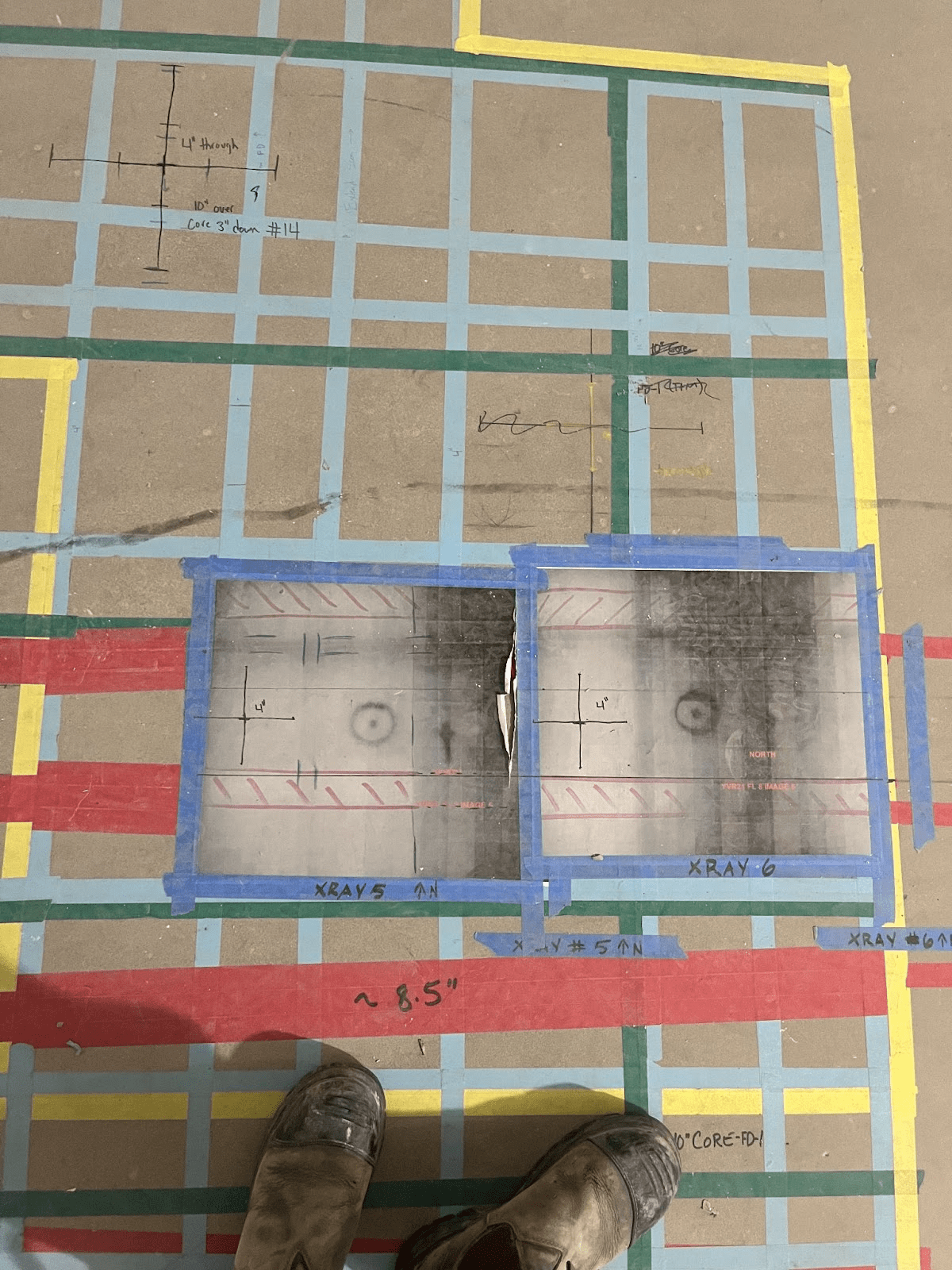
However, our experienced technicians using our Xradar™ methods are able to properly distinguish between the subsurface objects and interpret the data correctly. This is then presented to the client in an understandable report.
GPR is 100% accurate
While GPR is one of the most effective forms of non-destructive testing, it is not 100% accurate. The variables we have discussed here such as the conditions and material of the scanning area, along with the person using the equipment all affect the accuracy.
Our expert technicians utilizing Xradar™ are able to reduce concrete scanning errors to less than 1%, compared to the 25% typical for the scanning industry. We are also the only company who guarantee our concrete scans.
For more information on our services and the technology we use, get in touch with one of our technicians.