How long does the service take?
This all depends on your needs and will vary from project to project. In general the time required will always relate to the size of the scan area, along with a range of other variable factors.
The age of the concrete, moisture of the ground, obstructions, wire mesh and congested rebar can all affect the time it takes to effectively perform a concrete scan. The best way to determine a completion time is to get in touch with us and provide as much information as possible to inform our estimate. You can get in touch HERE.
What is Xradar™?
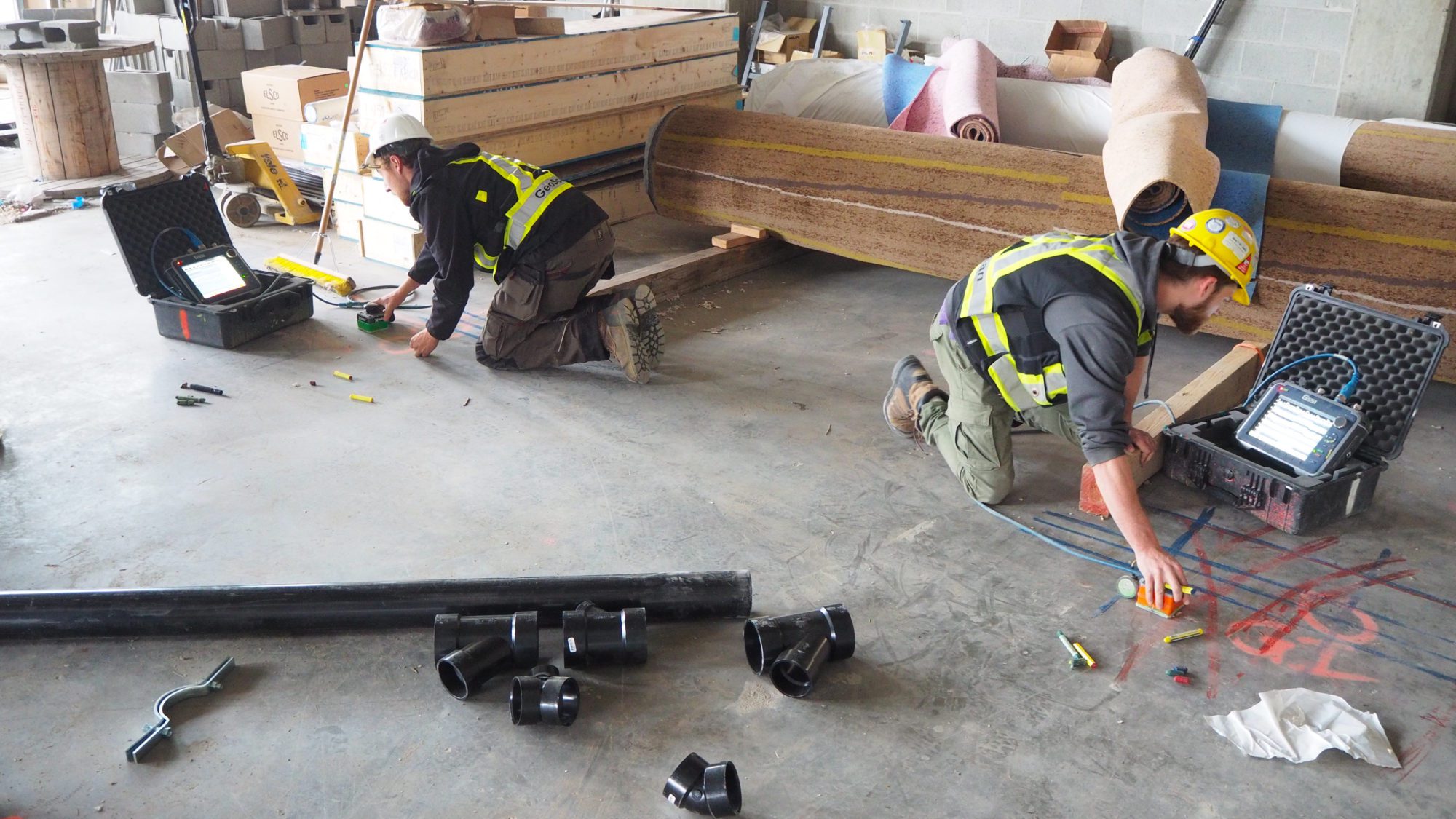
Xradar™ is an advanced imaging capability utilizing GPR technology which has been developed specifically for concrete scanning. It reduces concrete scanning errors to less than 1%, compared to the 25% typical for the scanning industry.
For a more in-depth explanation, Xradar™ uses radar amplitude, phase and shape to achieve maximum performance for freehand B-scan analysis.
Can you scan any concrete?
Xradar™ is able to scan any concrete slab, providing it is three months old. Prior to this there is too much moisture content to provide an accurate reading which can disrupt the equipment.
Can you perform a concrete scan in the rain?
When utilizing GPR and Xradar™, data collected from a wet surface is not accurate. This means that in the rain we do not advise carrying out a concrete scanning survey as it could result in issues.
You don’t have an office in my location, do you travel?
We have offices in Toronto, Montreal, Vancouver, and Vancouver Island however, we frequently travel to other regions and provinces to carry out work where required.
If you have a project in mind our technicians can discuss pricing for specific travel time and provide you with a quotation.
How fast can I get a report?
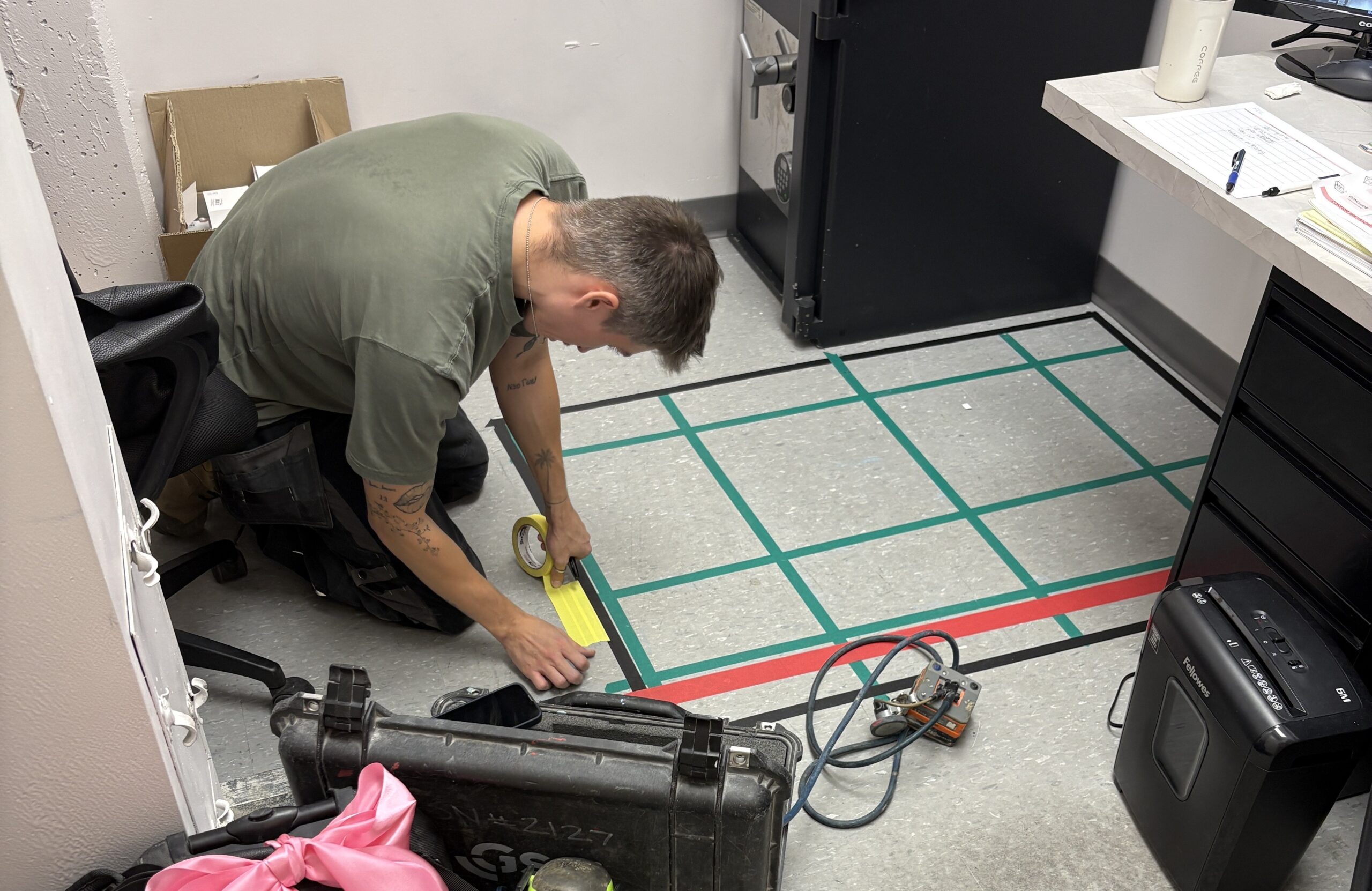
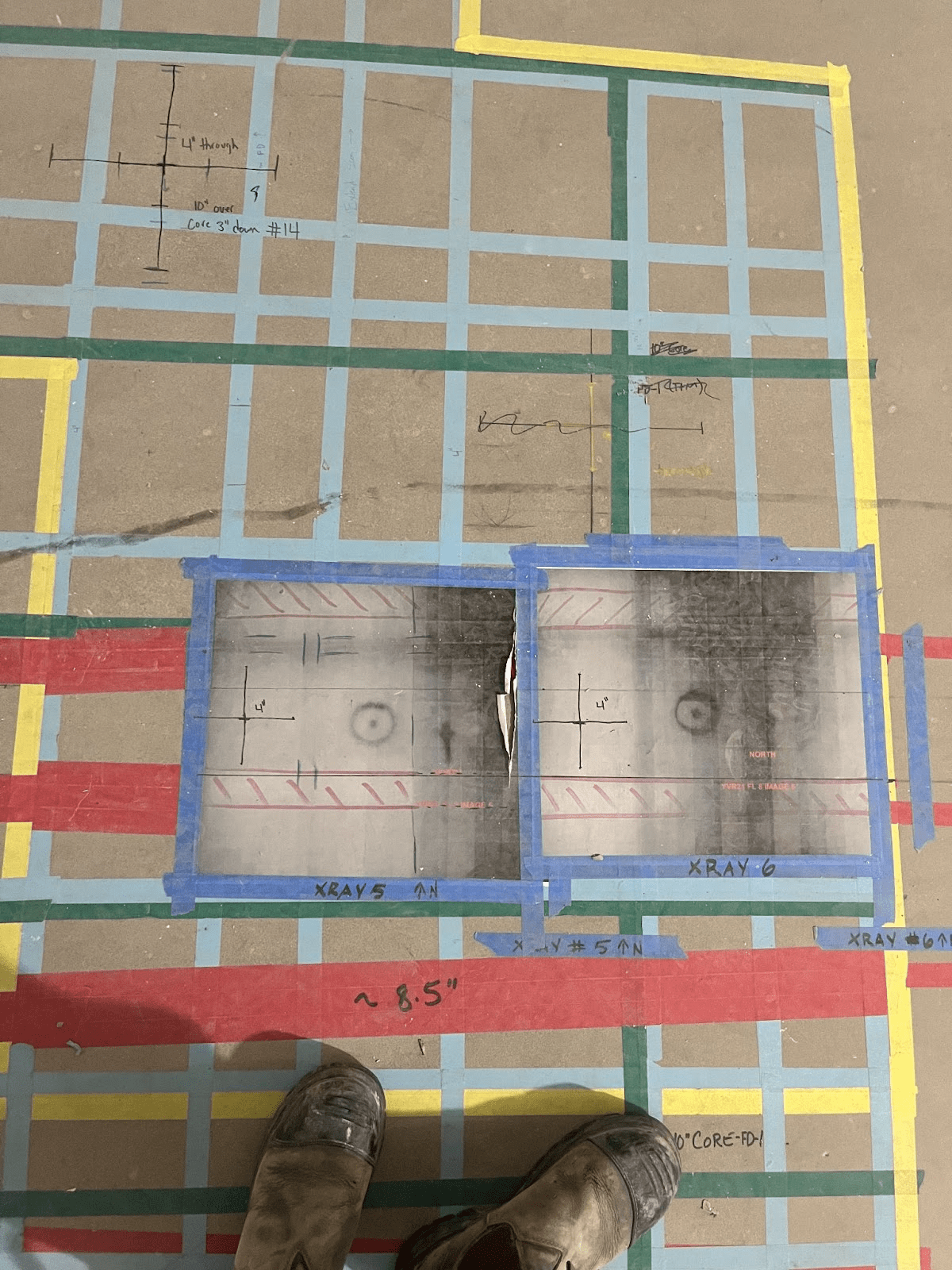
Our technicians will provide you with a report of the findings after they have completed the scan and marked out the area for any obstructions. This is included as part of every project.
Do you offer any other sort of reporting?
Yes, we offer additional reporting levels aside from our standard report. Both of these reports come at an additional cost but provide a huge range of information for clients.
We provide an Xradar Structural Report which details slab type, thickness, and presence of buried targets with technical drawings produced on AutoCAD. We also provide a Structural Report with 3D Model which is a scaled AutoCAD drawing of the scanned areas, complete with a full written report.
The latter is ideal for larger projects requiring remote structural engineer approval (such as cutting slab for new stairwell between floors). We also provide 3D point-cloud data to support the design.
If you have any other questions, don’t hesitate to get in touch!