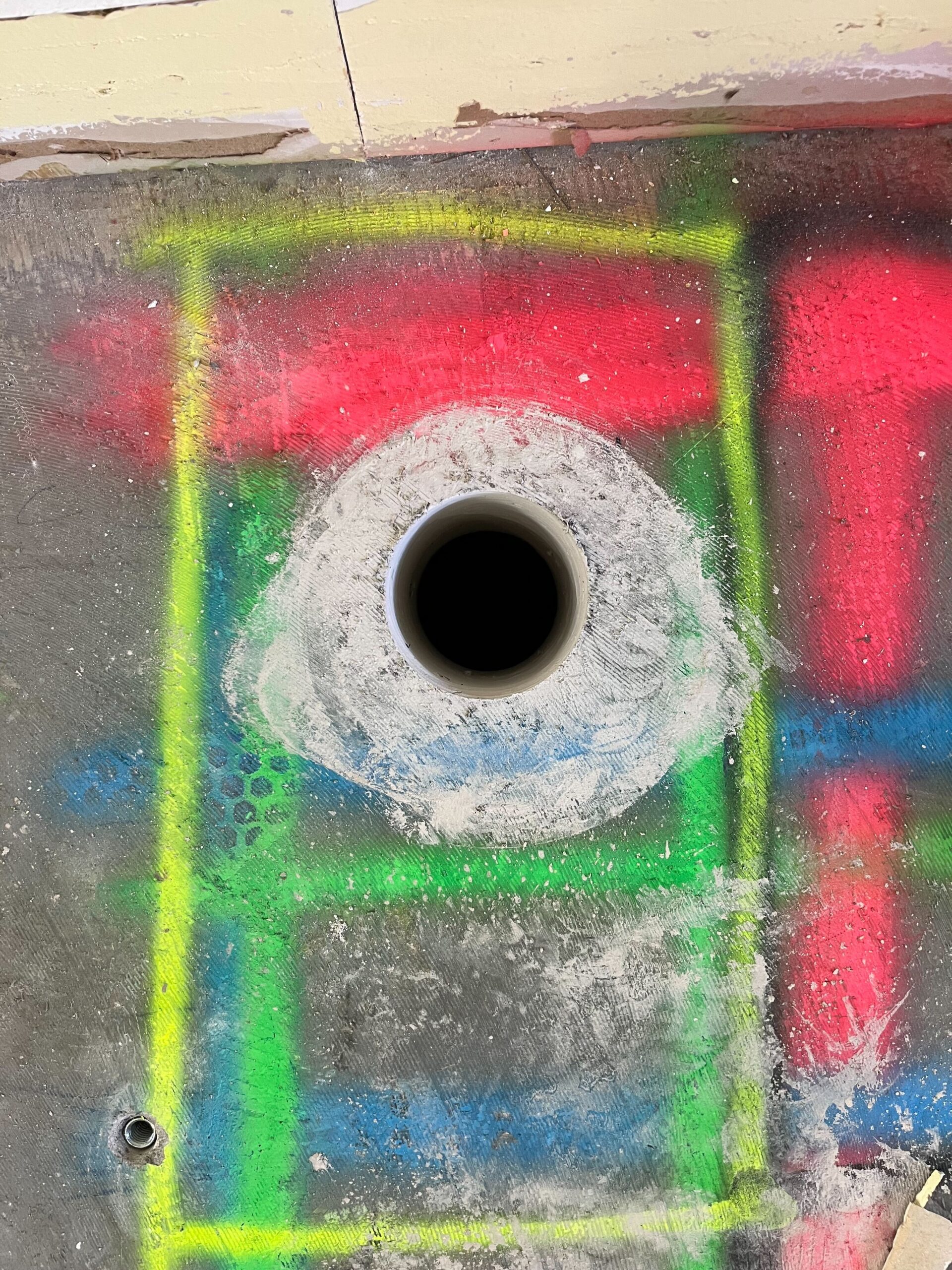
Xradar offers concrete core drilling services with the capability to drill holes of virtually any depth and diameter required (although the most common diameter requirement is under 10 inches), ensuring the job is done with precision and care.
What is concrete coring?
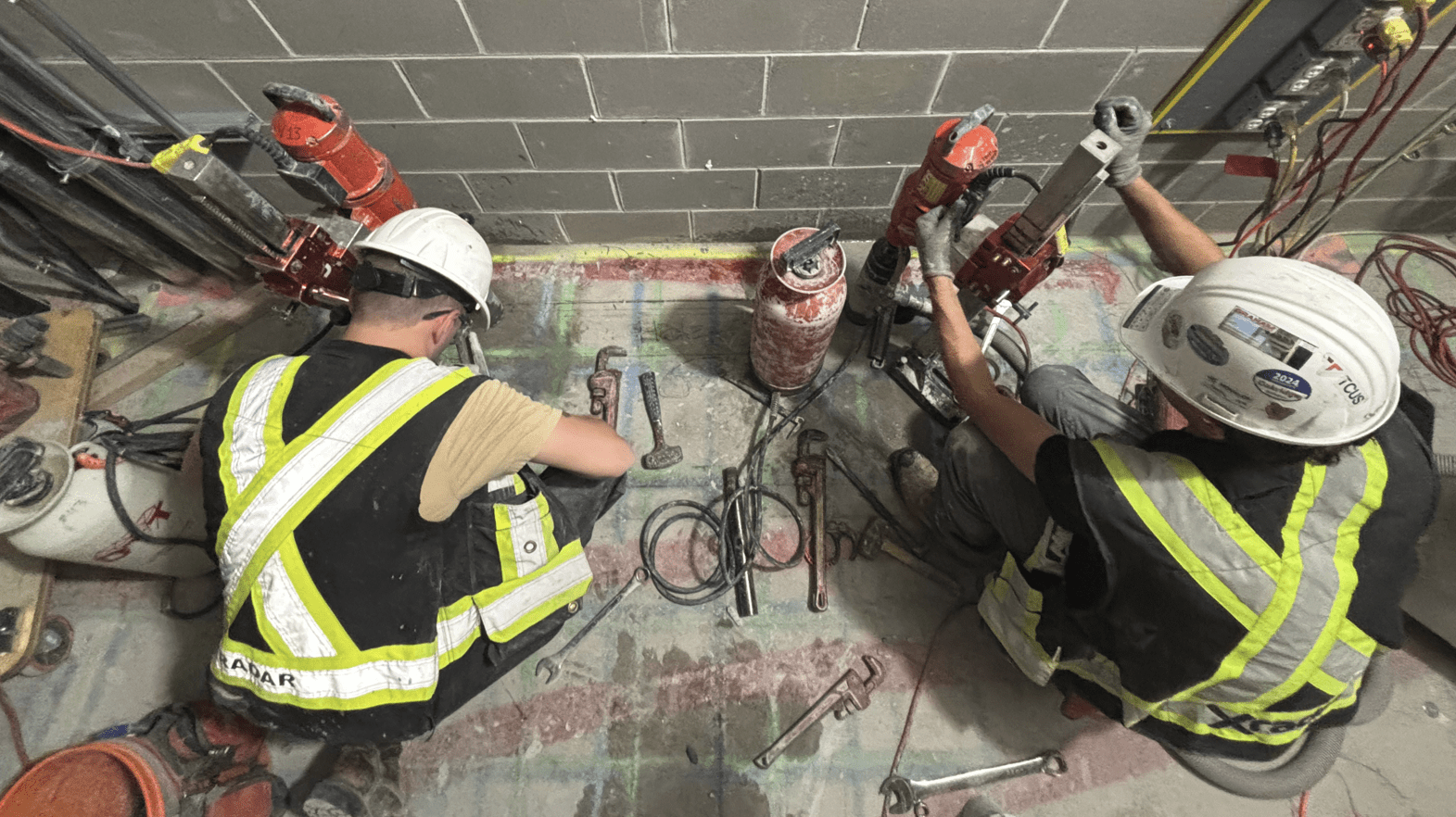
Concrete coring involves using a diamond-tipped drill to cut a perfect, round hole into concrete structures. This method is not only low-noise but also dust-free and non-percussive, making it the ideal choice for projects requiring minimal disruption. Holes can be drilled at virtually any angle—whether vertical or horizontal—and in sensitive locations, we can use electric or hydraulic rigs to accommodate confined spaces.
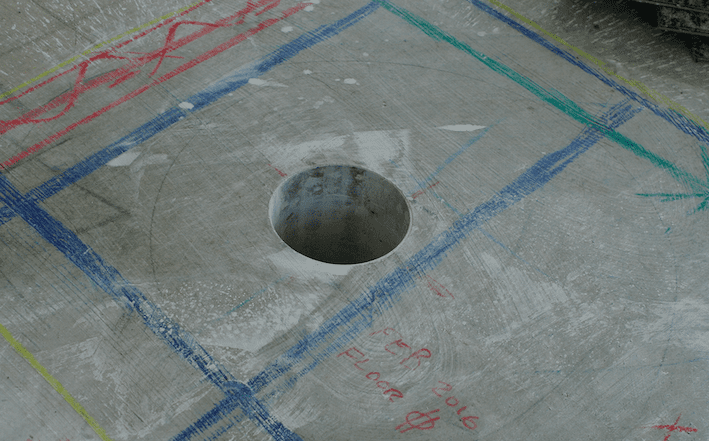
How does it work?
The core drilling tool itself consists of a diamond cutting bit attached to a steel tube. To ensure stability during drilling, the rig is anchored to the surface using bolts, anchors, or a vacuum seal.
As the rig drills, the cutter is cooled by water in order to reduce friction. The cutting process is completed by the removal of the slug, leaving a perfect hole with no cosmetic damage or requirement for after care.
When Is Concrete Coring Used?
Concrete coring is used in a variety of situations where holes are needed in floors, walls, or ceilings. Whether it’s for water pipes, sewer lines, electrical wiring, or creating manholes, core drilling is an essential service for construction and renovation projects. It’s also frequently required for vault installations and HVAC system penetrations.
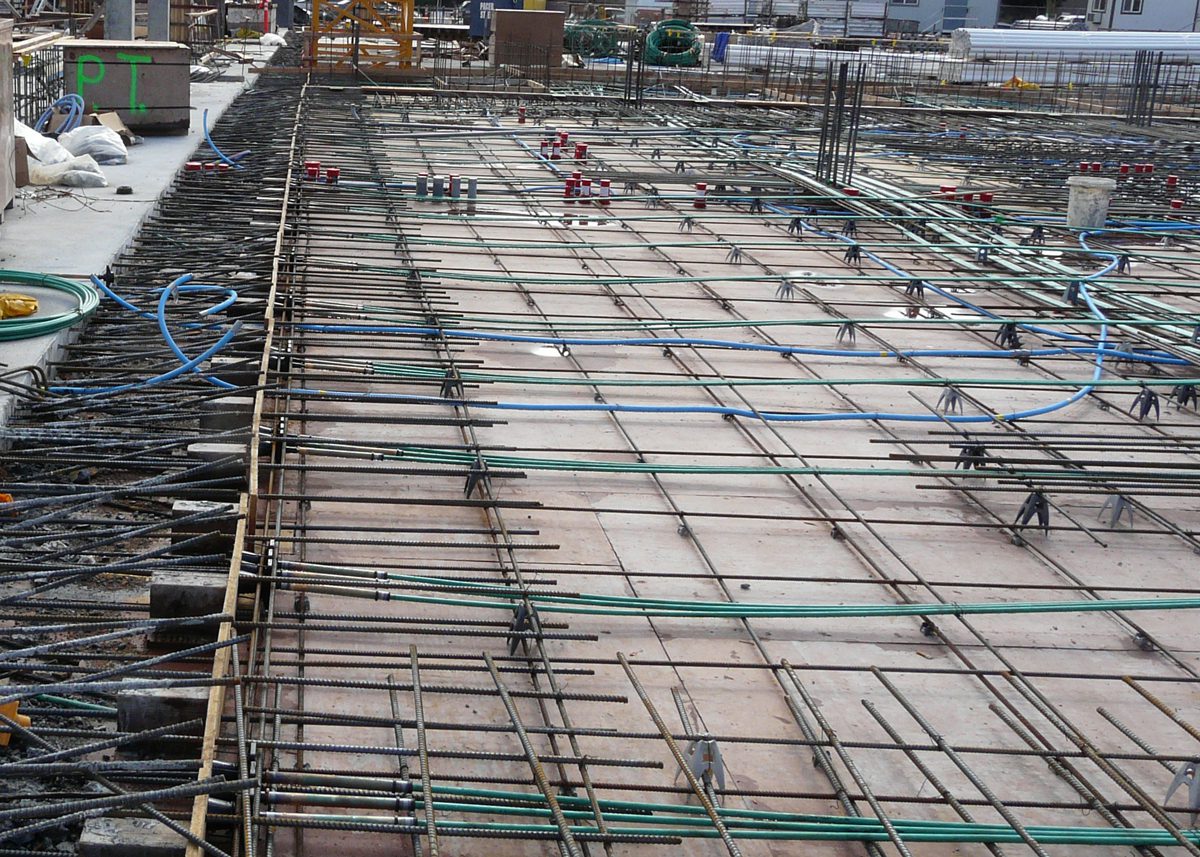
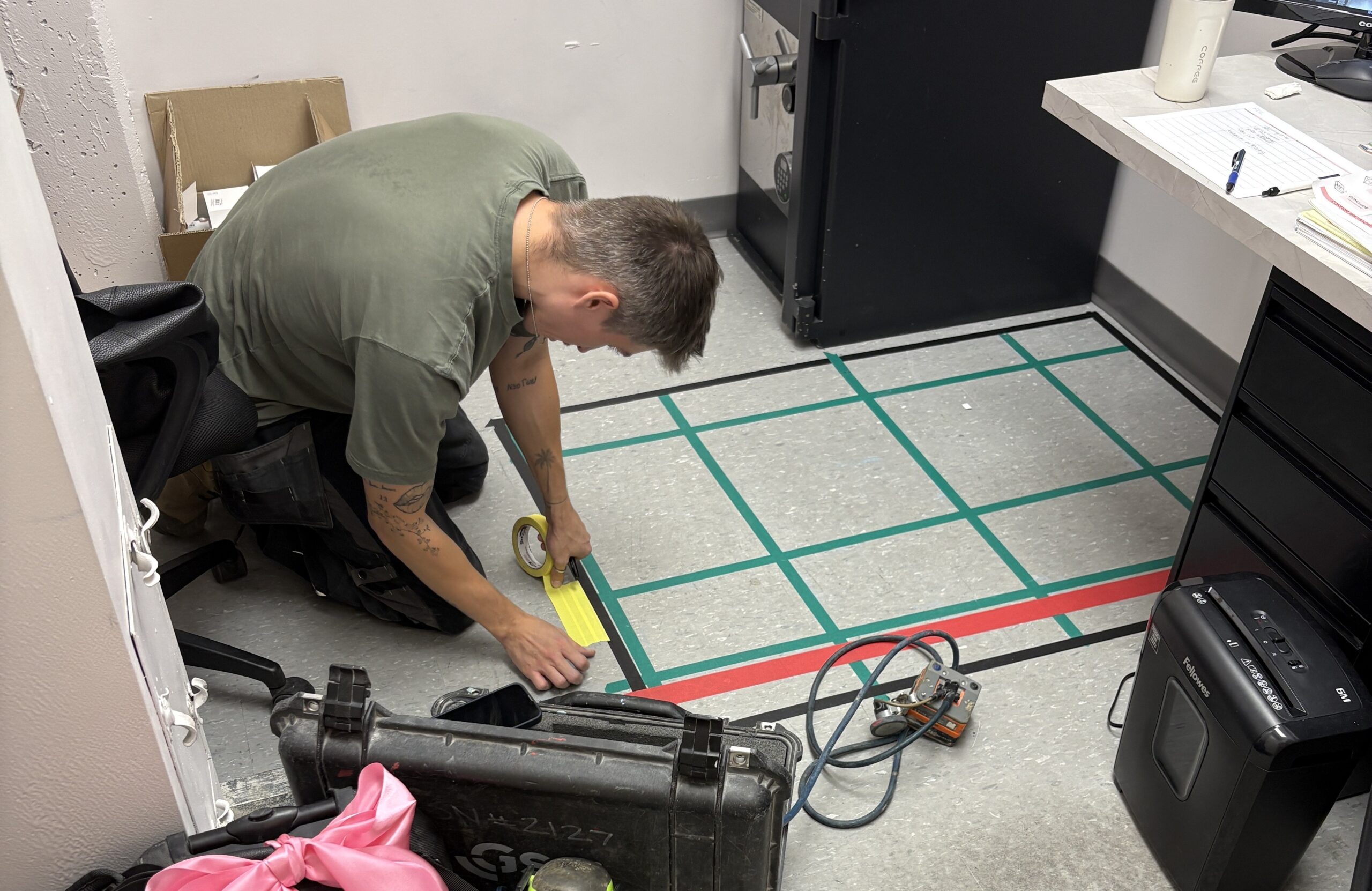
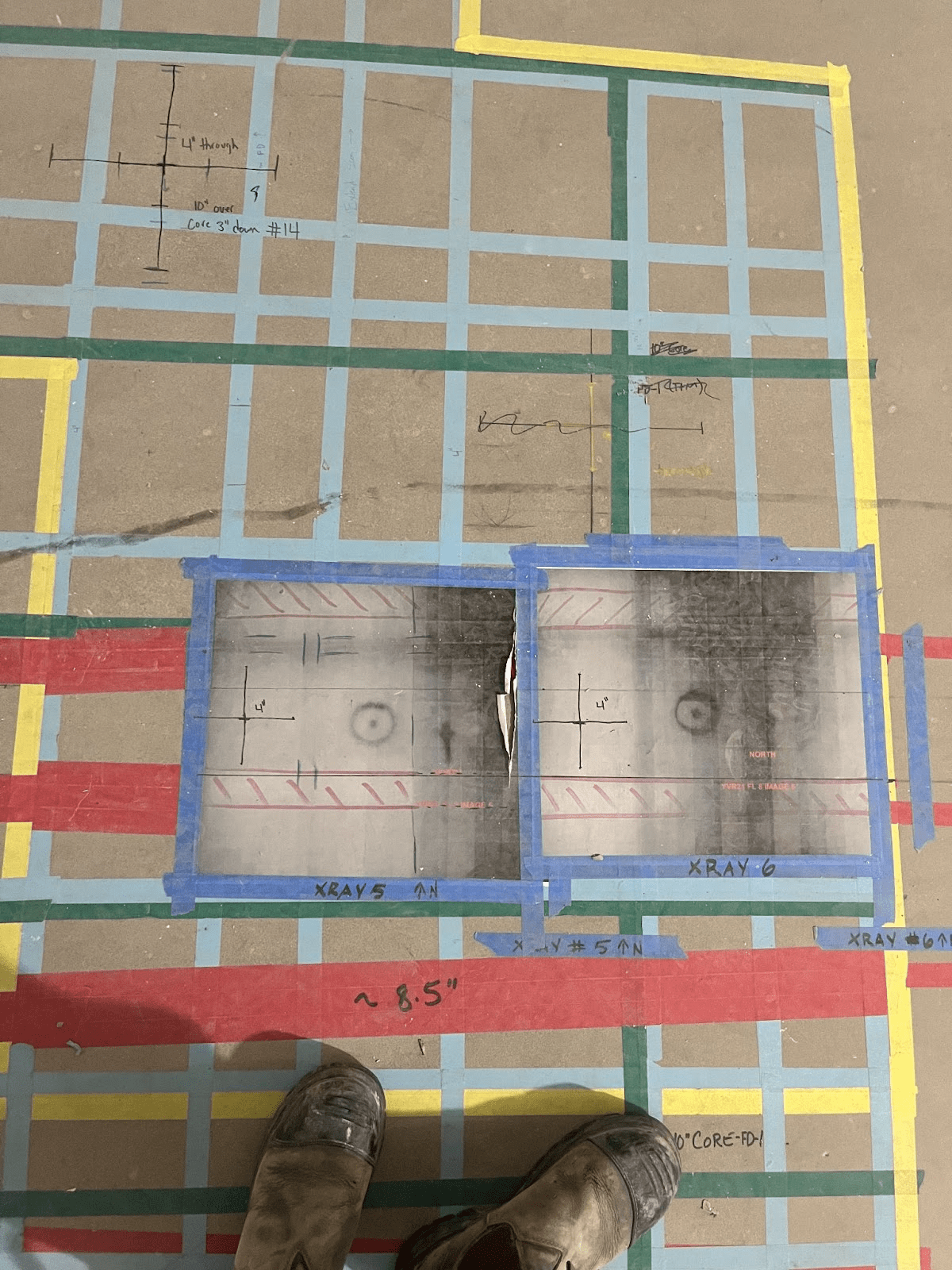
At Xradar™, we often combine our concrete coring services with advanced subsurface scanning to ensure that each hole is drilled with precision and safety in mind. This integrated approach minimizes risks, ensuring that no essential structural components are damaged during the process.
If you are looking for concrete core drilling services, get in touch today!