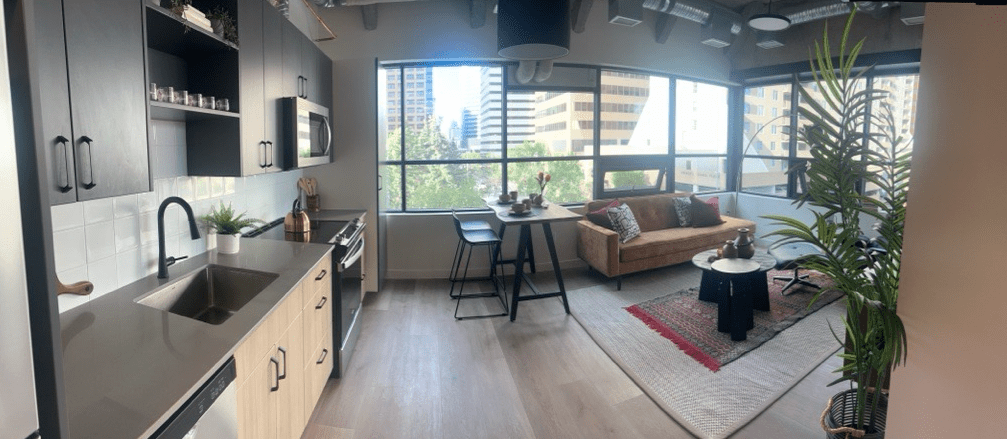
But while the vision is simple, the execution is anything but. Turning aging commercial buildings into modern, livable spaces requires surgical precision, deep technical understanding, and partners who can navigate the unknowns hidden within concrete.
Why Office-to-Residential Conversions Are on the Rise
Remote and hybrid work have redefined office demand, leaving many downtown cores with underused square footage. At the same time, cities are facing unprecedented housing shortages, prompting governments and developers to consider adaptive reuse as both an opportunity and a necessity.
But it’s not just about solving a space issue, it’s about building more sustainably. Repurposing existing buildings reduces construction waste, conserves embodied carbon, and shortens development timelines.
The Technical Challenges Behind the Trend
Office buildings weren’t designed to be homes. That means deep retrofits: open floorplates must be converted into apartments, mechanical & electrical systems may need to be rerouted, and old construction drawings may be missing or unreliable.
Before any cutting, coring, or modification can happen, developers need to know what lies beneath the surface and whether it’s safe to proceed.
Non-Destructive Testing (NDT) Makes the Difference
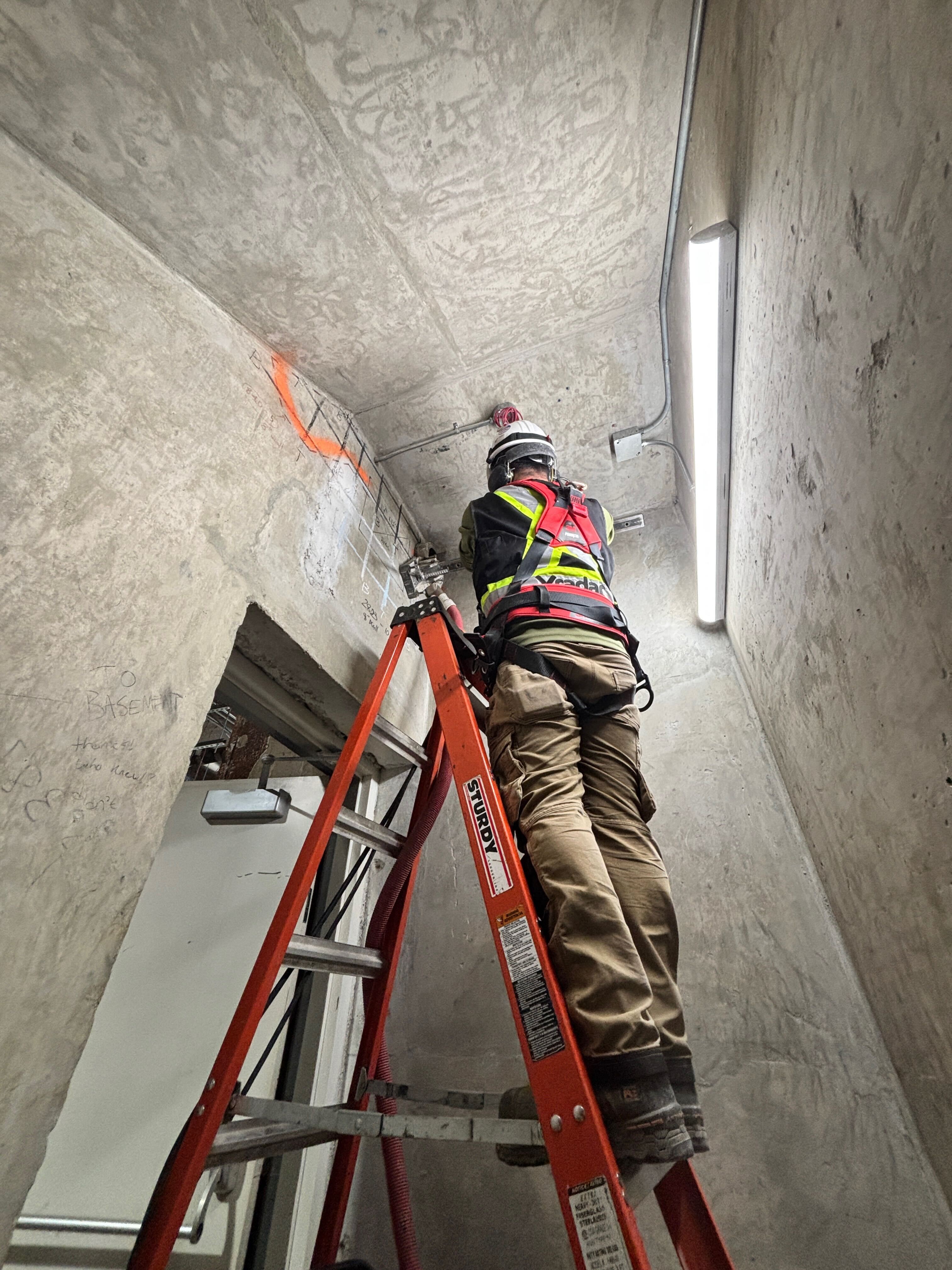
Xradar’s advanced Ground Penetrating Radar (GPR) and concrete scanning techniques provide accurate insight without damage.
Our integrated scanning and coring workflows ensure zero surprises on-site, with <0.3% scan error and full accountability baked into every project.
Trusted on High-Risk Retrofit Projects
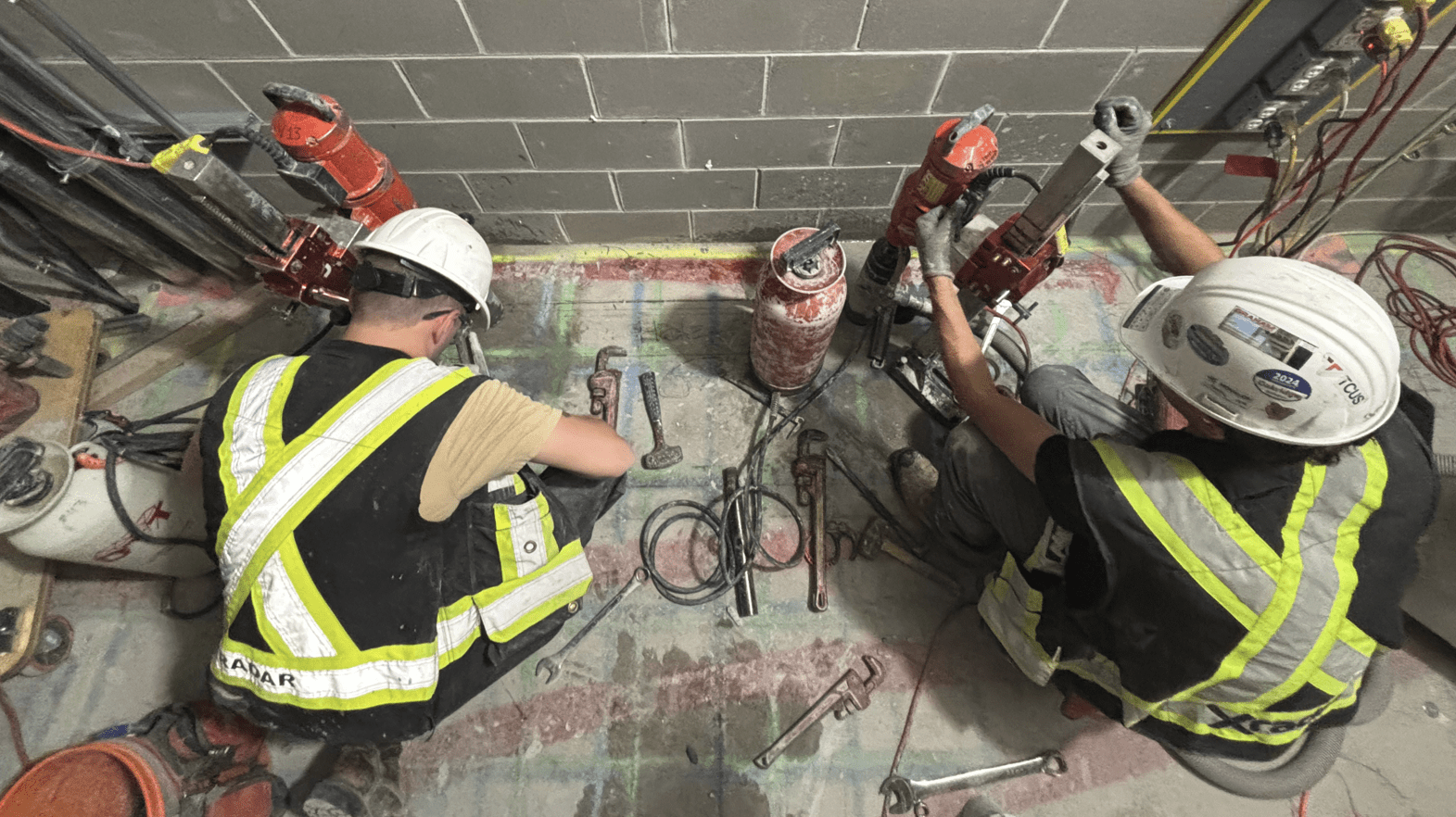
Xradar has delivered scanning and coring services for some of Canada’s most complex tenant improvements and adaptive reuse projects, including The Exchange Building in Vancouver, where our team successfully cored over 600 holes through both heritage and modern post-tension slabs during construction of a luxury hotel.
“Xradar performed their scanning and successfully cored over 600 holes through both old and new slabs with no negative impact and communicated with us every step of the way in a professional manner.”
— Parb Rehal, Executive Group Development
Our track record of working on occupied buildings, heritage structures, and LEED-certified projects makes us the go-to partner for retrofit success.
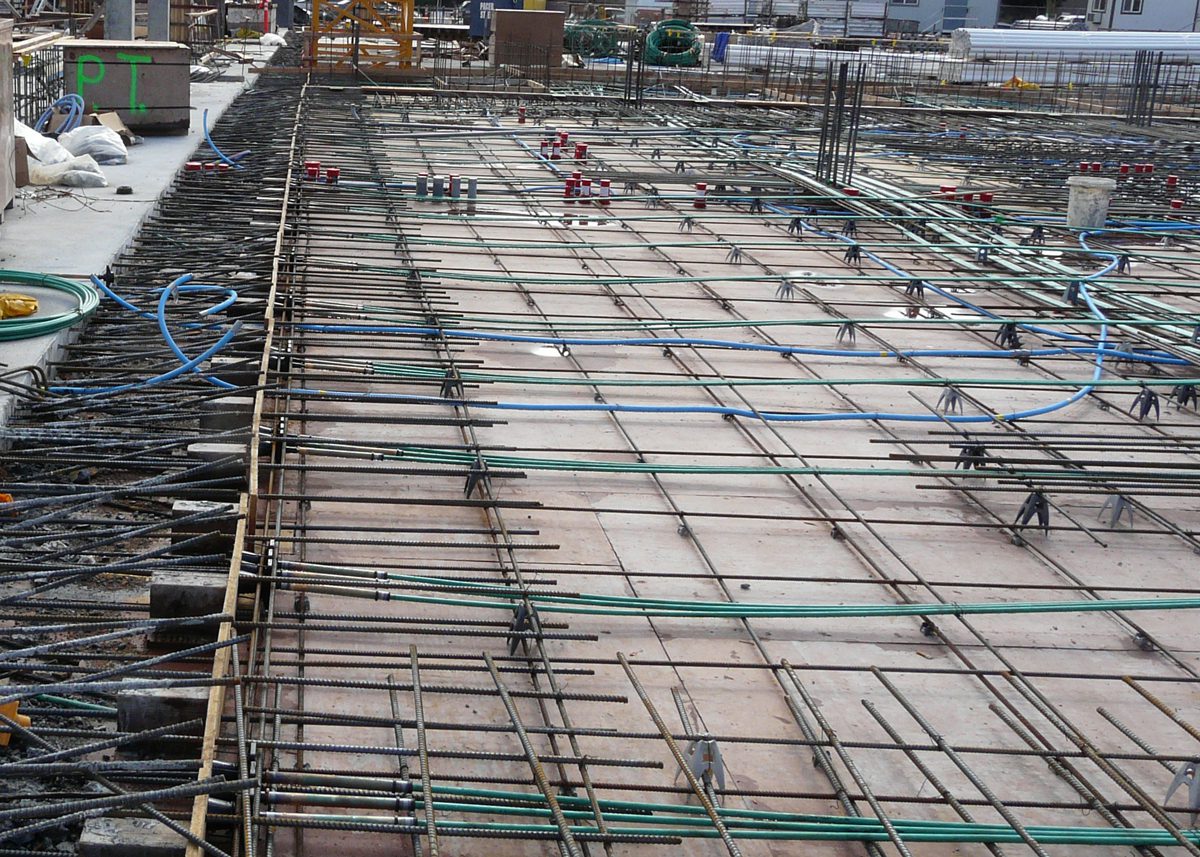
“We’ve had the pleasure of working with Xradar on our site “The Loft” in downtown Calgary, as part of one of Calgary’s first Office to Residential conversions. The complex project includes over 13 post-tensioned floor slabs transforming 52,550 ft² of office space into 56 residential loft units. Due to the presence of post-tensioned cables, accurate concrete scanning is essential before making any penetrations through the slab – we chose to work with Xradar, as the specialists in post-tension concrete scanning
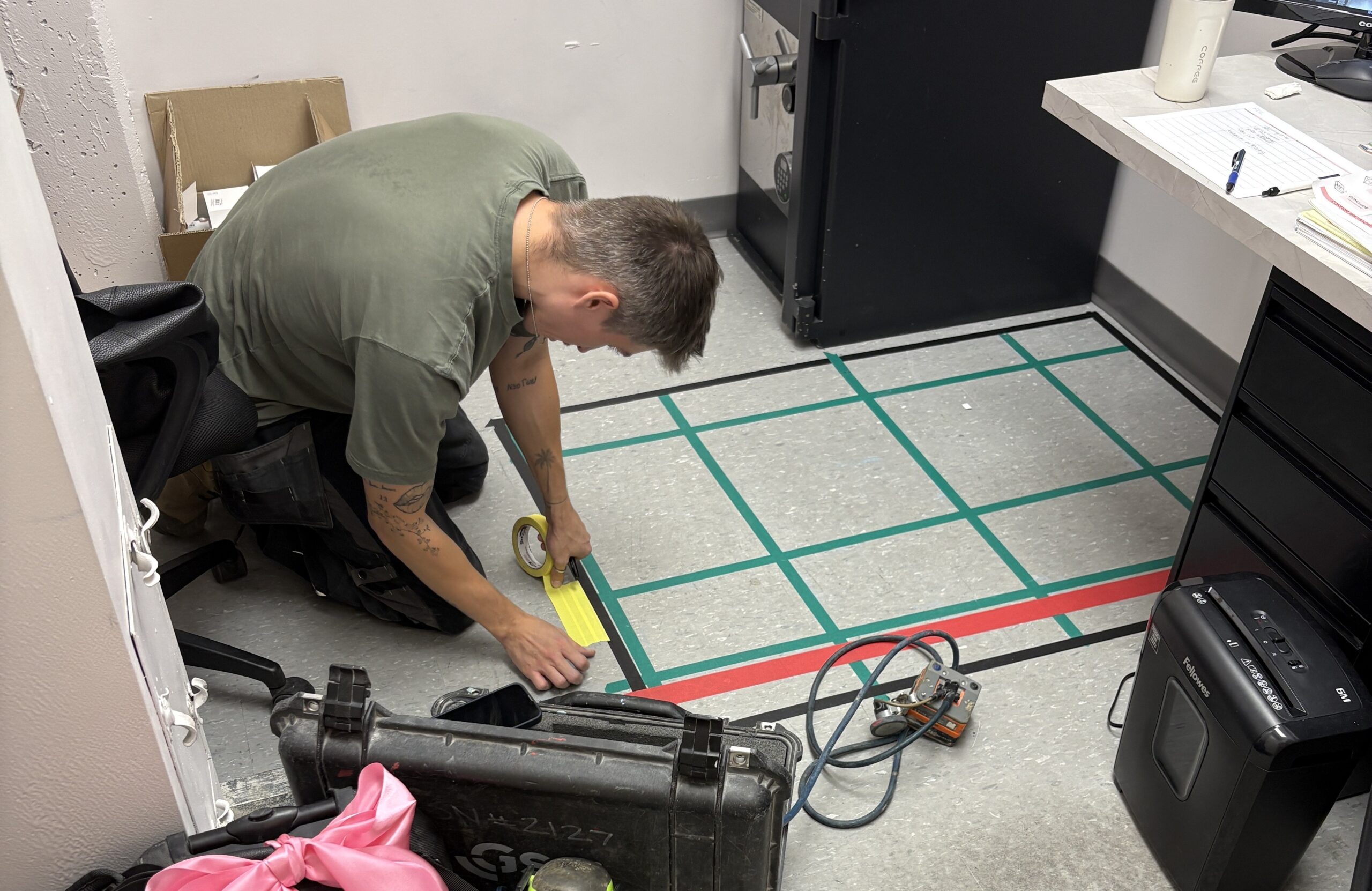
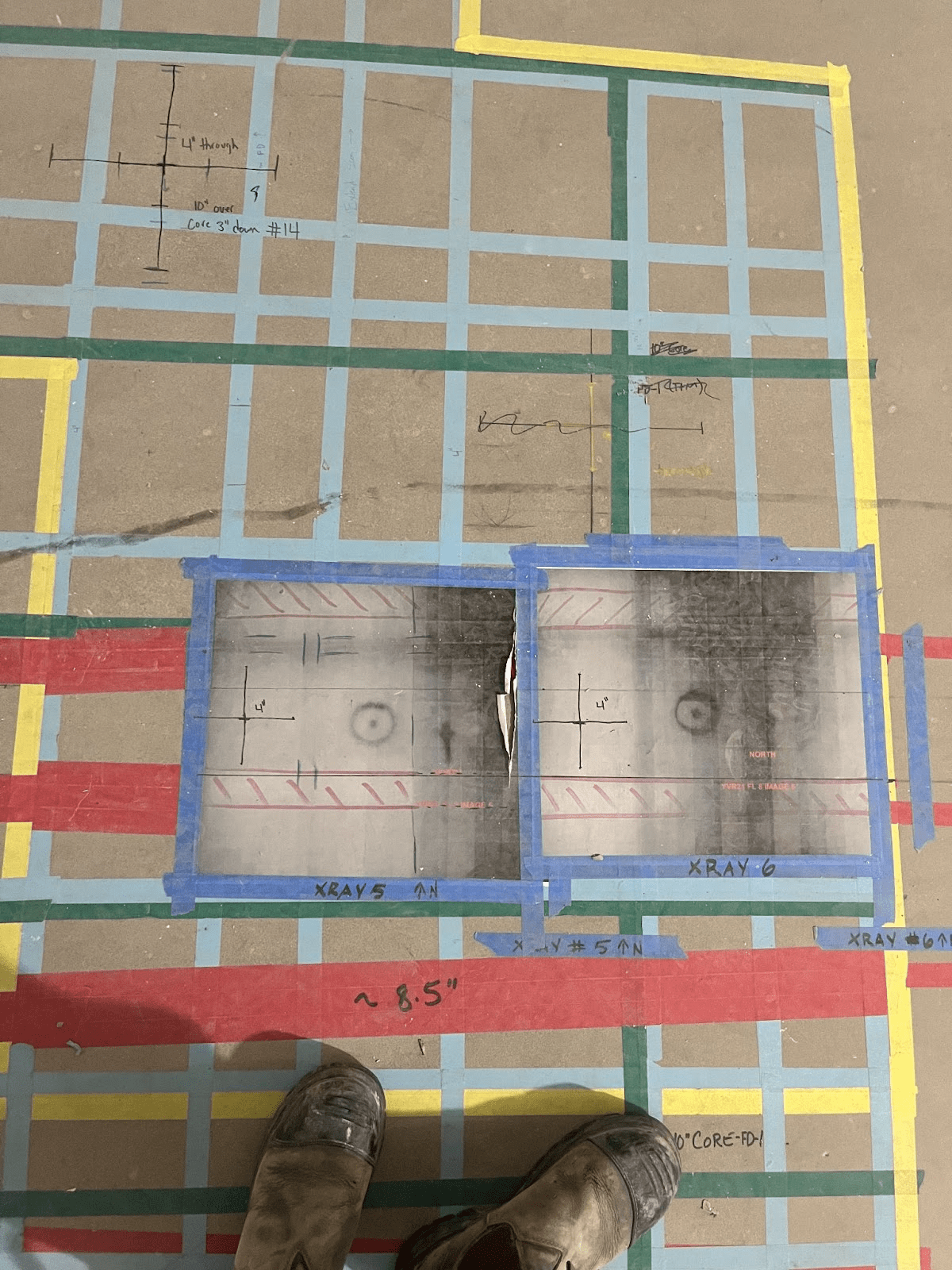
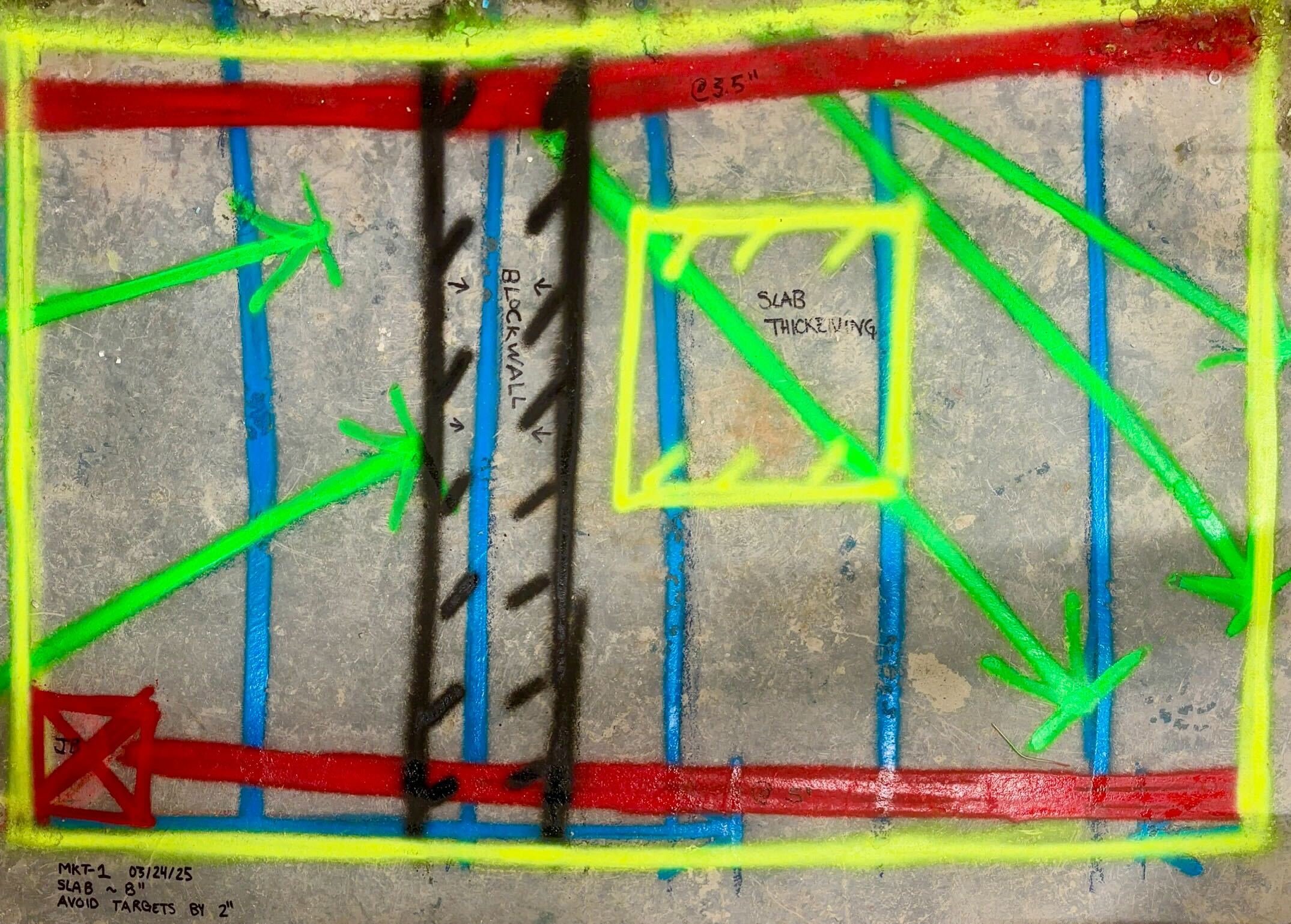
Xradar completed their scans accurately and delivered summary reports promptly (same day), which helped us expedite the approval process with our structural consultant. Their scans include all relevant details clearly marked and color-coded on the slab, and their digital reports summarize the information concisely for our records. Xradar then also completed coring on site of over 100 holes without incident or mess, whilst complying with our high safety standards from the outset.
I’ll hire Xradar again for future projects, and would recommend anyone do so also, especially when faced with post-tensioned slabs.”
— Erik Pavkovich, MSc. Design Manager, Major Projects (Maple Reinders)
What We Deliver on Conversion Projects
- Pre-design GPR scanning & 3D modeling
- Slab thickness & post-tension cable verification
- Concrete coring for plumbing, HVAC & electrical
- Pre-pour inspections & reinforcement layout scanning
- As-built documentation validation
Whether it’s a 30-storey office tower or a mixed-use development, we adapt our services to meet your project’s specific needs.
Our Impact: Reducing Risk, Saving Time
By identifying embedded utilities, rebar, and voids before construction begins, Xradar reduces rework, prevents structural damage, and helps keep timelines on track. Our trademarked scan markings and clear reporting also improve communication between trades and consultants, making coordination smoother and safer.
Supporting a More Sustainable Urban Future
Office-to-residential conversions are more than a trend; they’re a smart step toward building greener, more resilient cities. As developers continue to reimagine the built environment, Xradar will be there to provide the data, accuracy, and assurance needed to turn bold ideas into functional spaces.
Let’s talk about how we can support your next adaptive reuse project.