
Performing a concrete scan on a large structure
As conventional methods such as Ground Penetrating Radar (GPR) and Xradar™ Enhanced Concrete Scanning cannot be used on larger structures, another method must be used. We utilize a range of ultrasonic non-destructive testing (NDT) methods, such as Sonic/Impact Echo or Ultrasonic Pulse Velocity.
These methods are perfect for thick concrete structures and are able to provide accurate data around the concrete slab which can be reported in a wide range of ways, depending on the needs of a client.
Benefits of a concrete structural survey
There are a wide range of reasons to conduct a concrete structural scan. Some of the most common reasons include mapping the thickness of the concrete, the reinforcement cover, spacing and diameter, as well as the foundation locations.
These attributes can then be used to calculate structural integrity and load capacity, in addition to updating historical and inaccurate structural drawings that may exist of the area.
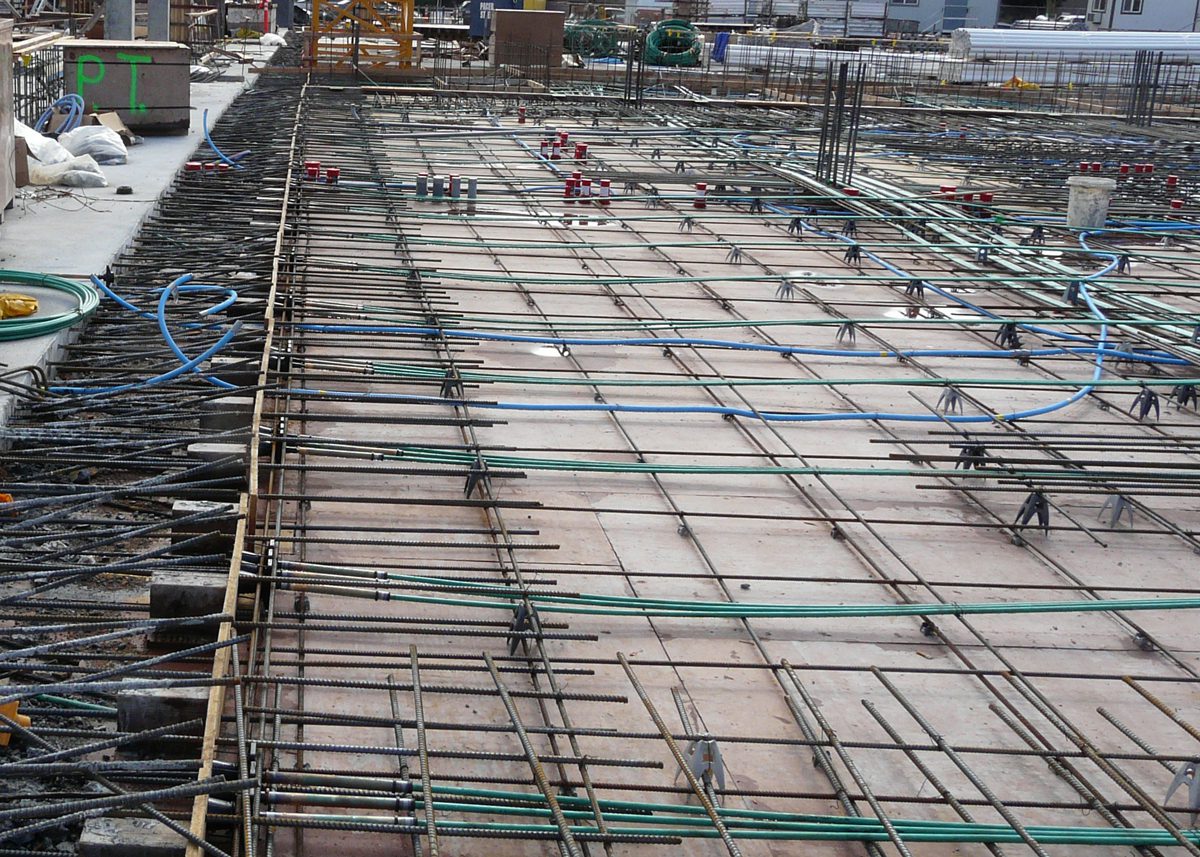
Other applications of scanning are the detection of voids, along with detecting the presence of any pre-stressed tendons, conduits and other partially hollow objects. Data can be accurately mapped up to 2.5m, even within reinforced concrete.
Methods
The equipment we primarily use is the MIRA tomography by ACSYS. This is the most advanced instrument of its kind today.
The scanner works by sending a short pulse through the concrete, produced by hitting the surface with a small metal object. The instrument then records the shear wave reflections and produces a two dimensional array of transducers then generate an image.
As-built drawings and reporting methods
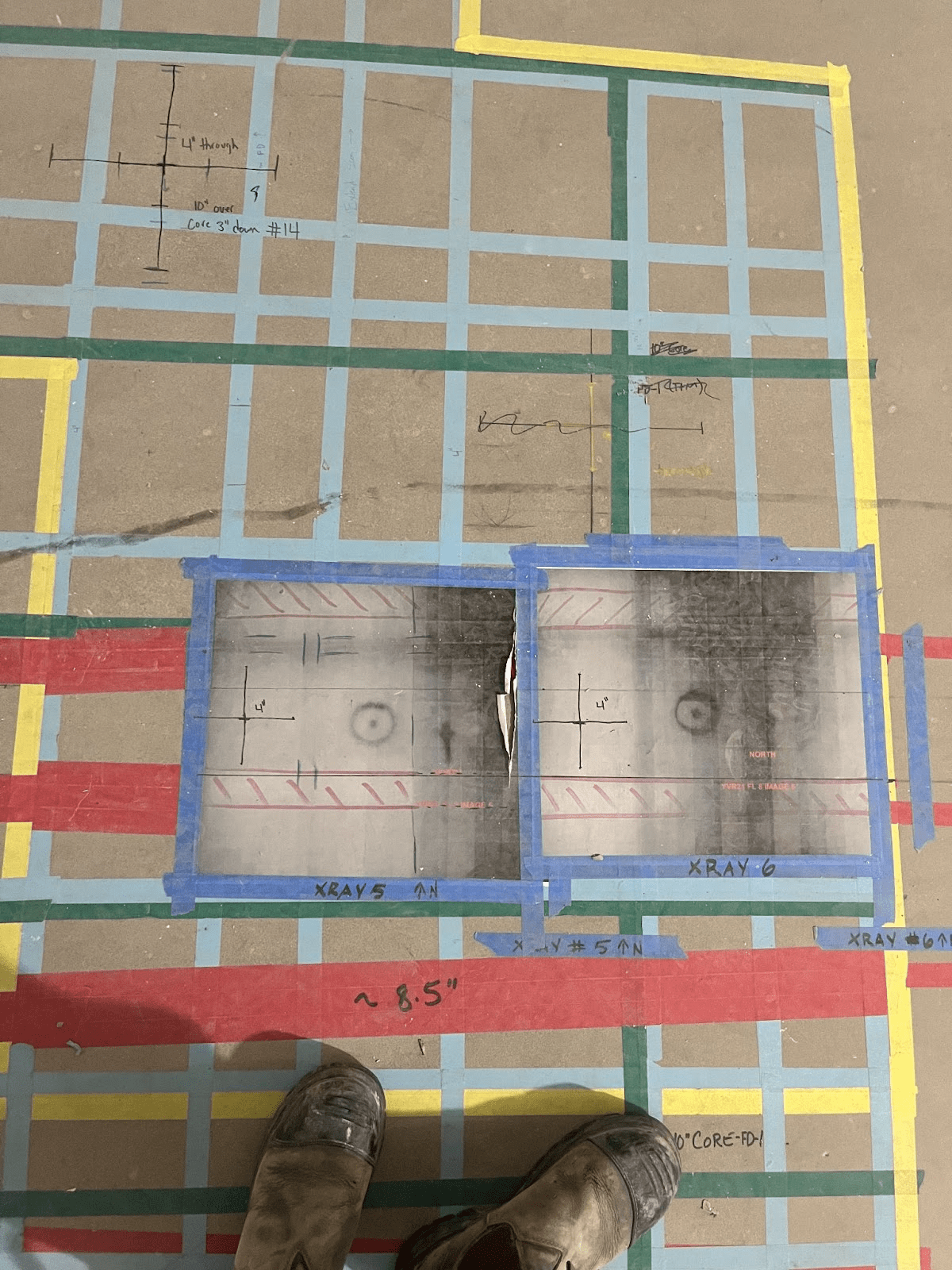
A variety of reporting methods can be accommodated with flexible digital outputs in the form of raw data, maps and CAD-ready files make it easy to incorporate existing as-built slab conditions into structural design and analysis.
In addition onsite Xradar data and 3D laser scans are processed in-house using our bespoke proprietary software to deliver quantifiable, detailed measurements of slab attributes. We then create as-built structural drawings which provide comprehensive and detailed information to inform engineering decisions during the planning and construction phases of a project.
For more information on our concrete structural scans and drawings, get in touch with a technician.