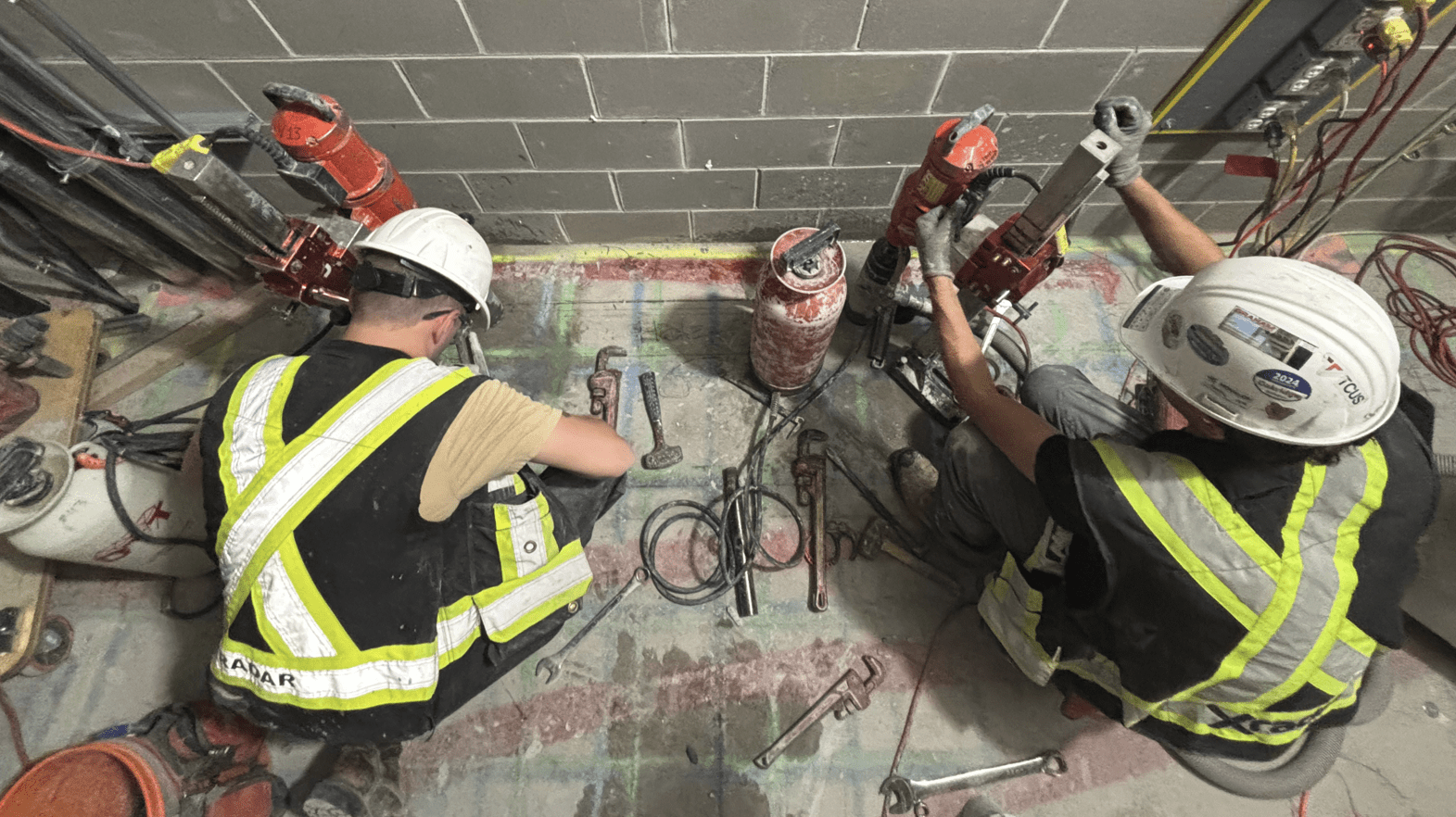
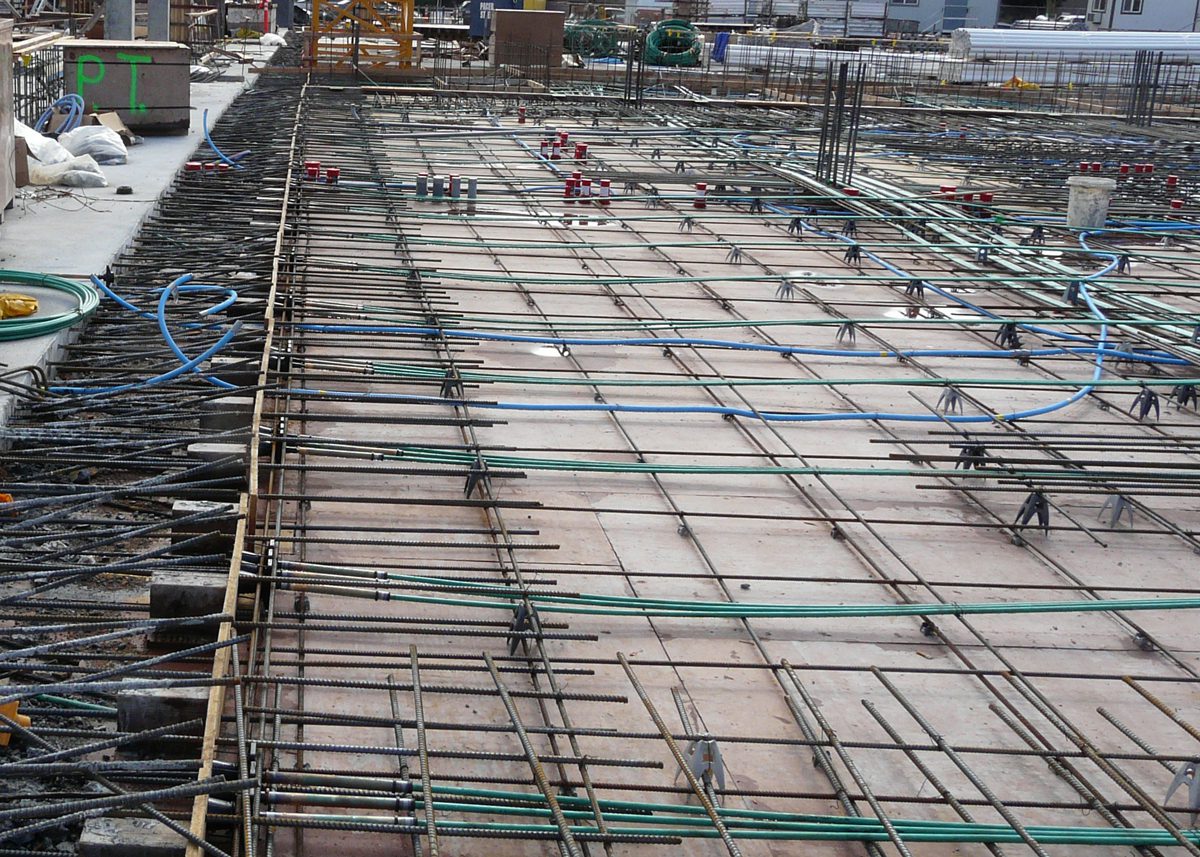
When it comes to concrete construction, few hazards carry as much risk as post-tension (PT) cables. These high-strength steel tendons are designed to reinforce and stabilize slabs, and they are tensioned with tens of thousands of pounds of force. Striking one while drilling or coring is a costly mistake.
What are post-tension cables?
Photo from creativecommons.org
Post-tensioning is a sophisticated construction technique that utilizes high-strength steel cables, known as post-tension cables, which are strategically embedded within concrete elements during the initial construction phase. These cables are typically encased in protective sheaths or ducts to prevent bonding with the surrounding concrete and allow for movement. Once the concrete has been poured and has achieved a sufficient level of strength (hardened), these cables are meticulously tensioned using hydraulic jacks. This process of tensioning introduces a compressive force into the concrete, effectively counteracting the tensile stresses that the concrete would naturally experience under load.
The primary benefit of this induced compression is a significant increase in the concrete’s overall strength and durability. By pre-stressing the concrete, post-tensioning allows for the creation of thinner, longer, and more flexible structural elements compared to traditional reinforced concrete. This method is particularly prevalent and highly advantageous in the construction of high-rise buildings and large condo complexes, where it provides crucial structural support, enhances load-bearing capacity, and contributes to the overall stability and safety of these large structures. Post-tensioning can also lead to reduced material usage, lighter structures, and often more open floor plans due to fewer columns or load-bearing walls. This technique also helps to control cracking and deflection (bending or sag under load), contributing to the longevity and aesthetic appeal of the structure.
Why is Striking a PT Cable so Dangerous?
Violent cable release: A severed PT cable can recoil with explosive force, leading to “cable whiplash” or sudden bursts of concrete. This can cause severe injury to anyone nearby.
Structural compromise: PT cables are fundamental to a slab’s load-bearing capacity as mentioned above. Damaging one can weaken the structure, leading to fractures, long-term instability, and even collapse in extreme cases.
The Project and Business Consequences
Beyond the immediate safety hazards, a PT strike has ripple effects across an entire project:
-
Costly repairs and delays: Damaged cables require engineering oversight and specialized repairs, halting progress and driving up costs, as explained in this article by Calgary Listings.
-
Regulatory and legal risks: In Canada, occupational health and safety standards demand due diligence. A strike can trigger investigations, fines, and insurance complications.
- Reputation risk: Project owners and contractors rely on safe, timely delivery. A single avoidable incident can damage credibility and trust.
How are PT Cables Detected?
The industry standard for locating PT cables and other embedded hazards is non-destructive testing performed by qualified technicians. Common methods include:
-
Ground Penetrating Radar (GPR): The most effective tool for PT cable detection, whilst in the right hands. GPR delivers high-resolution, real-time imaging that reveals cable positions, rebar, and conduits within the slab.
-
Electromagnetic (EM) locators: Often used alongside GPR, EM locators confirm the presence of metallic objects.
- Plan review: Experienced technicians cross-check scan data with structural drawings to verify accuracy.
At Xradar, we go beyond standard GPR. Our approach at Xradar Academy™ focuses on the locating of PT cables in great detail. Our methods enhance accuracy by methodically eliminating common errors, ensuring that no PT cable or conduit is left undetected.
Best Practices Before Drilling
To protect both people and structures, the following steps are non-negotiable:
-
Hire certified technicians: Ensure that scans are performed by professionals thoroughly trained to interpret subsurface data accurately.
-
Always scan before you cut or core: Every hole, every time. Even “small” drills can cause catastrophic strikes.
-
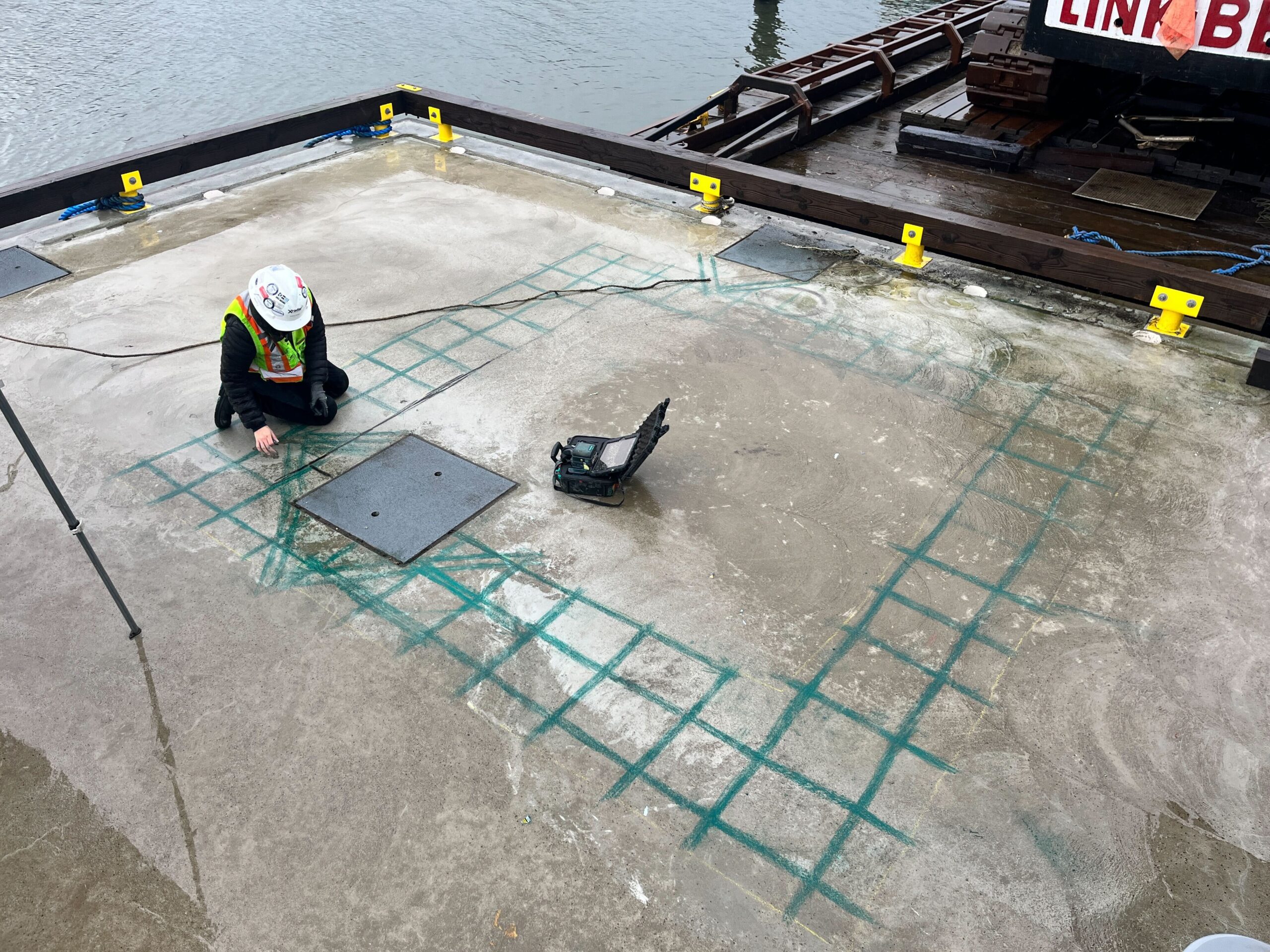
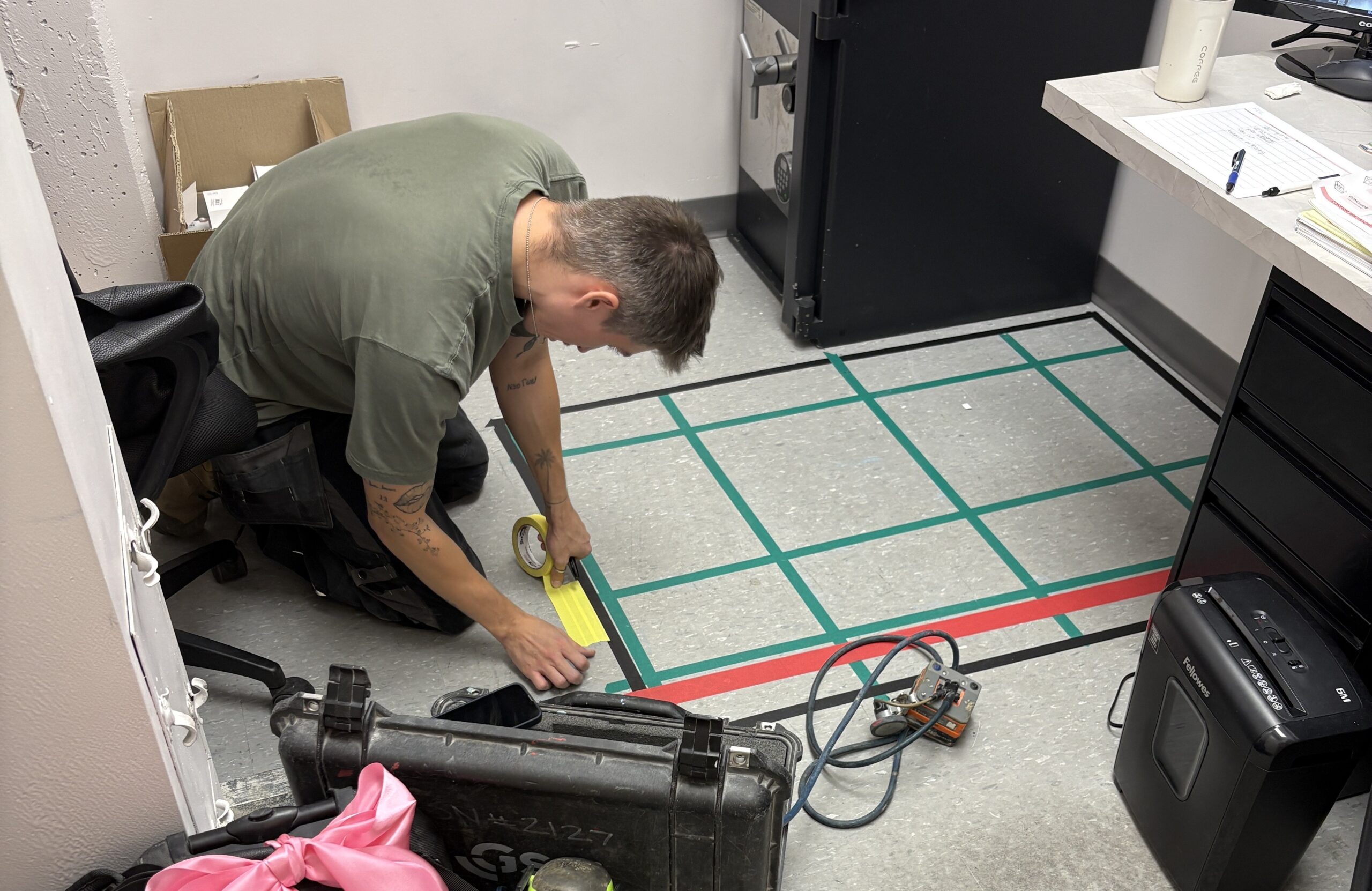
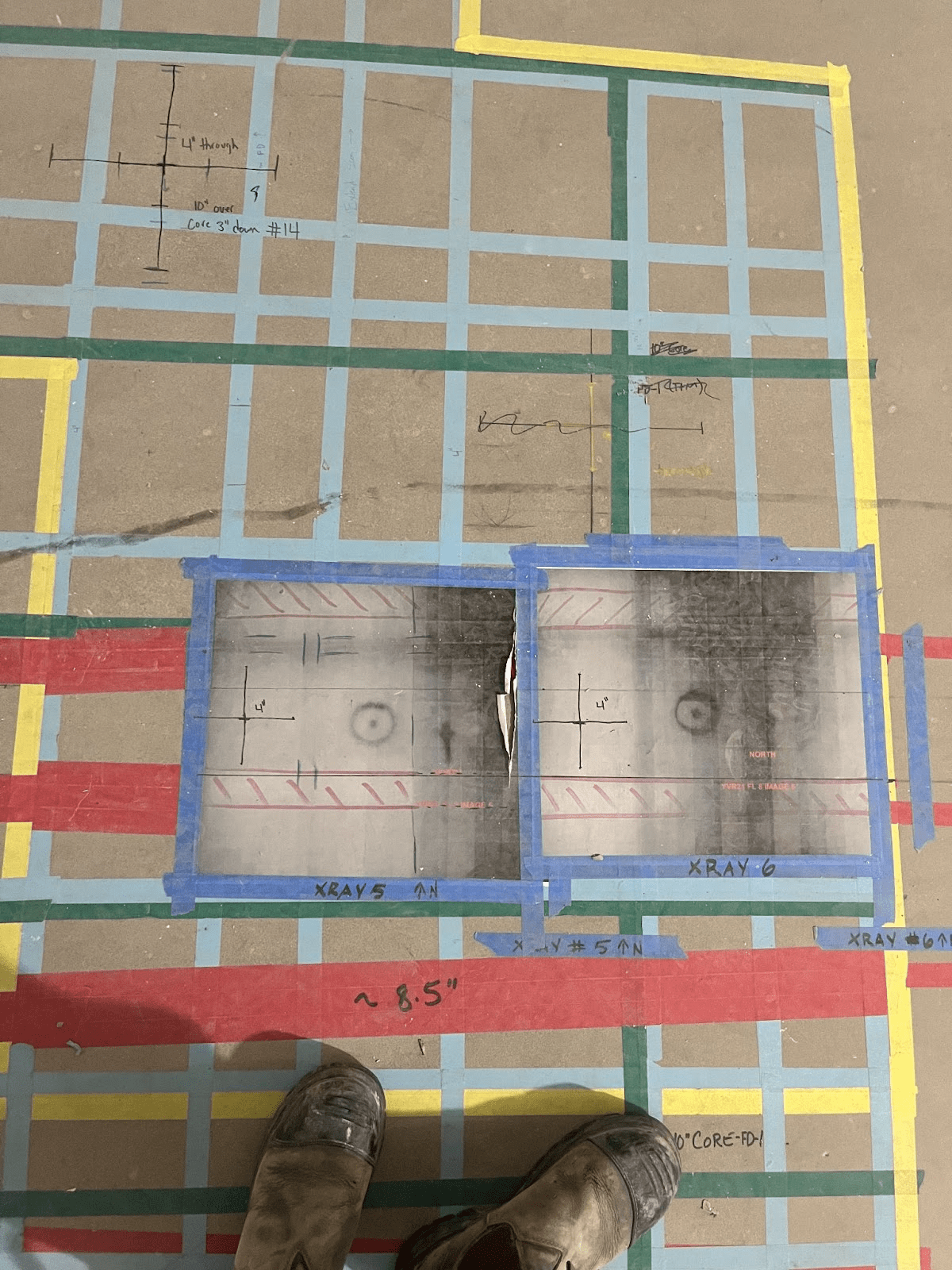
Mark and communicate hazards: Technicians should clearly identify cable and utility locations directly on the surface with an easily understood colour scheme. Xradar do this via our own specific Xradar Scan Markings©.
- Equip your team properly: Workers should wear PPE and be briefed on understanding the scan results before drilling begins. Xradar teach this within Xradar Academy, to enable signed off technicians to communicate clearly within our Xradar Summary Reports©.
Why Does This Matter in Today’s Construction Environment?
In Canada and around the world, the use of post-tensioned slabs is increasing across high-rises, parking structures, bridges, and commercial facilities. This makes accurate detection more critical than ever. Construction schedules are tighter, budgets are leaner, and regulatory scrutiny is higher. Cutting corners is no longer an option.
By scanning before drilling, project teams protect lives, safeguard investments, and keep projects on track.
At Xradar, we take pride in our ability to locate post-tension cables and reduce risk in our client’s projects. Our quality is underpinned by our training procedure within Xradar Academy, where technicians under-go thorough training over the course of 6+ months. If you need this quality on your site to help your project run smoothly, get in touch with our team here.