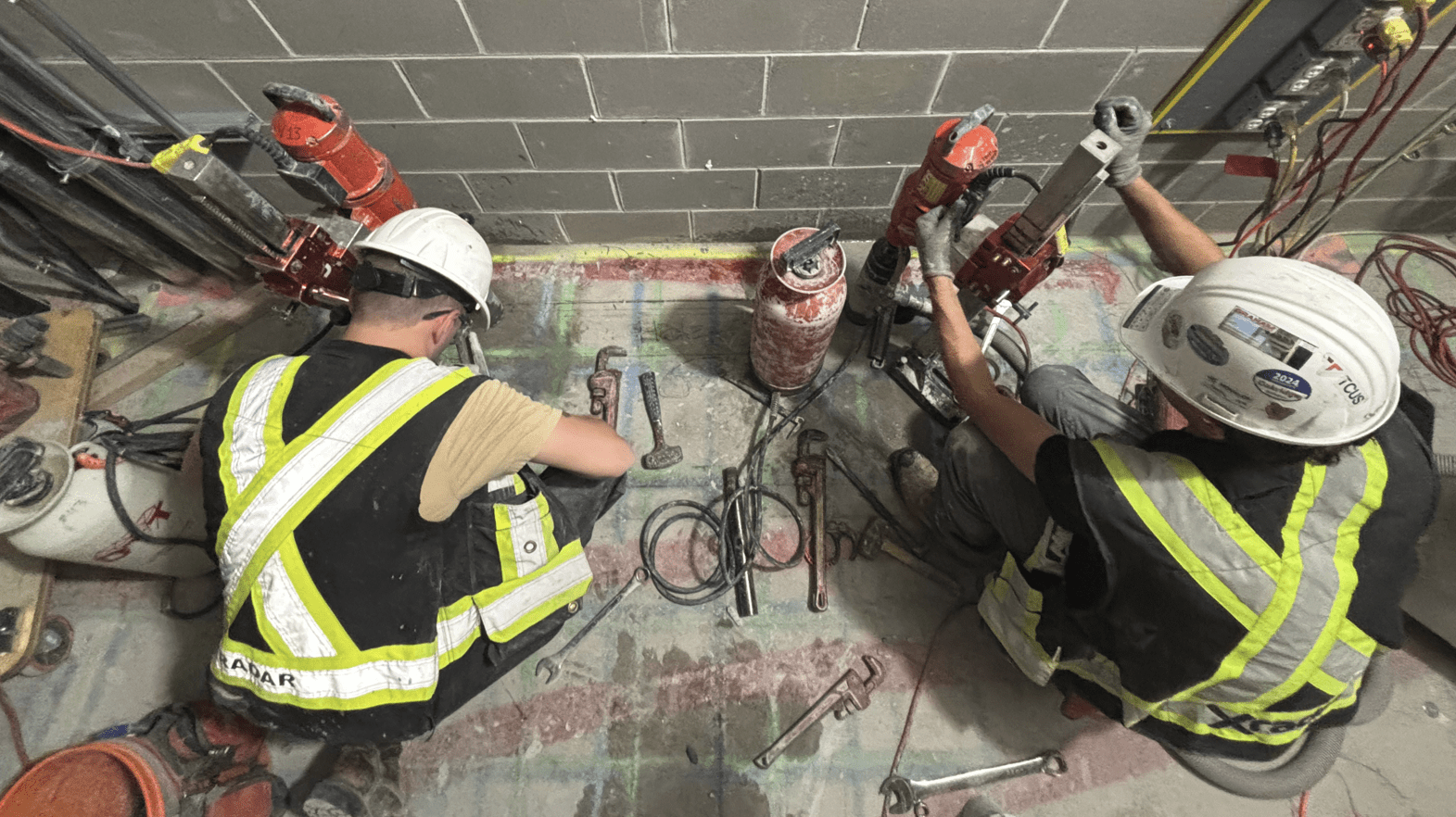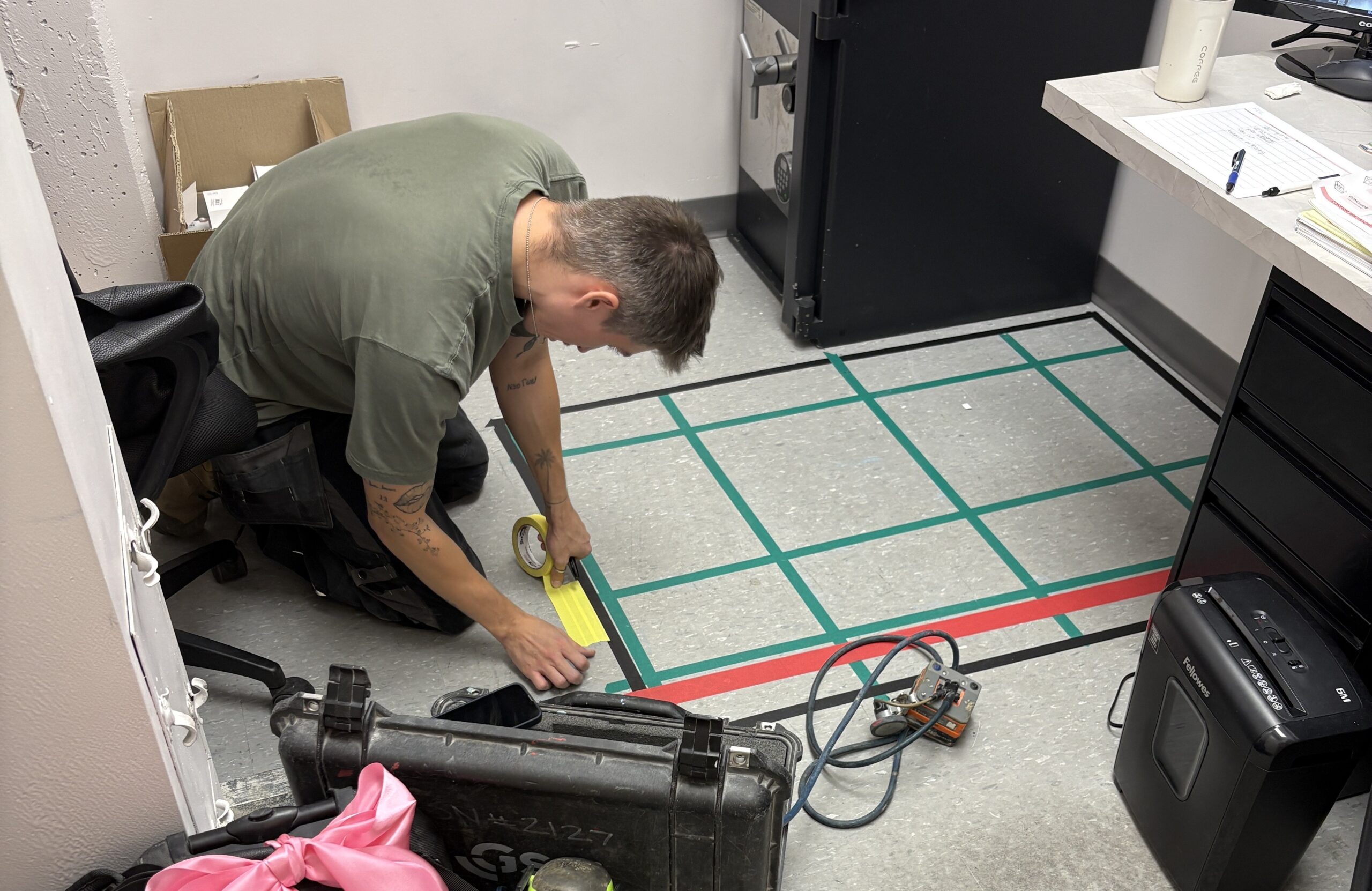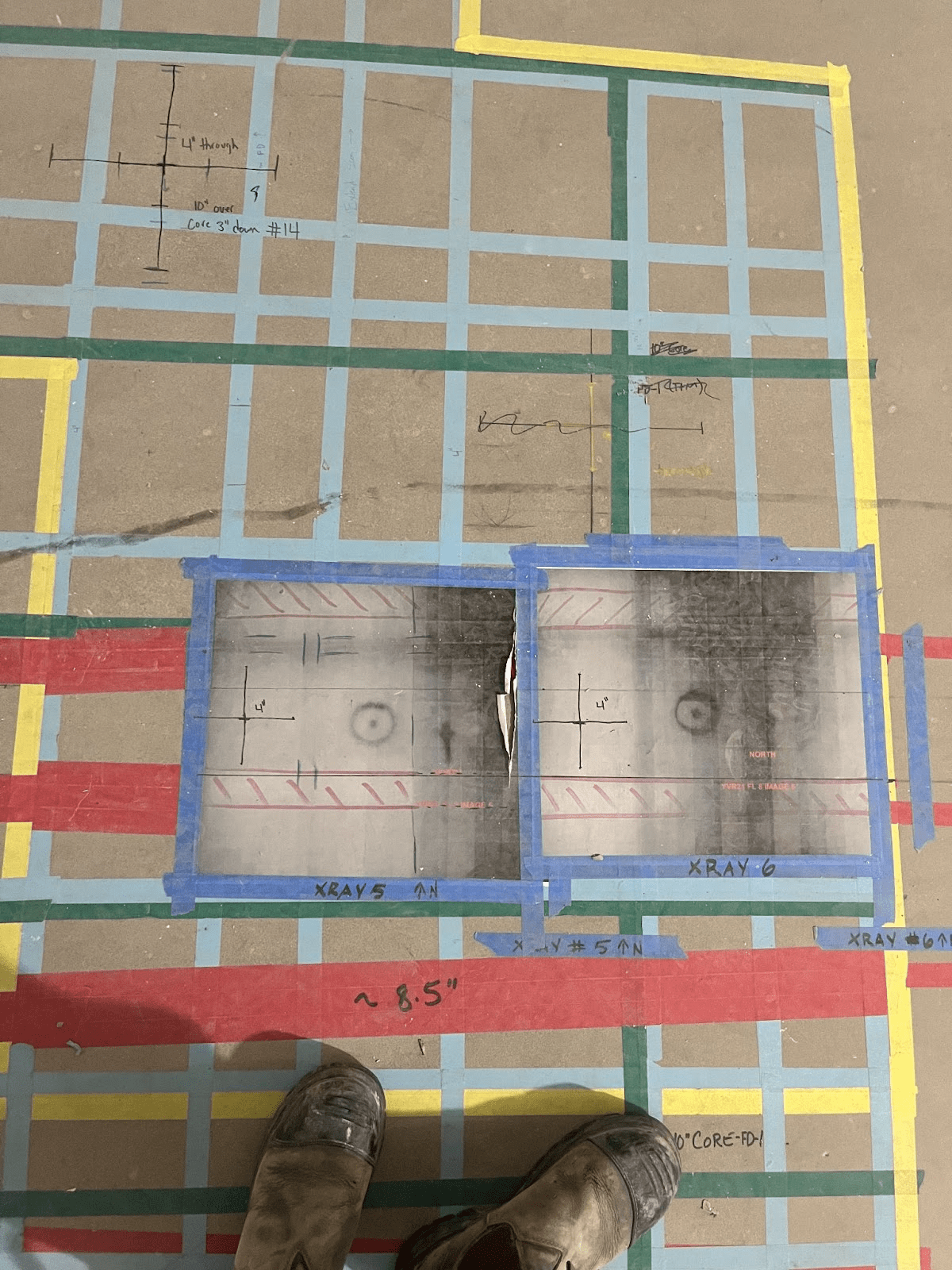
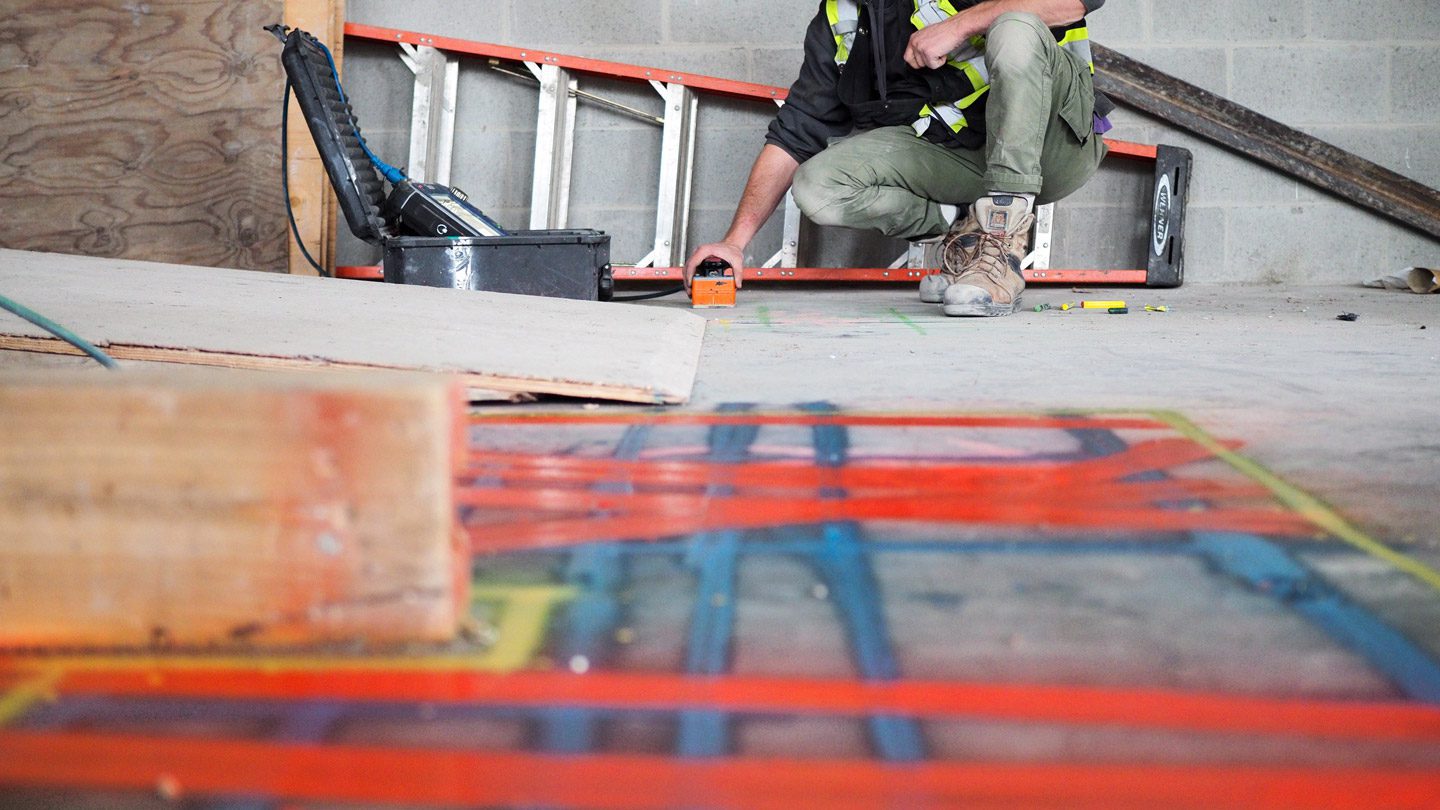
Performing a concrete scan allows you to see exactly what is below the surface and where, allowing you to cut or core safely, without the risk of causing damage.
Here are some potential hazards and reasons why you should always carry out a concrete scan:
Detecting utility lines and electrical conduits
Accurately detecting utility lines and electrical conduits is essential prior to cutting or coring. Hitting one of these during any type of excavation not only poses a massive safety hazard, but can be very costly for those involved.
In addition, damage to lines can cause power outages or loss of services for the area. Scanning the concrete ensures that each job is performed safely, while saving time and money in the long run.
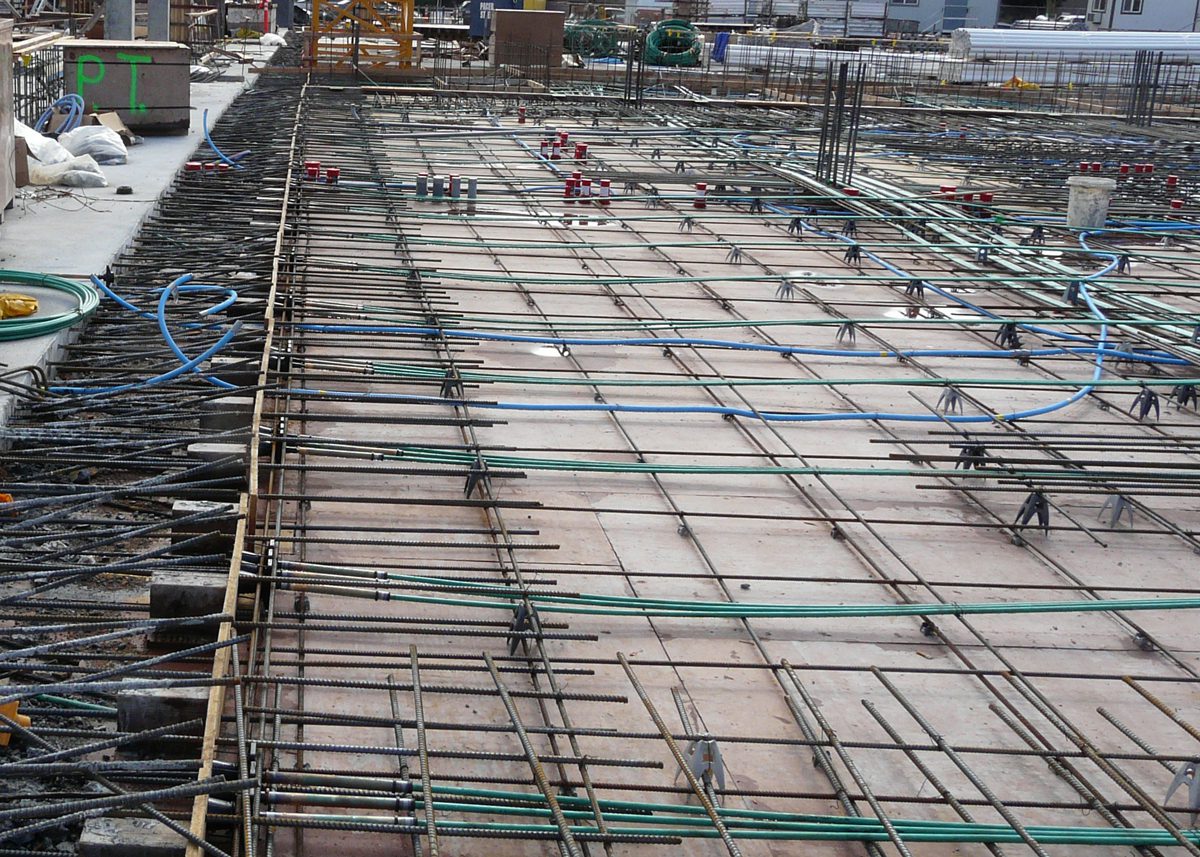
Rebar and post tension cables
During the construction process you often run the rusk of damaging rebar and post tension cables. This can cause serious injuries to workers, with the risk of debris flying or through cables snapping and causing harm.
Not only is there danger to workers, but cutting into rebar and cables can also result in major structural damage to the building. This will seriously impact the completion of your project and result in very costly repairs.
Concrete inspection
Concrete scanning is also used to inspect the concrete and analyze the structure. This can include measuring the thickness, gauging spacing and elevation of a slab, as well as detecting potential voids, air pockets, or concrete corrosion.
The latter issues can result in major damage to the structure and it is incredibly important to detect this early and initiate any relevant repairs. Failing to do so can lead to the collapse of the slab and structural damage to the building.
For more information on the uses of concrete scanning, and why you should scan before cutting and coring, get in touch with one of our technicians!