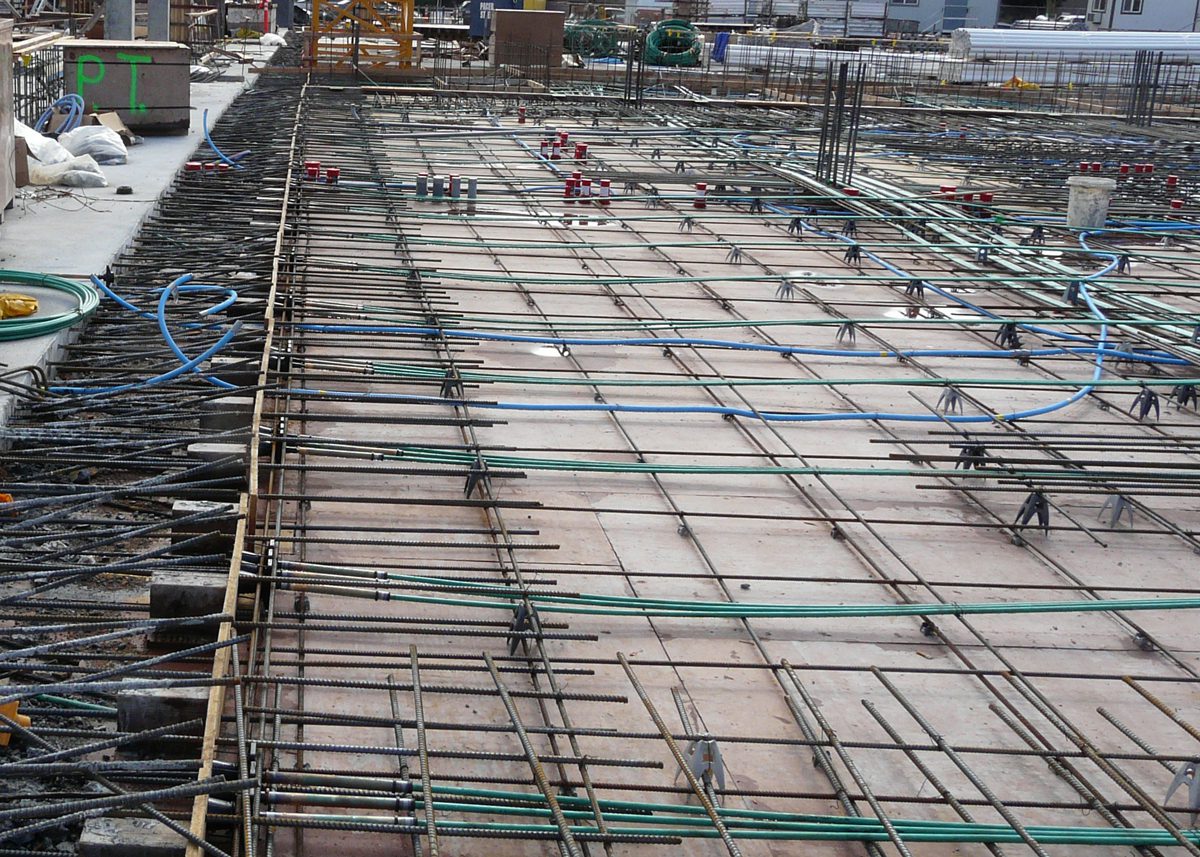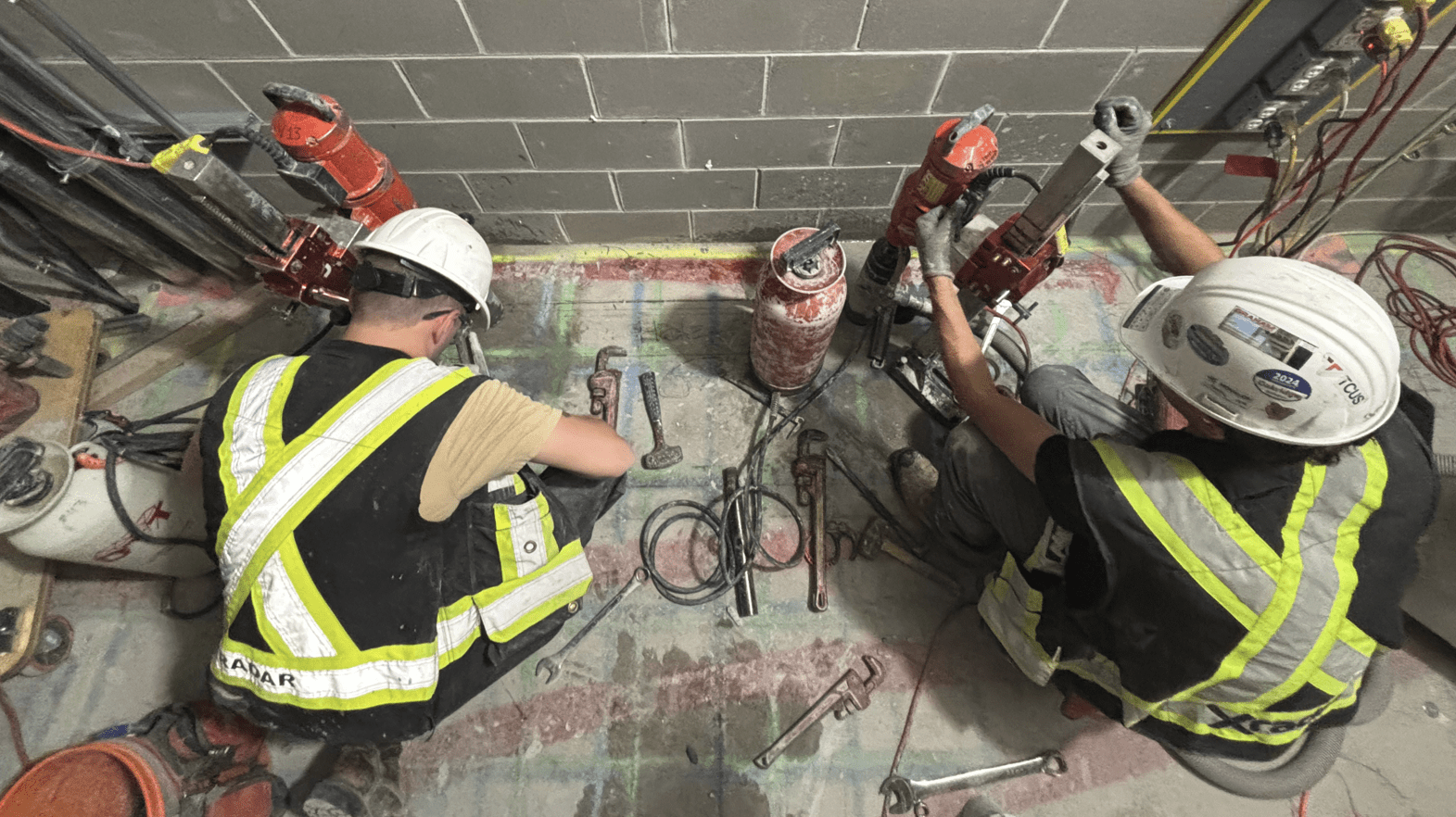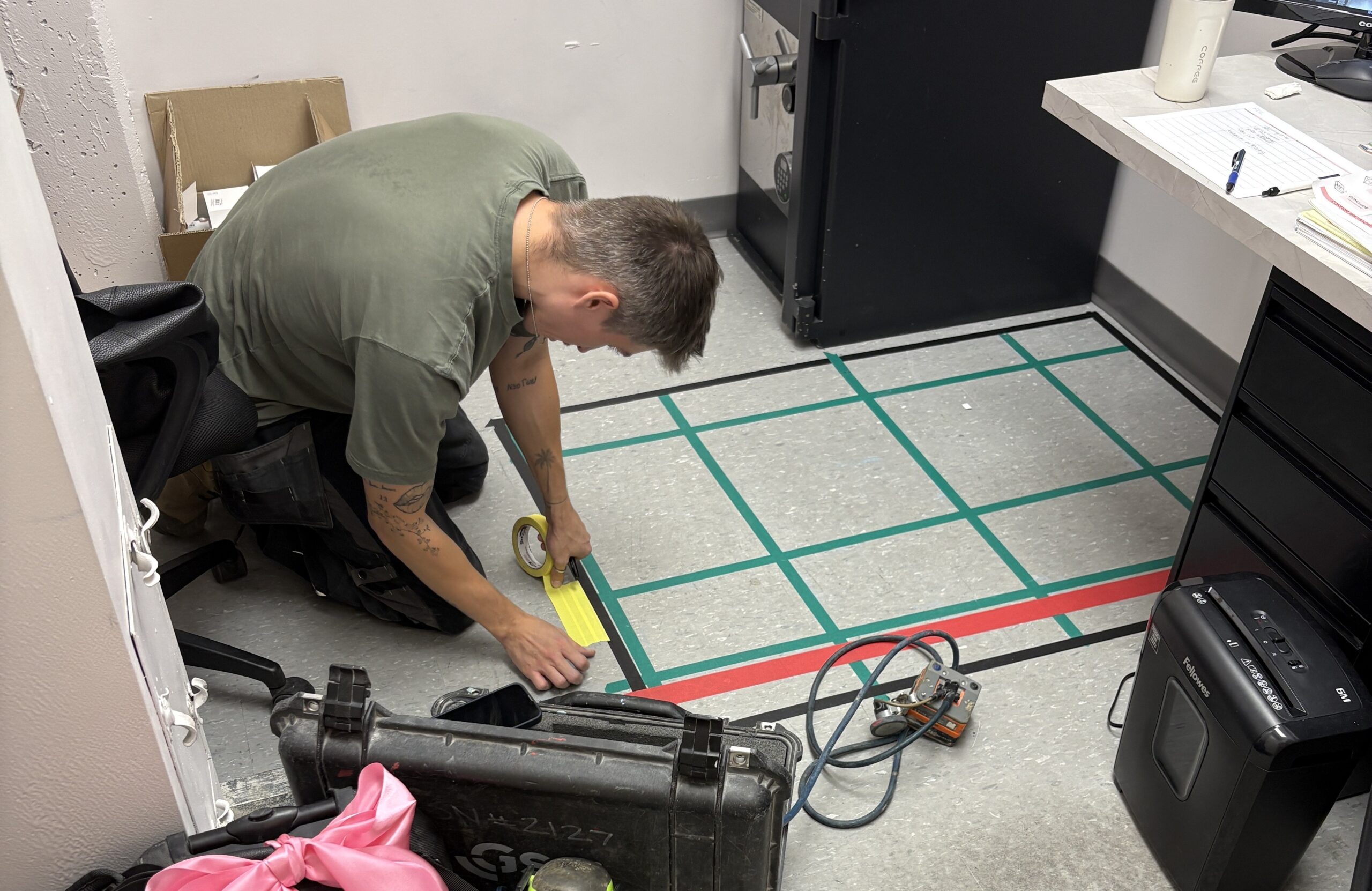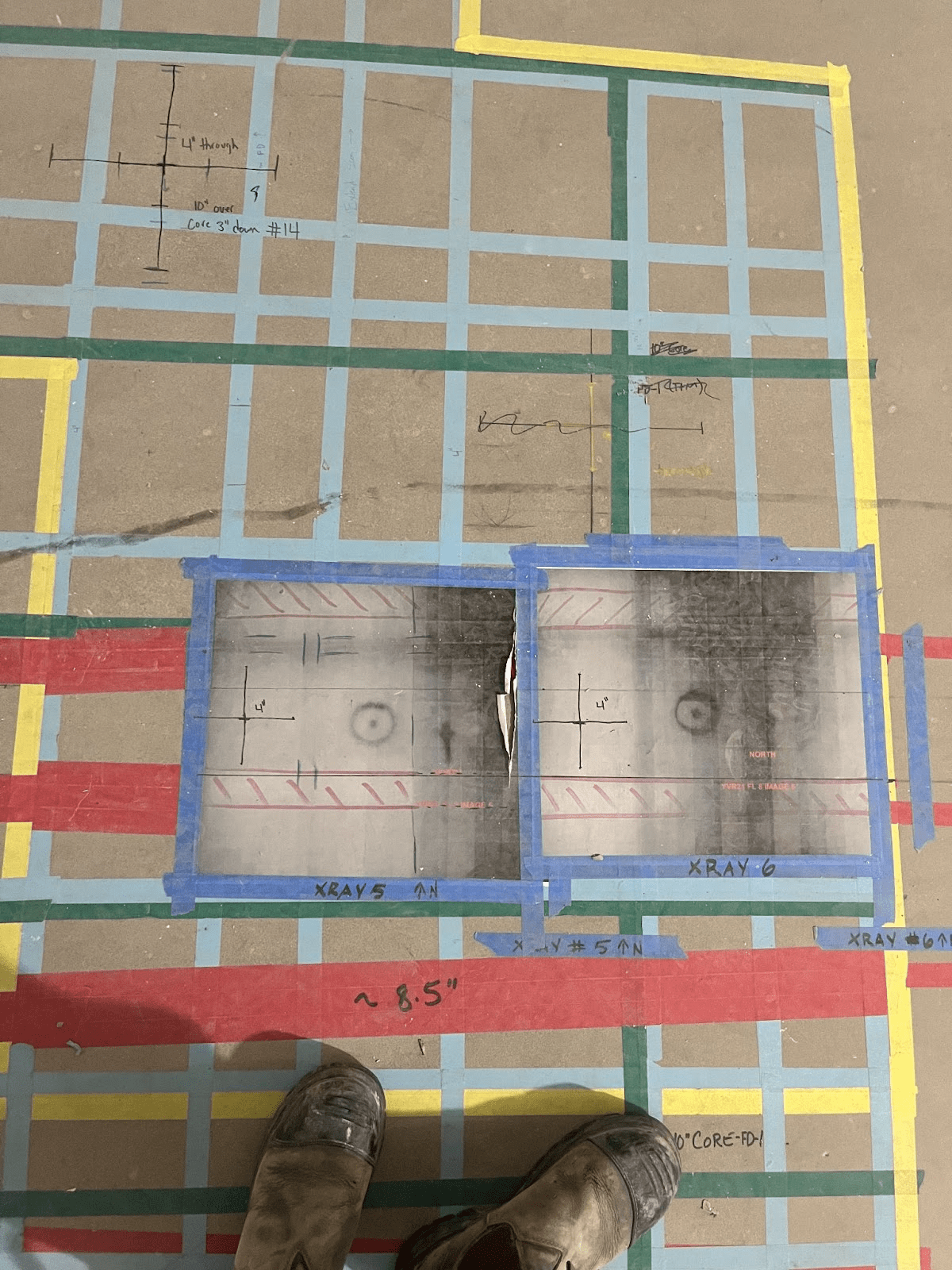
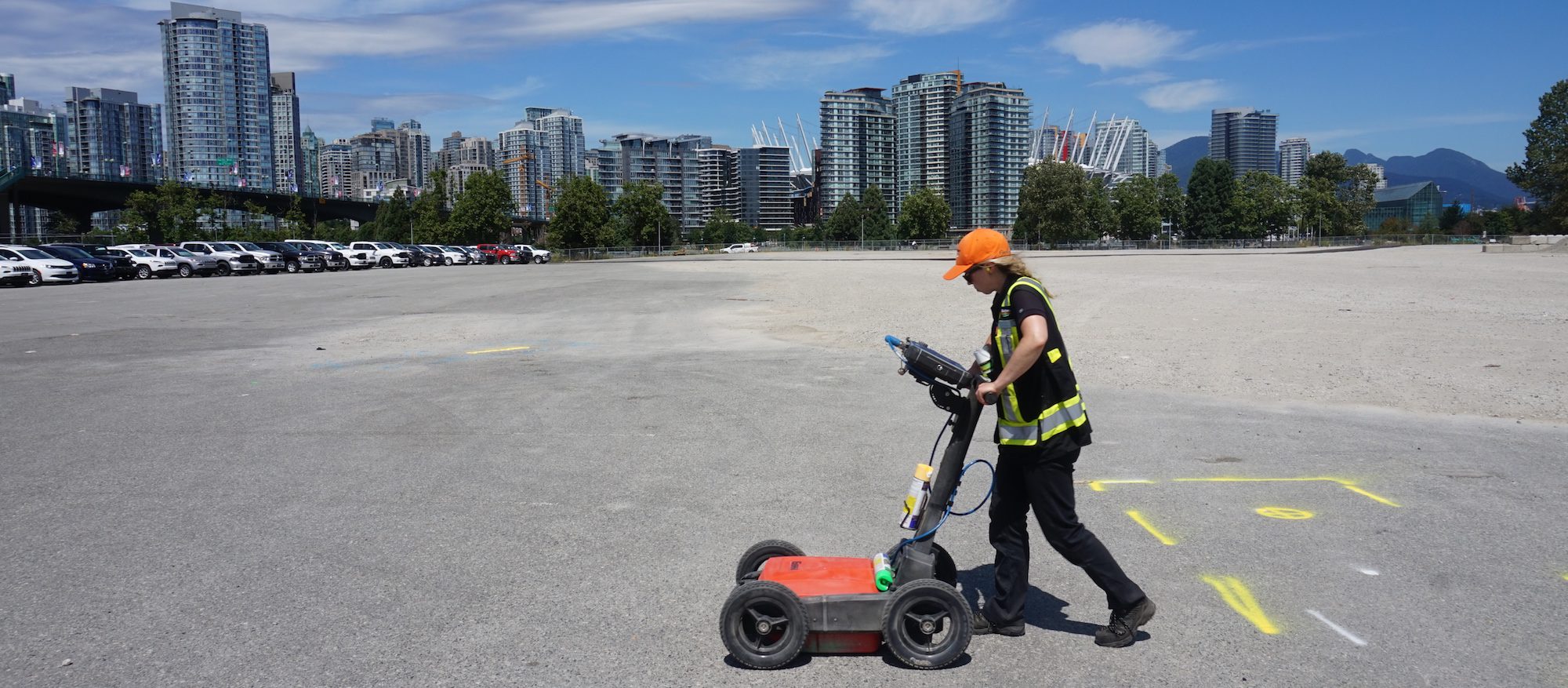
It can be used to detect objects and obstructions beneath the ground and has applications across a huge range of fields including archaeology, construction, earth sciences, and military.
What is Ground Penetrating Radar?
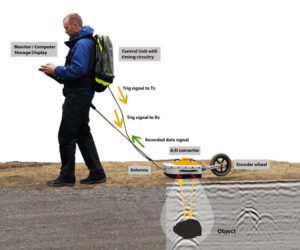
GPR is a non-destructive technique and allows you to map structures and features buried under the surface. It works by transmitting high-frequency electromagnetic waves into the ground through an antenna.
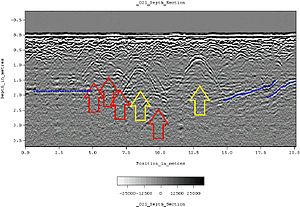
As the waves spread through the ground they encounter buried objects with different electromagnetic properties. The waves are then reflected back to the receiver which forms an image of the subsurface and any potential obstructions.
Depending on the purpose of the scan, various factors can be altered within the process. Changing the frequency of the wave can alter the depth and detail of the scan based on the requirements of the client.
Why use GPR?
The most common use of GPR is to detect objects below the surface in a non-destructive way, without the need for coring, drilling, or cutting.
The method is very versatile and can be used on a wide range of materials, which include rock, soil, ice, fresh water, pavements, and other concrete structures. GPR is able to detect subsurface features whose electrical properties contrast with those of the surrounding soil or concrete.
Our clients have many needs for GPR from locating utilities and conduits, to locating rebar and other obstructions for the purpose of determining a suitable location to cut or core through the ground. The key is that the GPR method is non-disruptive, fast, safe, and efficient.
Applications of GPR
Ground penetrating radar can be applied to a wide range of applications across a number of fields.
It is absolutely essential in the construction process to ensure safe cutting and coring, saving time and money. Most commonly it can be used in construction and engineering as a form of non-destructive testing (NDT) on structures and pavements. It can be used for concrete scanning, corrosion mapping, utility locating, and oil tank locating, to name a few.
Other applications include earth sciences, where it can be used to study the bedrock, along with soils and groundwater, and water table profiling. In addition it can be used in archaeology for detecting and mapping archaeological features, as well as military and law enforcement for the detection of dangerous objects such as landmines.
Benefits of Xradar
Xradar™ is Canada’s leading provider of ground penetrating radar technology, with offices in Victoria, Vancouver, Toronto, Montreal, and Quebec City.
Xradar Enhanced Concrete Scanning is a new form of GPR which improves the accuracy and range of the common technology, and reduces concrete scanning errors to less than 1% compared to the 25% typical for the industry.
Unlike a large number of GPR service providers, Xradar technicians are specially trained, providing you with complete peace of mind and ensuring that any concrete inspection and scanning is carried out in the most efficient manner, giving the most accurate results.
This saves you time, prevents injuries, and vastly reduces costly errors that can happen as the result of poor scanning.
Find out more about our services HERE.