Principle
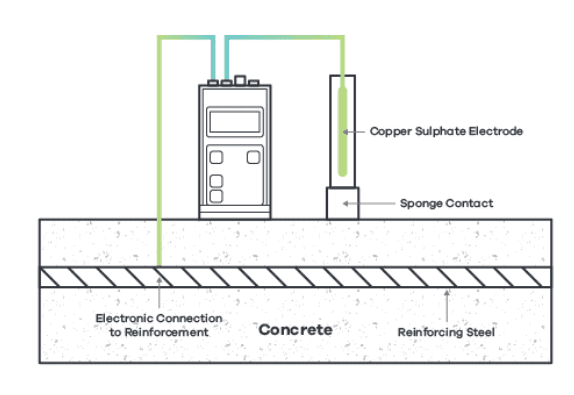
Half Cell Potential consists of measuring the difference potential between a reference electrode (the half cell) and the rebar network present in the concrete.
This is relevant to a corrosion study because the electrochemical reaction leading to rust involves the exchange of electrons and the movement of positive ions. This reaction creates a current on the surface of the steel reinforcement.
By connecting the metal to a reference electrode with a known potential, we can measure the potential difference (voltage) and evaluate the probability of corrosion in the structure
Applications of Half Cell Potential
The test is cost-effective and can be used in any concrete structure where a connection point to the rebar network is possible.
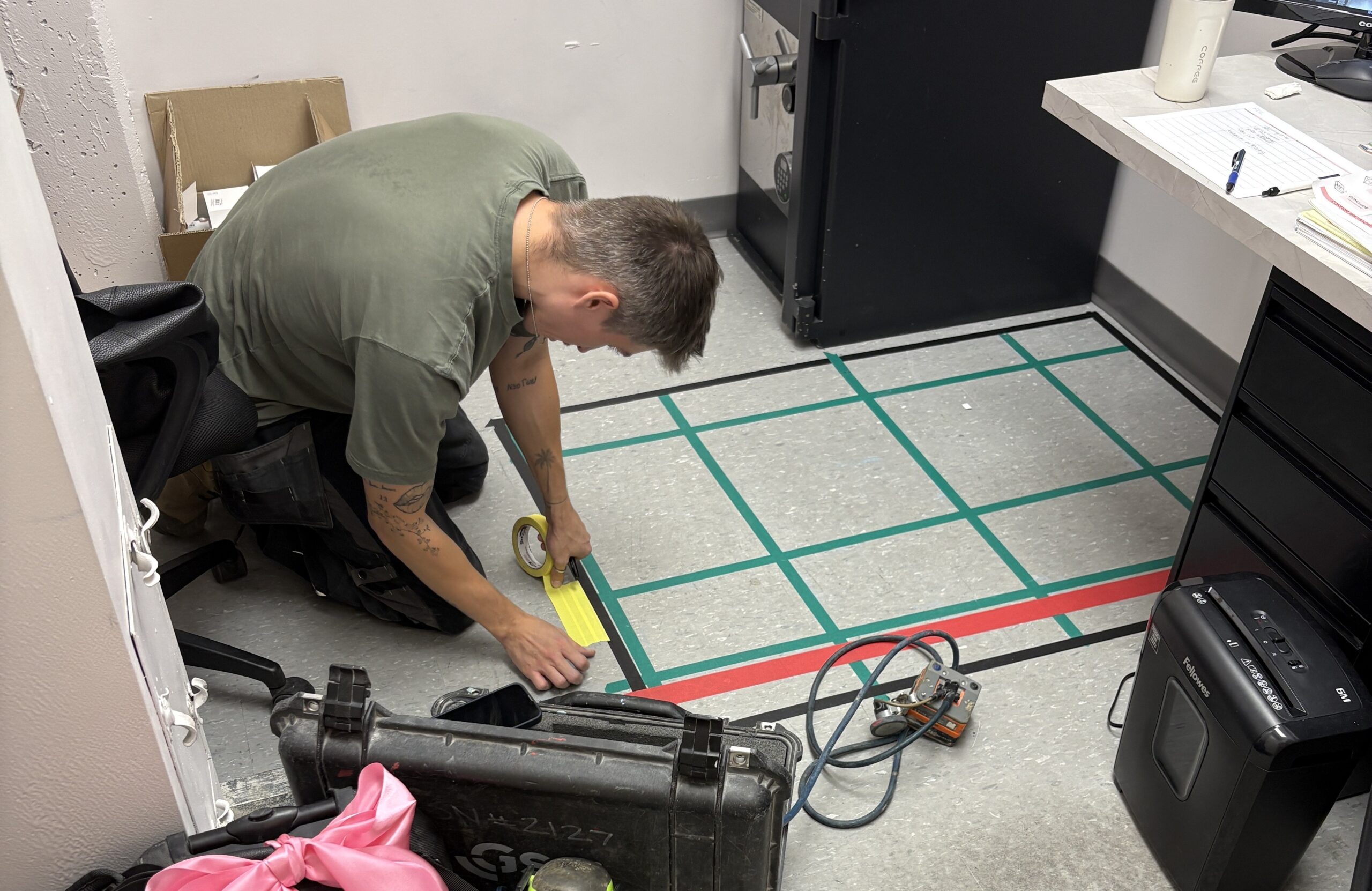
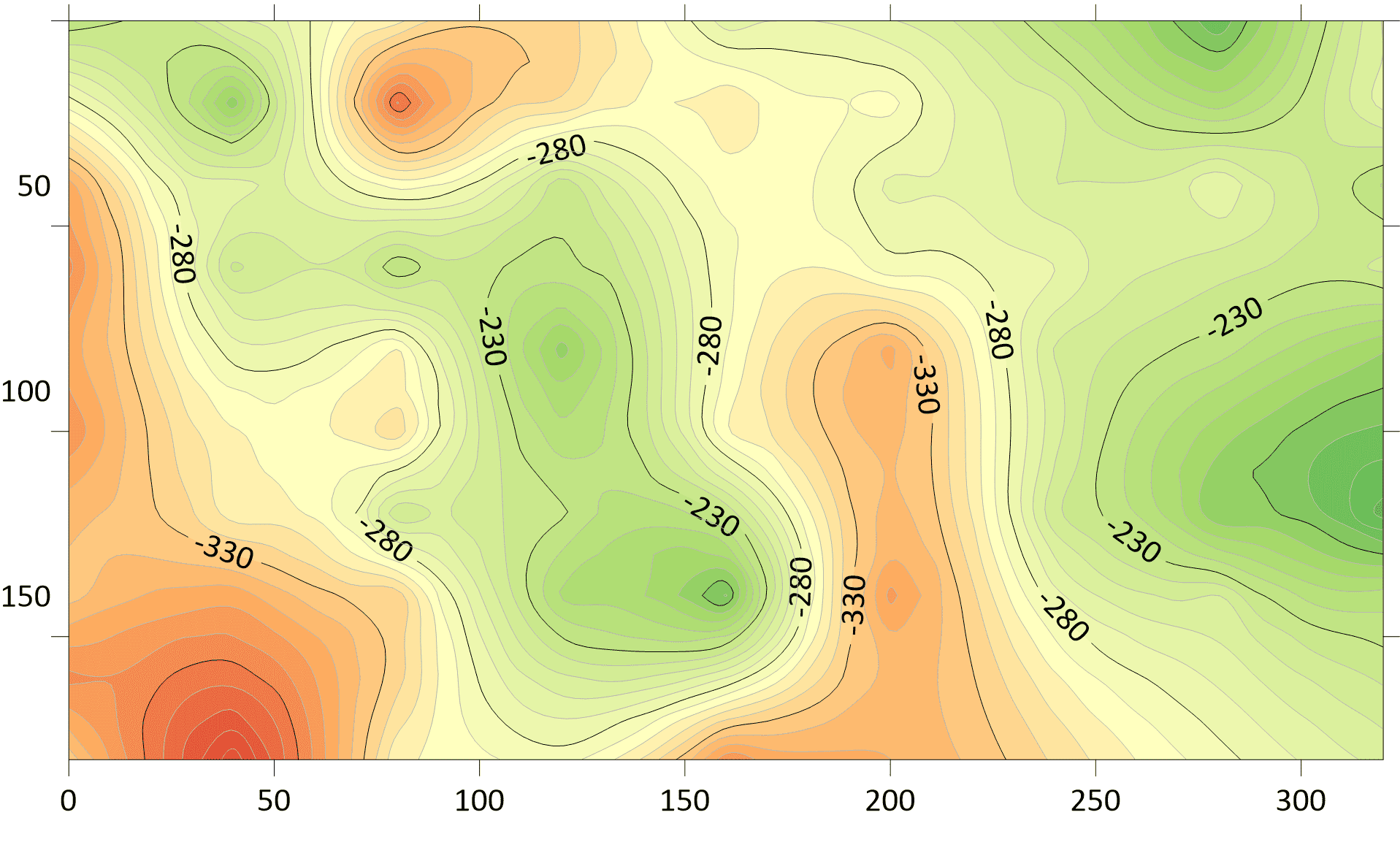
The reference electrode which consists of a metal rod encapsulated within a saturated solution is connected to the exposed rebar via a voltmeter. The electrode is then moved around the concrete surface in a predetermined grid pattern. At each location, the value of half cell potential is recorded with accuracy. After the measurements have been adjusted for environmental variations, the results are presented in a contour map format. The map shows the gradient of the half cell potential values and can easily be interpreted.
The Standard Test Method is described in the publication ASTM C876 – 15. This survey provides a standardized outcome and can deliver fast results. It is best suited for concrete structures such as parkades, concrete piers, docks, and tunnels.
Since the result of the Half Cell Potential measurement may be misleading (e.g. improper connection to the rebar network, delamination, water-saturated concrete, low temperatures, etc.) we are typically using it as a complementary method to Xradar’s computer-assisted corrosion analysis technique.
Summary
In summary, Half Cell Potential is an efficient tool and part of Xradar’s Concrete Corrosion Mapping service.
The ASTM C876 standard describes the proper methodology of data collection and interpretation. The data collection is cost-effective and the resulting intuitive contour maps are easy to interpret.
The survey maps out the corrosion-activity of the reinforcement in a reinforced concrete structure.
If you’d like to learn more about how Xradar use these methods to report on concrete corrosion, or any of our other services, then please get in touch.