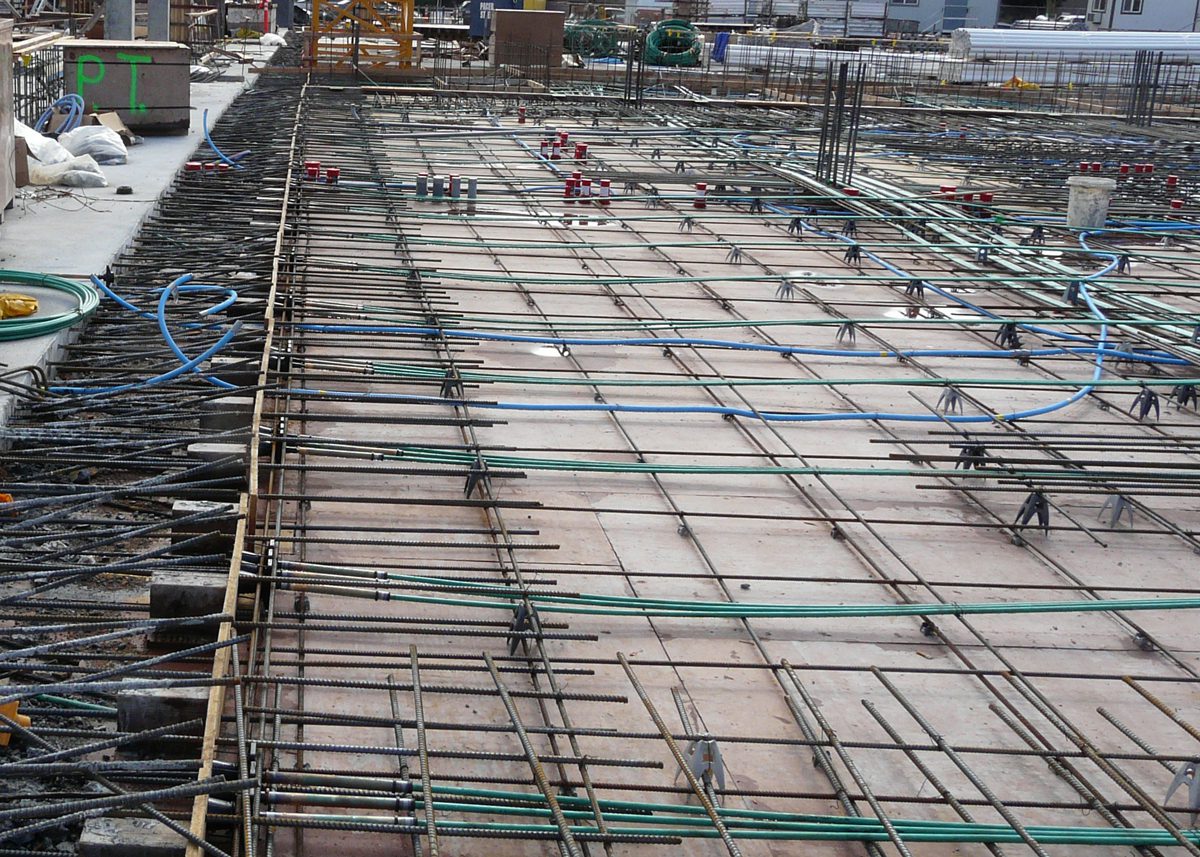
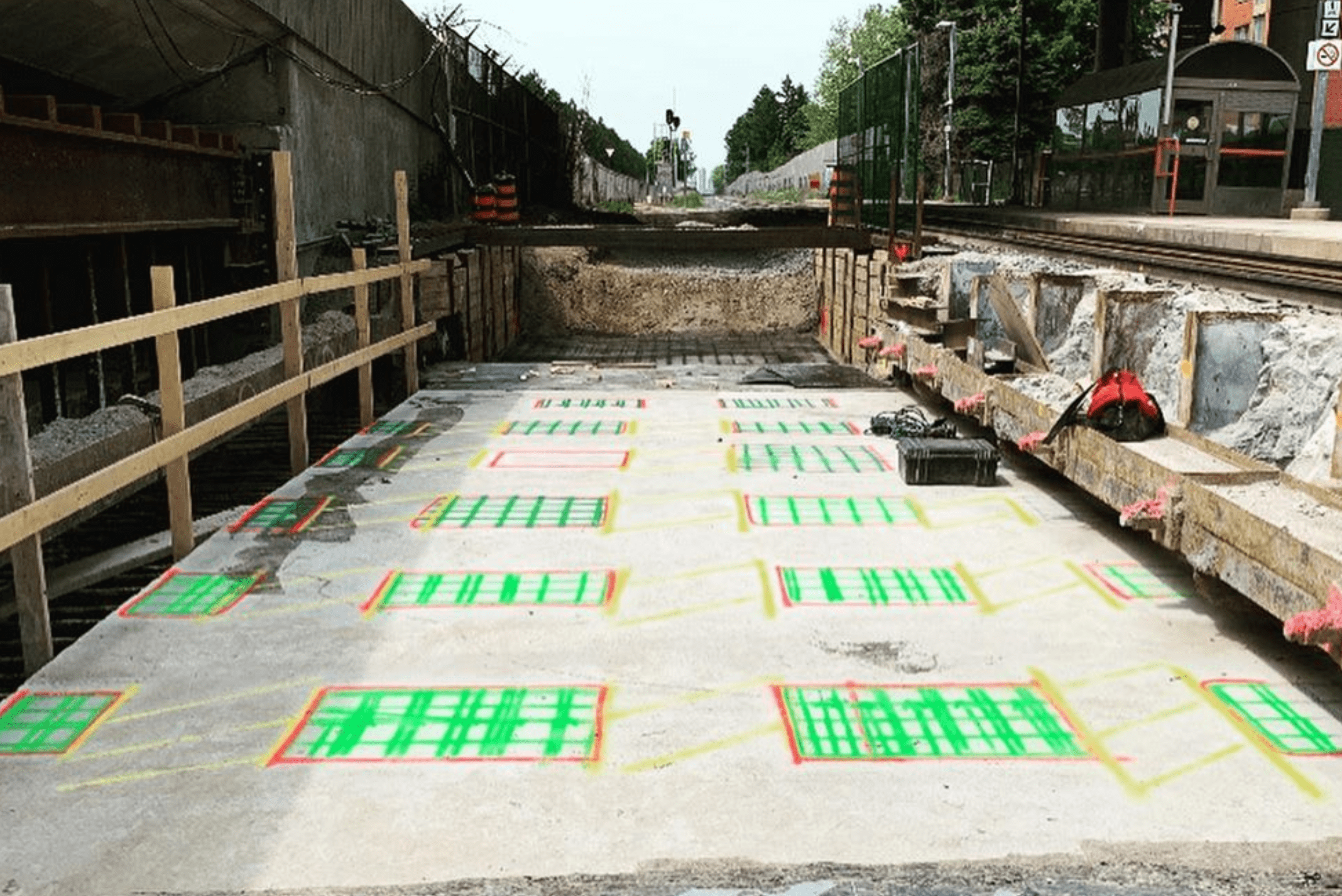
When scanning a slab, the detectability of the bottom or base of the slab depends on the underlying material and the amount of steel within. Using GPR it is easier to locate the base when a contrasting material such as water, air or metal is below, due to the stronger response from the waves. The issue comes when the underlying material does not produce this response.
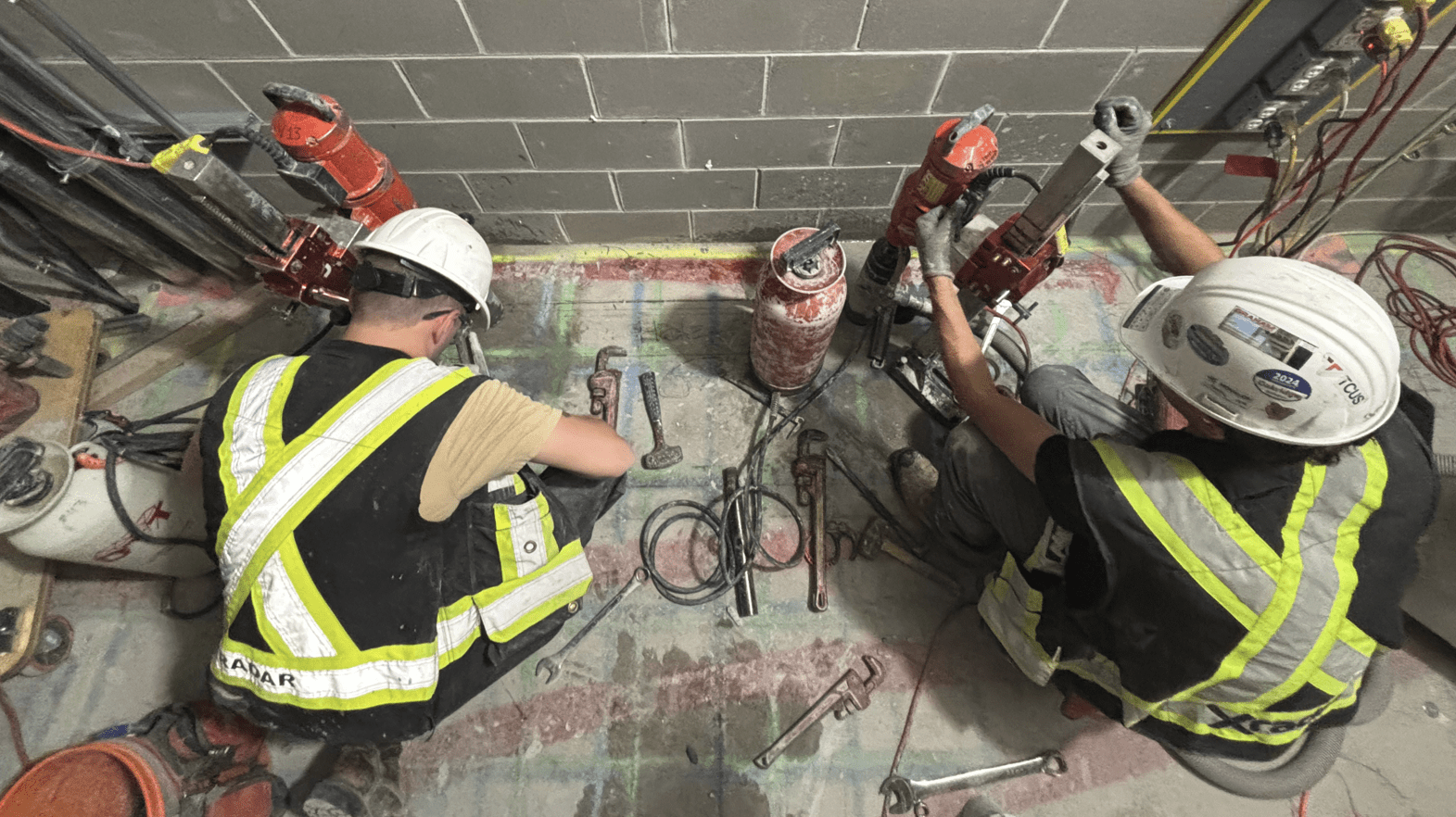
Along with detecting the location of subsurface obstructions, scanning a concrete slab provides the contractor with information about which cutting and coring tools to utilize, providing accurate quoting and increased safety.
The challenge with slab-on-grade
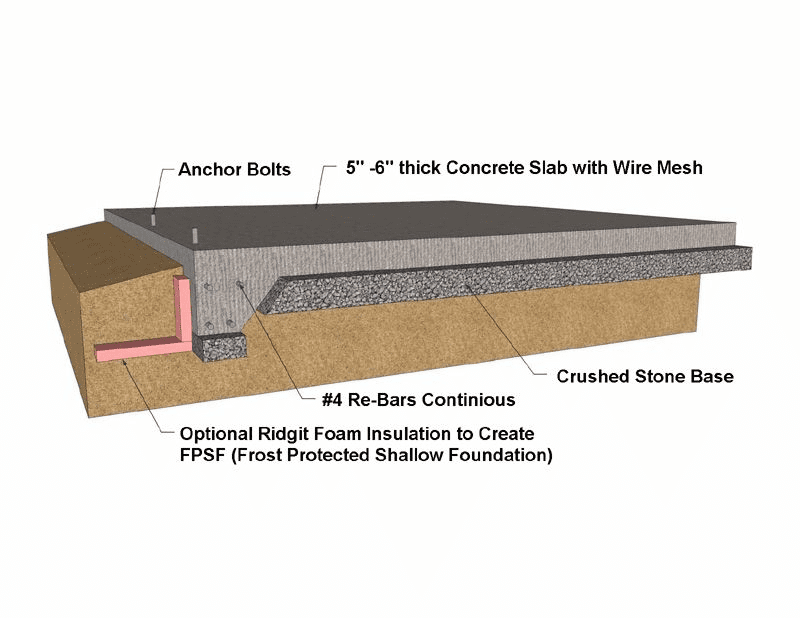
With slab-on-grade the bottom layer is often very weak or lays on a variety of different base materials, making it very difficult to determine the depth of the slab or obtain an accurate reading. As a result conventional GPR methods are often unreliable, especially without an experienced technician.
In these situations it’s important to utilize the best methods, including hiring a skilled technician, otherwise you risk damaging objects below the subsurface, compromising the slab, and delaying the progress of your project while increasing the cost.
The advantages of Xradar™ concrete scanning
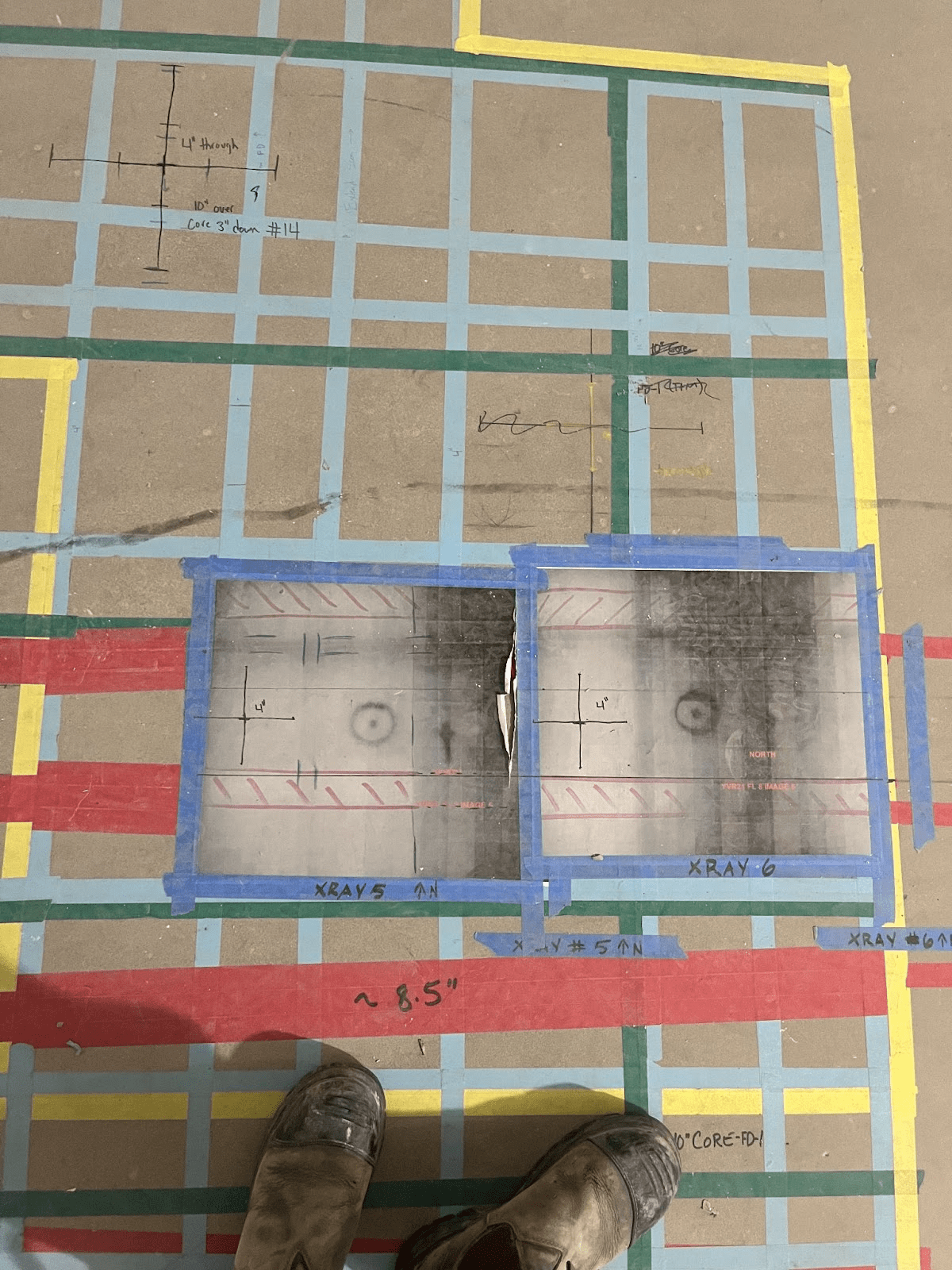
Xradar™ is a form of scanning that allows you to view many objects that remain hidden through conventional GPR Scanning. Xradar™ can “see” through wire mesh, distinguish between electrical conduits, radiant heating lines, P.T cables and steel reinforcement (rebar).
When it comes to slab-on-grade it is also has the ability to accurately measure the depth of the slab and determine where the base is, making it the ideal solution for scanning complex concrete slabs. In addition we are able to detect shallow utilities that lie in the grade and sub grade, which are usually too small and shallow to find with conventional utility locating!
This service is both efficient and accurate, reducing scanning errors to less than 1%, compared to the 25% typical for the scanning industry. Unlike GPR it is also regulated, with only trained Xradar™ technicians allowed to deliver the service.
For more information on how Xradar™ can save you time and money on your project, get in touch with one of our experts.