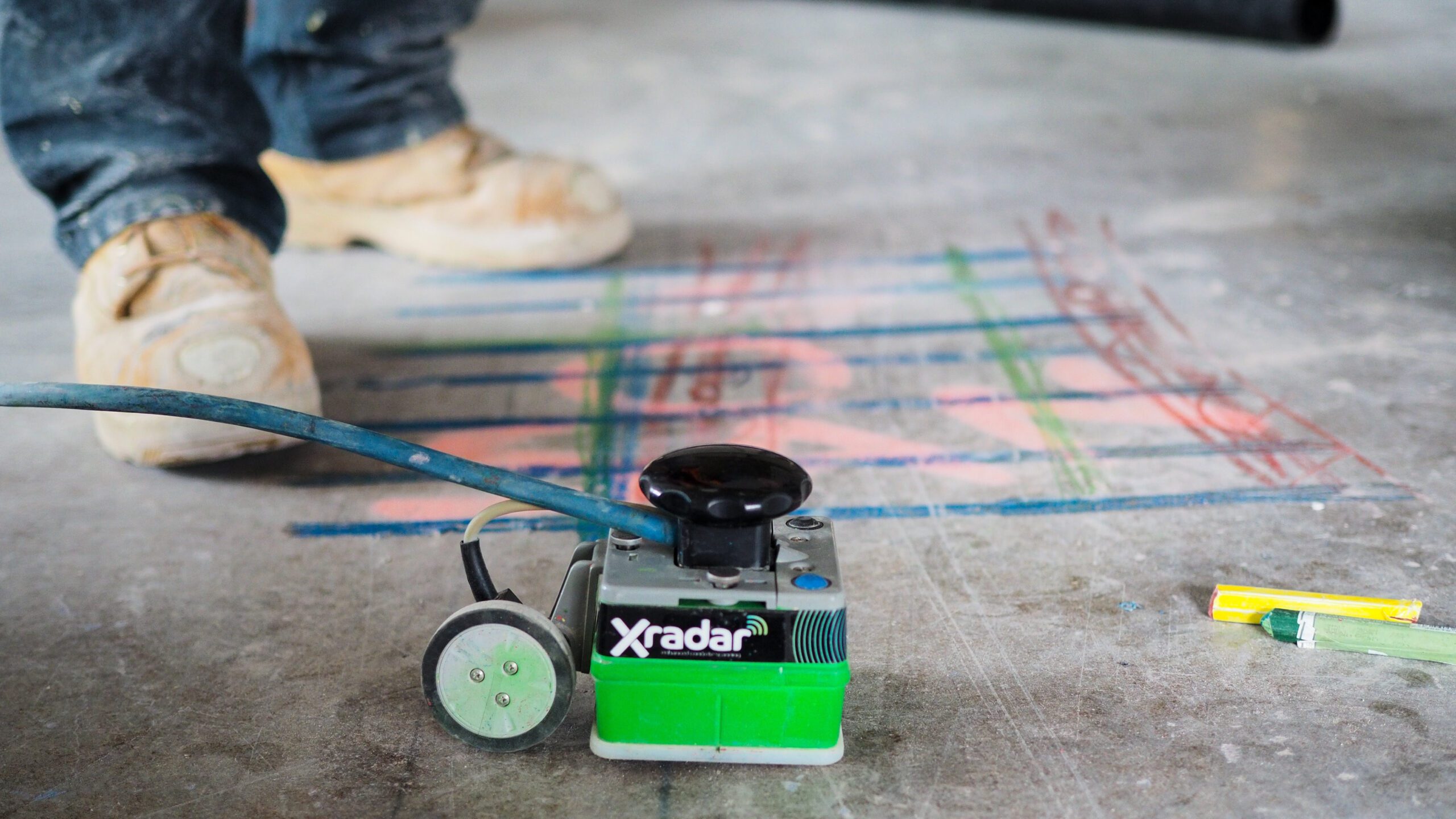
It’s a common occurrence.
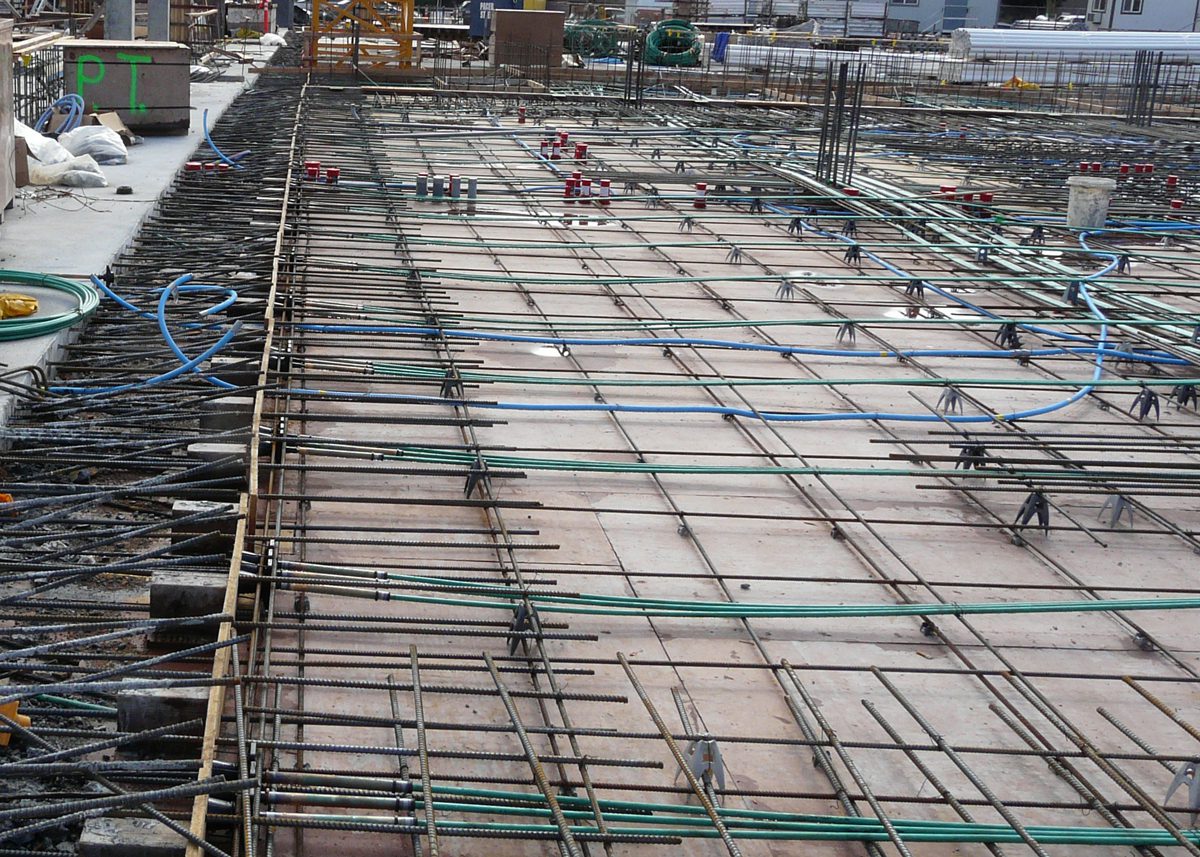
Recently, we received a call from a potential (now a repeat) client. They were told that they had to X-ray the slab because the location in question was too heavy with steel and had multiple conduits making it too complex to scan using regular GPR.
Knowing that this was just not the case, we engaged the client further, in order to find out where this recommendation was coming from as there simply are no instances where X-ray is the only solution.
After a quick chat, we found out this was the recommendation from a “professional” GPR technician. This is something we see on a weekly basis. The concrete scanning industry is unregulated and leads to unskilled and untrained operators on site. Currently one can purchase equipment and attend a 2-day manufacturers training course and become a “concrete scanning technician”.
To contrast that, to become trained in the use of Xradar a form of enhanced GPR, it takes approximately nine months to one year to train each Xradar technician.
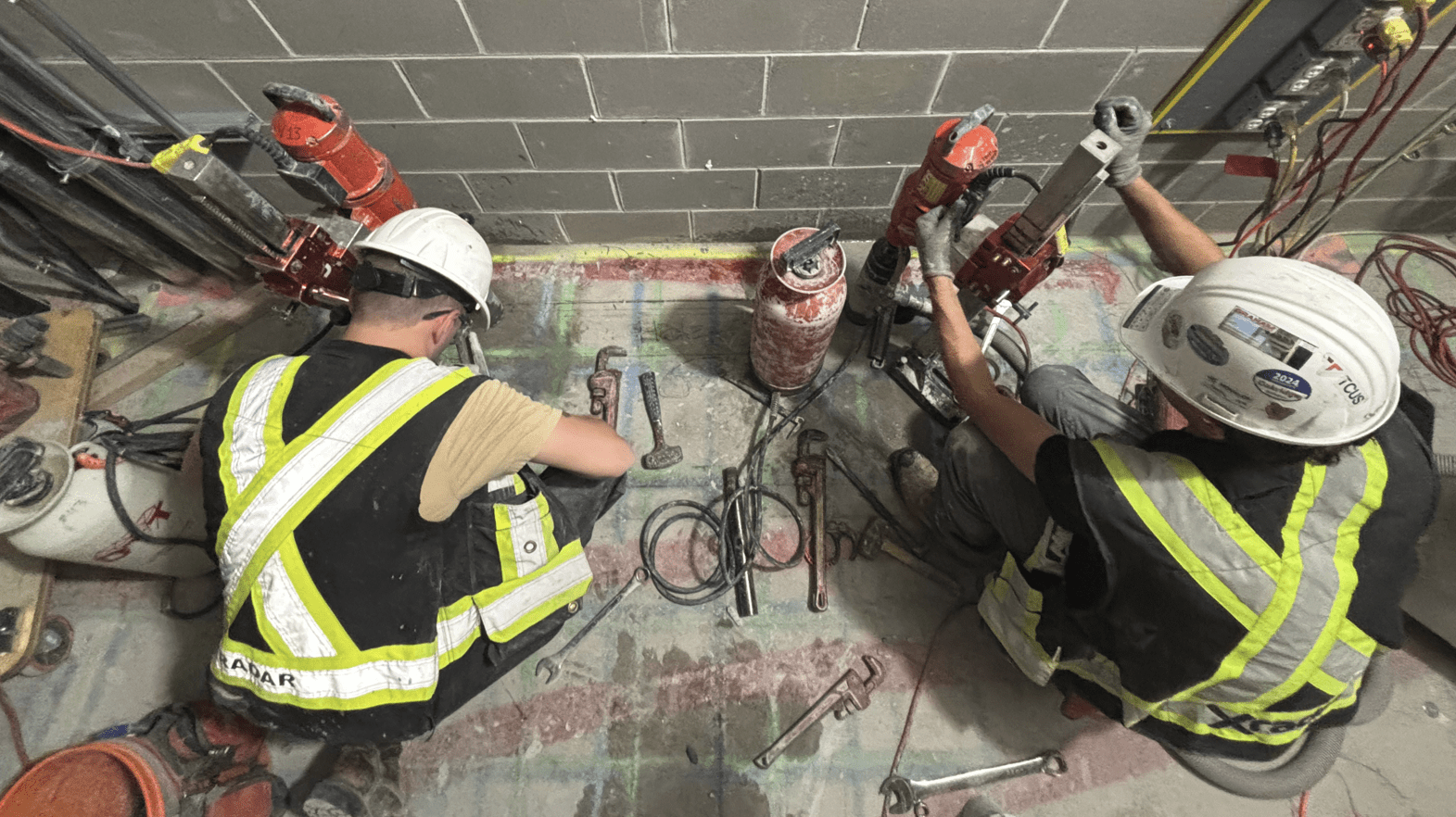
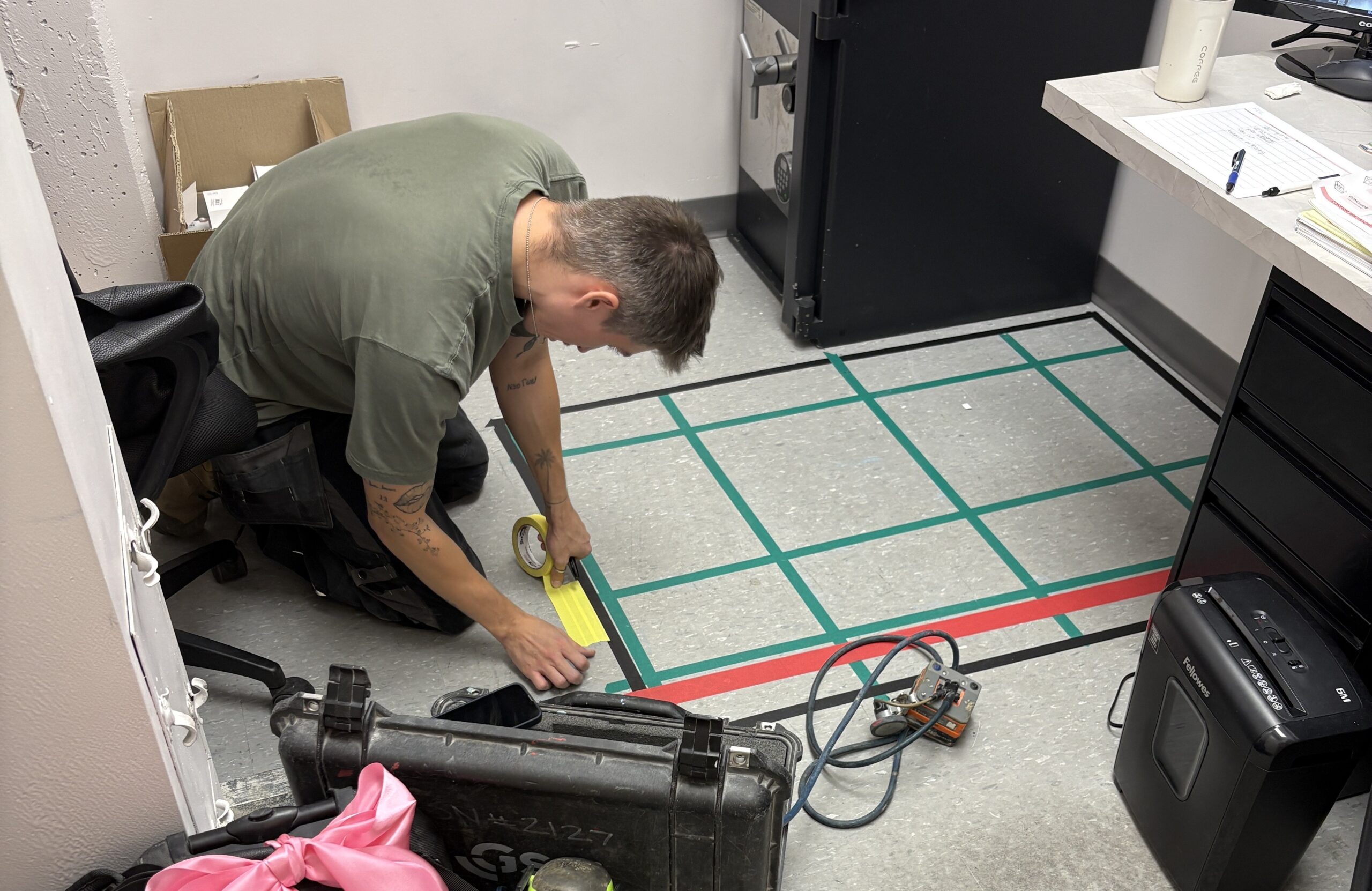
Upon arrival to site, this is what we saw!
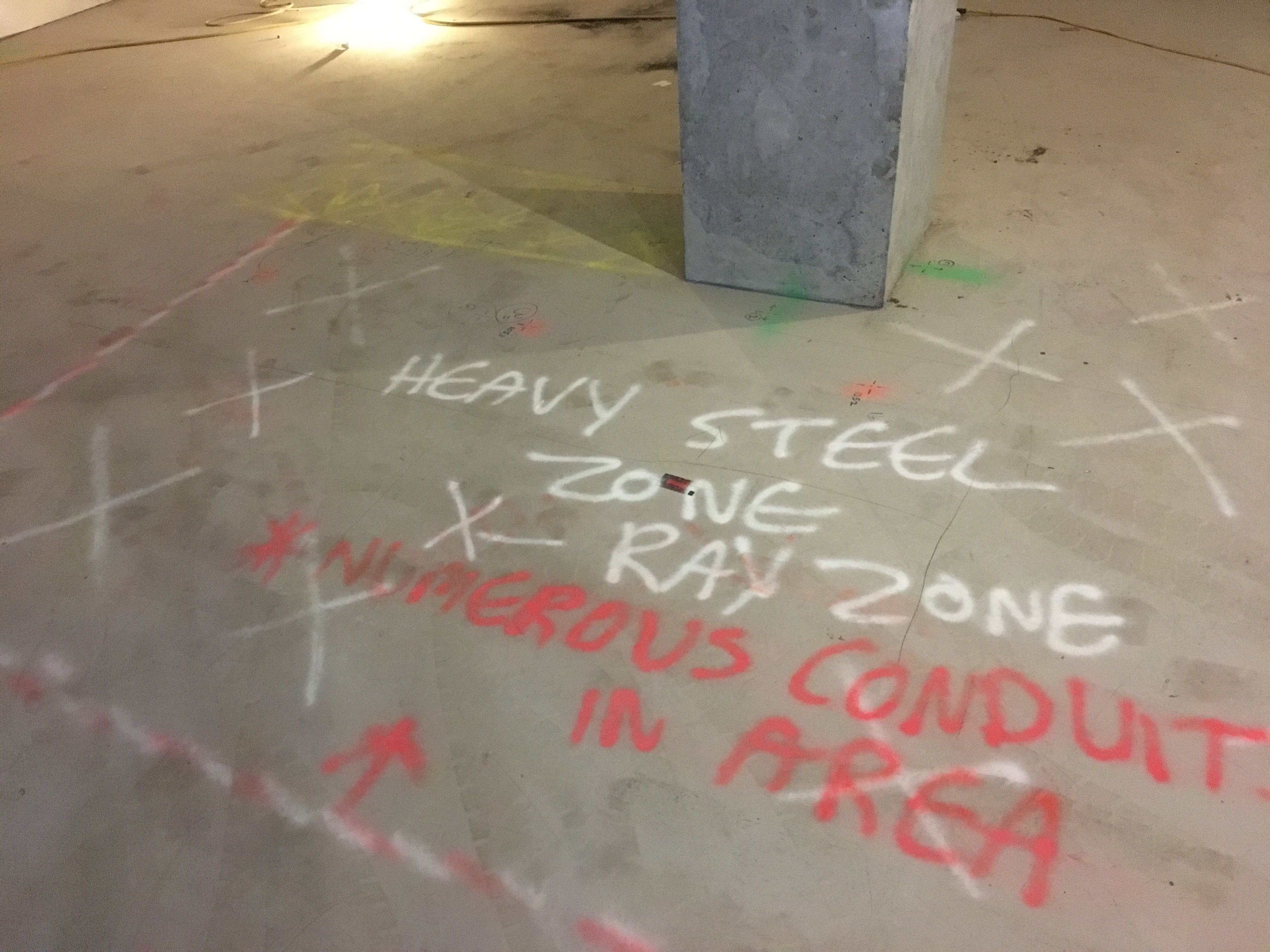
Xradar
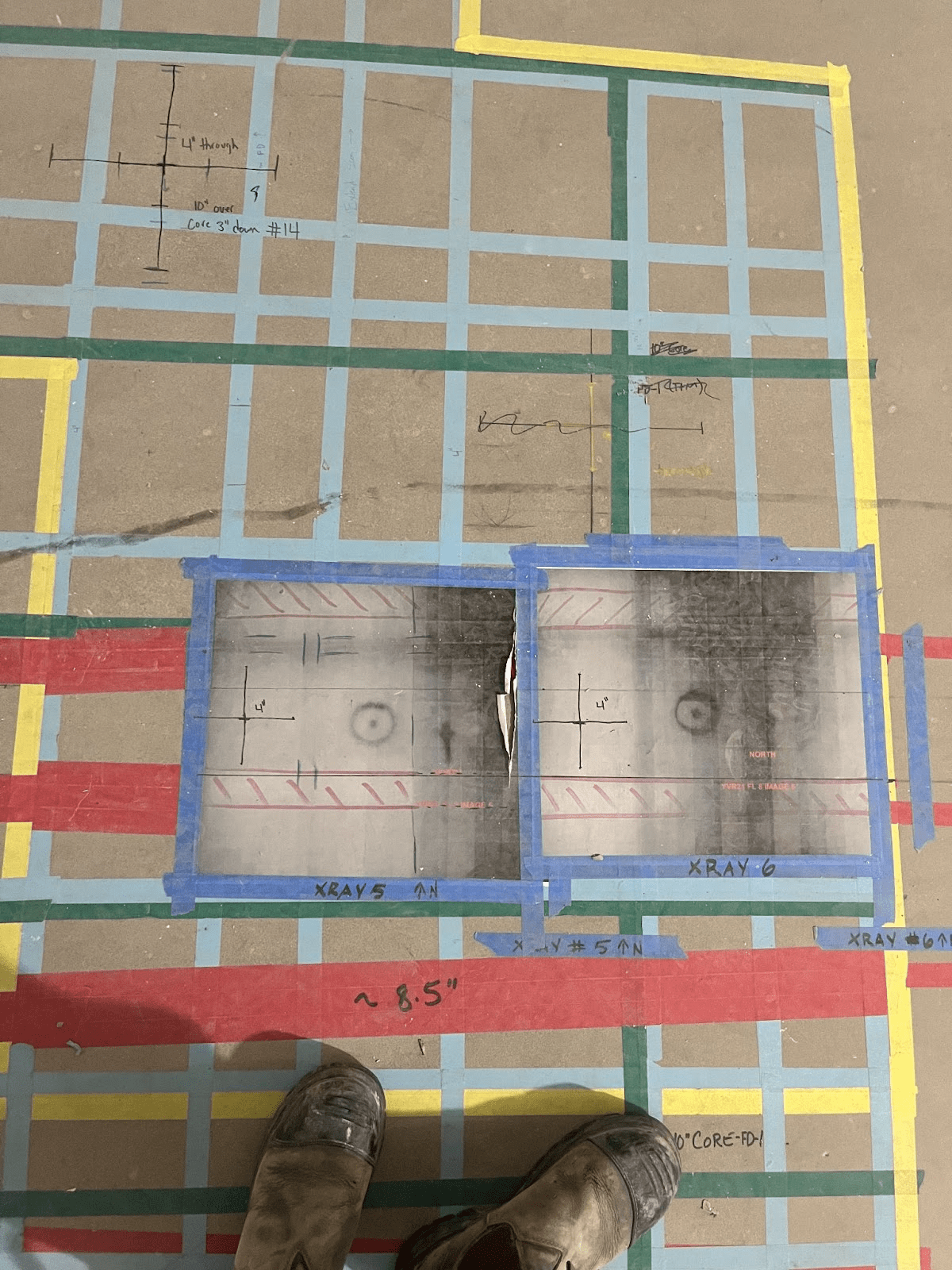
We arrived to site and began scanning, noticing straight away that the recommendation that you “must X-ray” was incorrect. Note the completed Xradar scan below, it has relatively dense steel at the top (Green) but the difference is Xradar could “see past” this first layer of steel to image what was below.
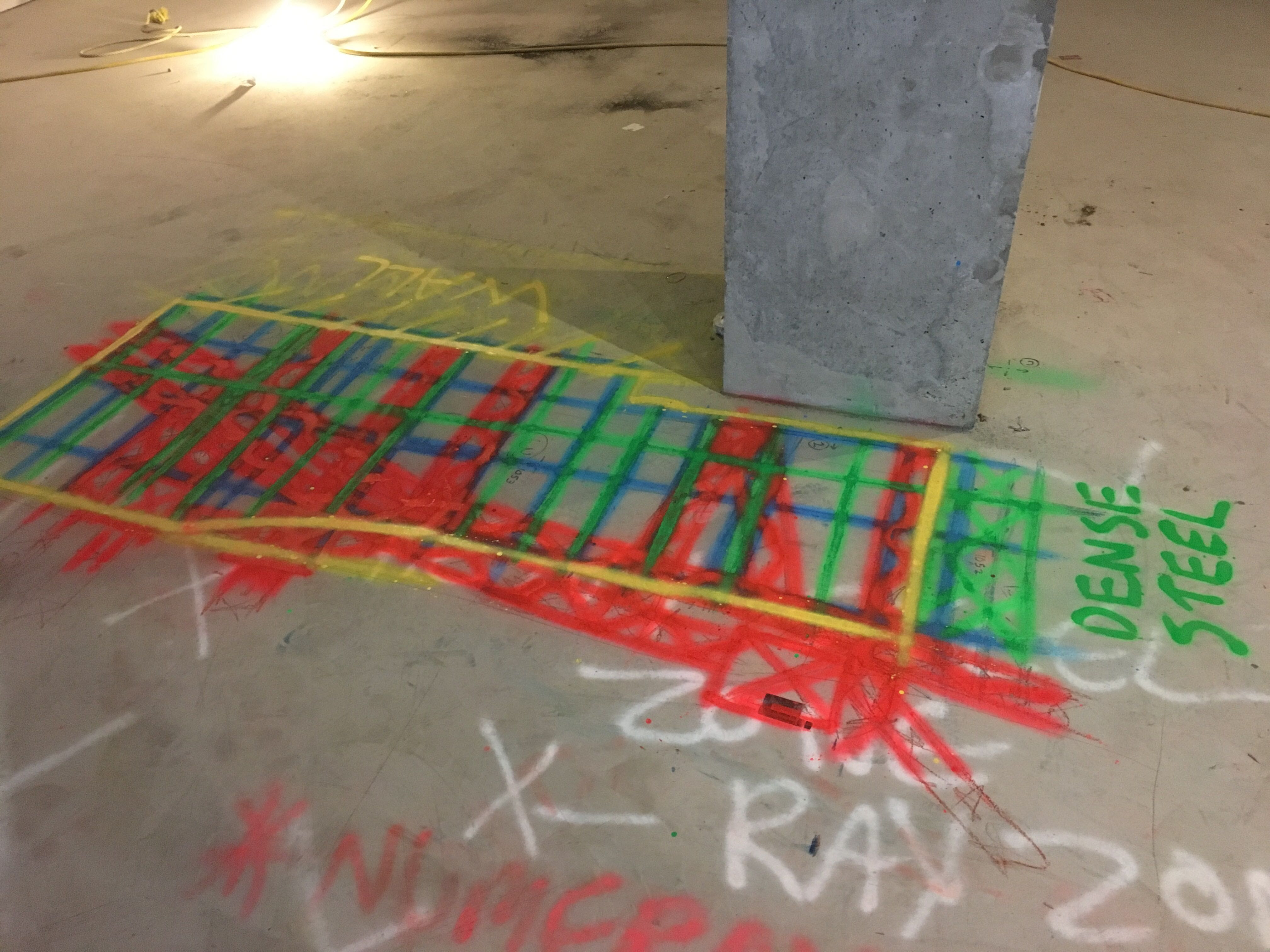
Do I have to X-ray?
No! X-ray is not the only solution when it comes to scanning concrete. Time and time again, using Xradar we have overcome suggestions of X-ray, whether that be from documents, engineers or untrained Regular GPR operators and provide our clients with the complete image of all embedded objects.
Common constraints of X-ray
- Hazardous and requires evacuation
- Slow (30 – 45 minutes per location)
- Inefficient (single fixed locations)
- Maximum depth penetration of 12-14″
- Not suitable for slab-on-grade (needs access to both sides of the slab)
- Cannot provide depth of targets
- Parallax and transferral errors (commonly laid out incorrectly)
Have you seen similar situations?
The next time you are told you “must X-ray”, give Xradar a call.