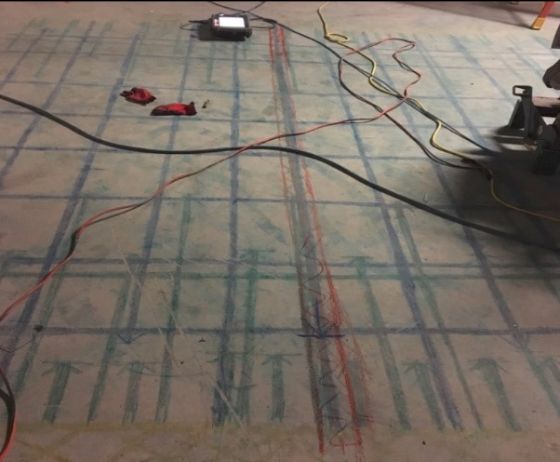
There are conduits somewhere!
Metal Conduits
The use of metal conduits within slabs was common practice in construction prior to the 90’s until changes in the building code and the availability of other materials came into play.
Many existing buildings, now undergoing tenant improvements must deal with the unique challenges posed by metal conduits. For example, the two main challenges are; how they behave in the slab, and the signal they produce in non-destructive testing methods.
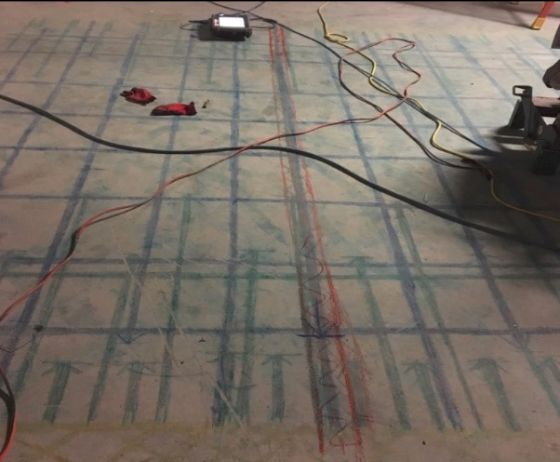
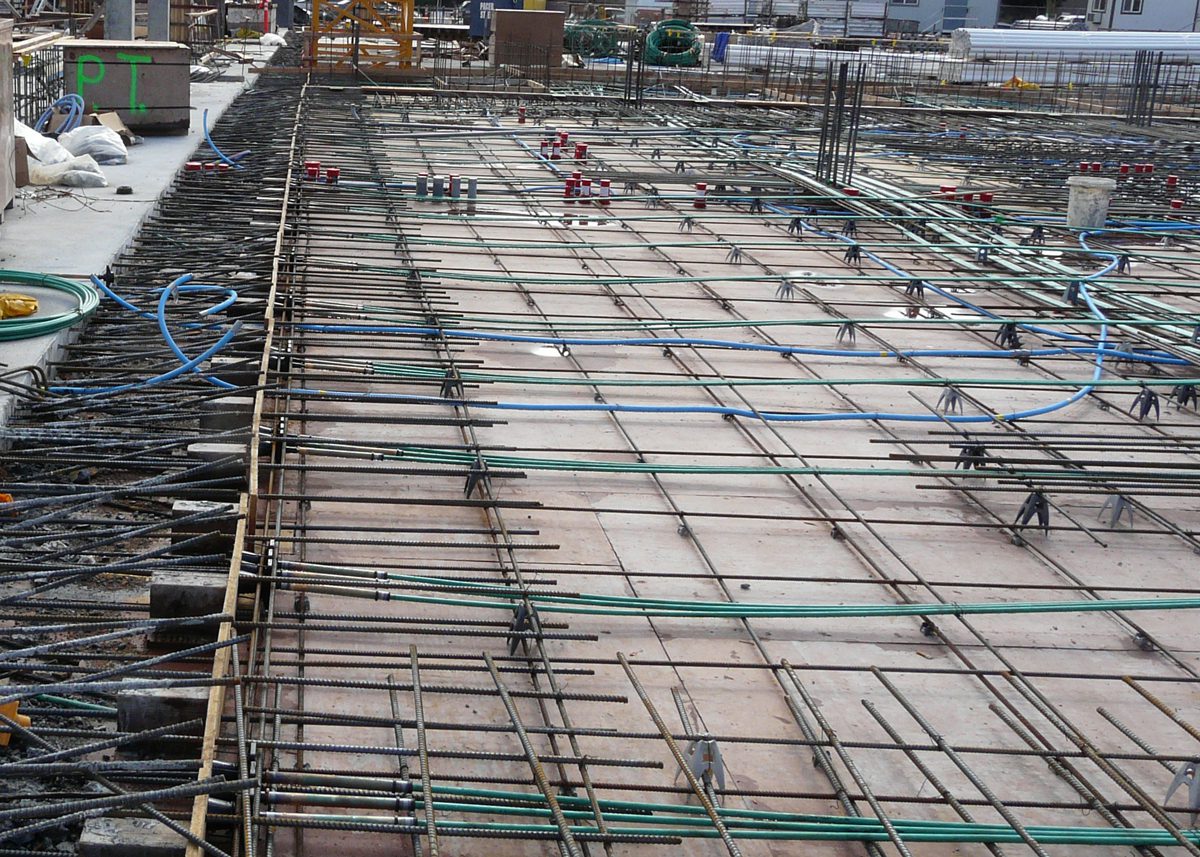
To keep conduits in position during the concrete pour they are tied to pieces of rebar in several locations. Metal conduits are rigid and therefore often run in straight lines, this often results in them falling into the established rebar pattern. Plastic conduits behave differently, they are more flexible and can curve and bend through a slab. Targets that are anomalous to the rebar pattern are more easily identified.
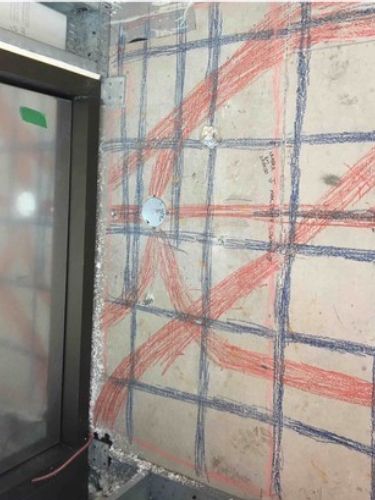
Identifying embedded targets
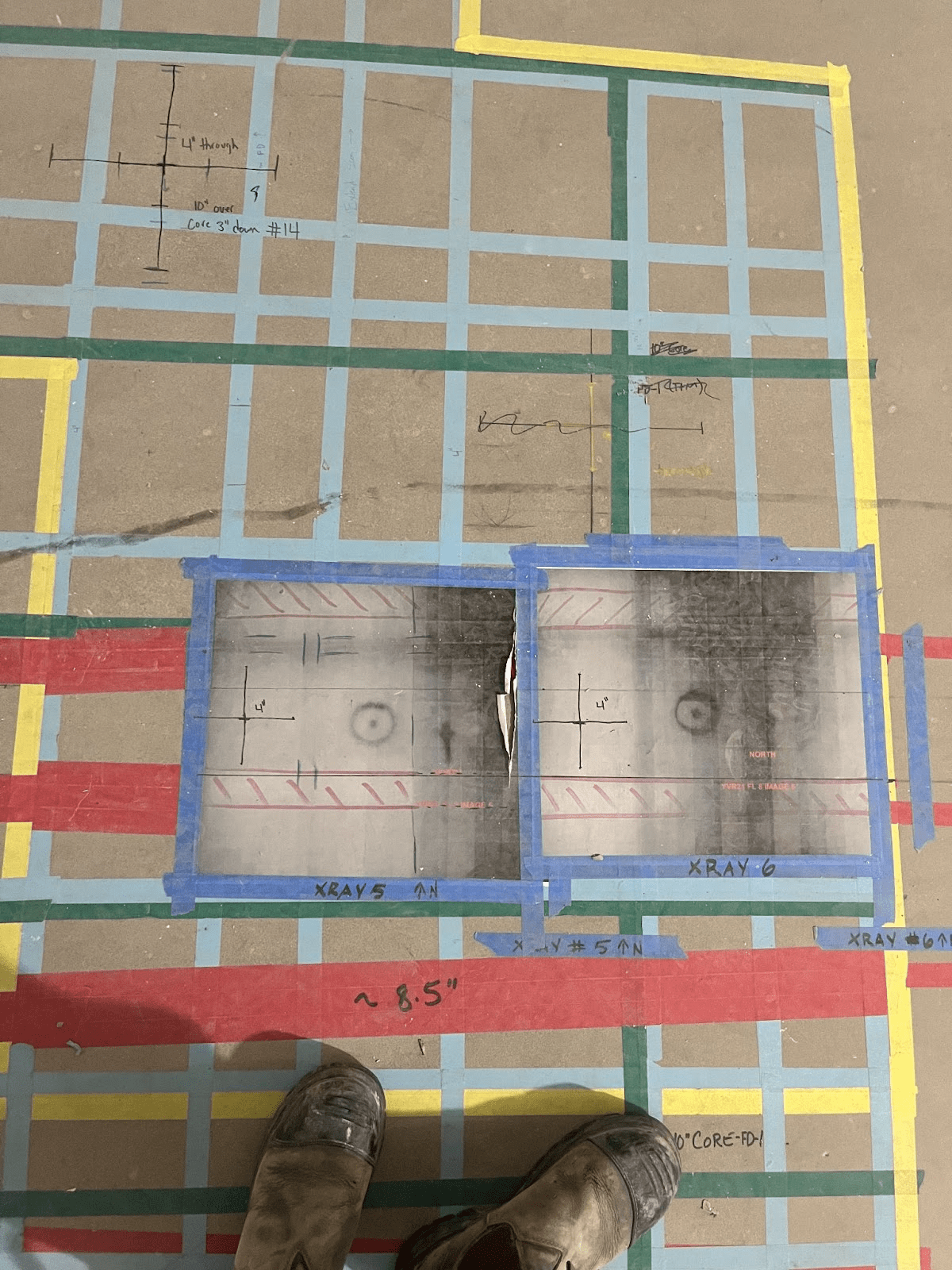
Non-destructive methods for locating in slab targets, including GPR and Xradar work by producing an Electromagnetic (EM) pulse into the slab. The pulse travels through the concrete until it meets a target made up of a specific material, like for instance, a metal or plastic conduit.
This change in material properties causes the pulse to be reflected towards the receiver. The amplitude and phase of this reflection is directly related to the difference in properties between the two materials. As a result, targets made of the same fundamental materials will produce the same signal in the data. i.e. all metal targets, including rebar and metal conduits, will create the same signal whereas plastic targets are easily distinguishable from metal targets as they are made up of different materials and thus produce reflections out of phase from one another.
Having skilled technicians is crucial
Unfortunately the concrete scanning industry is unregulated. Anyone can buy a piece of equipment, attend a manufacturer’s training course and become a “Concrete Scanner”. In reality, it’s just not that simple. At Xradar each technician undergoes an extensive training programme that typically lasts 9 months to 1 year in duration. It’s a stark contrast to the 2-3 days training course offered by manufacturers, but this kind of training is key to ensuring you have a skilled technician on your site.
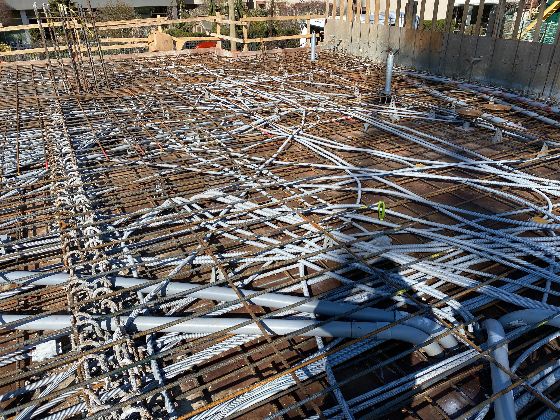
Pre-Pour Documentation
Something that can help a concrete scanning technician in their day to day battle is good pre-pour documentation. Unfortunately, this is often lacking.
Current methods of taking pictures are inherently flawed due to a number of factors including;
- Photos are often taken at bad angles
- Photos often miss complete sections of a slab
- Photos lack spatial reference & a sense of depth
Thankfully as advances in technology have quickly seeped into the construction industry there are solutions to ensure a more all-encompassing service is available.

One such service is offered by VUIT a sister company of Xradar. VUIT (pronounced view-it) was born out of the frustration our technicians faced on-site when relying upon photos to assist their scanning. We figured there had to be a better way to offer accurate documentation to a building owner/manager as well as aid trades & engineers on-site.
Click & explore VUIT’s Sitewalk 360 Virtual Tour & see the advantages of this type of technology-driven approach to solving documentation issues.
Got a new upcoming project?
Give us a call to get your free quotation for VUIT’s Pre-Pour service.