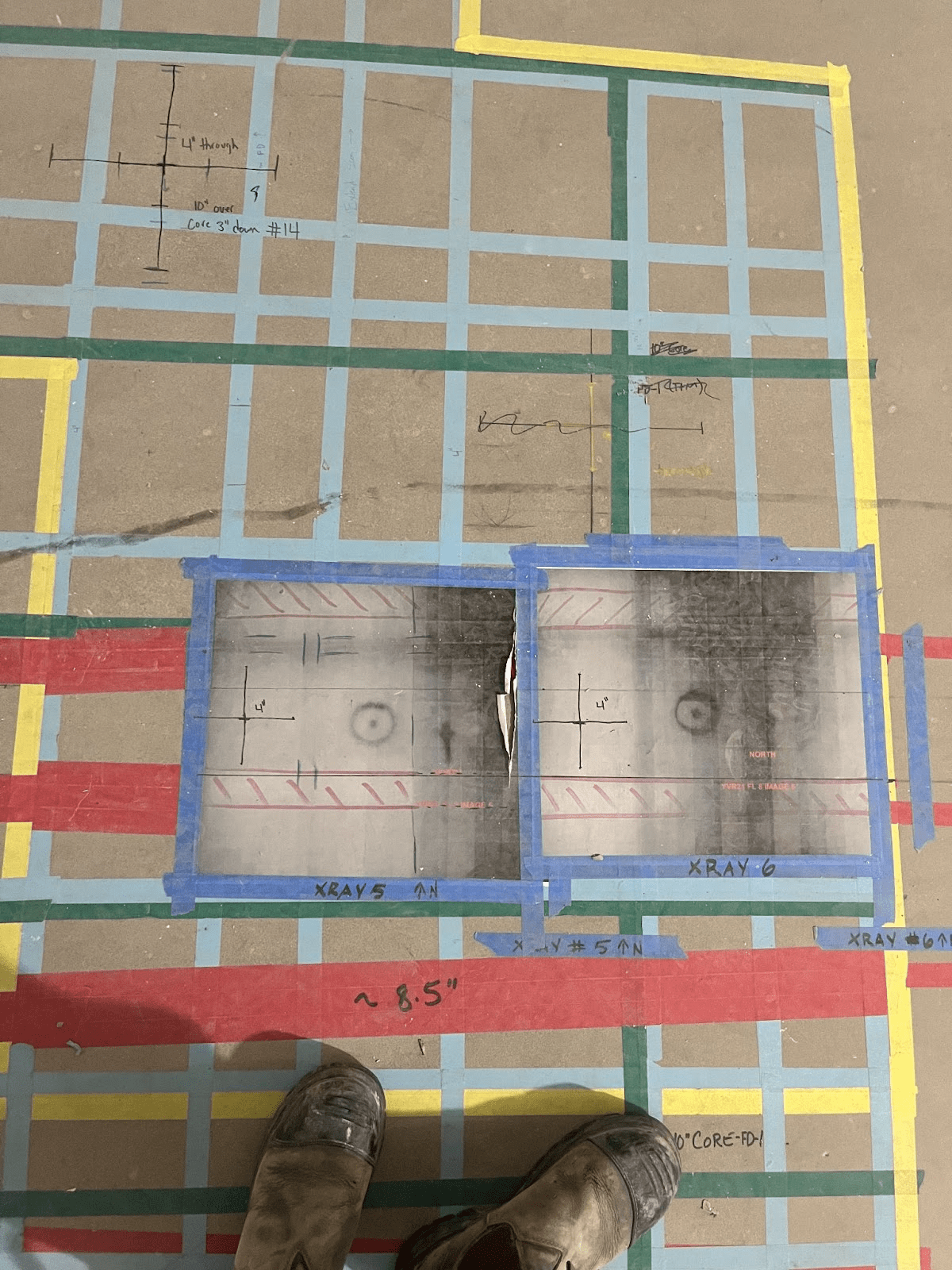

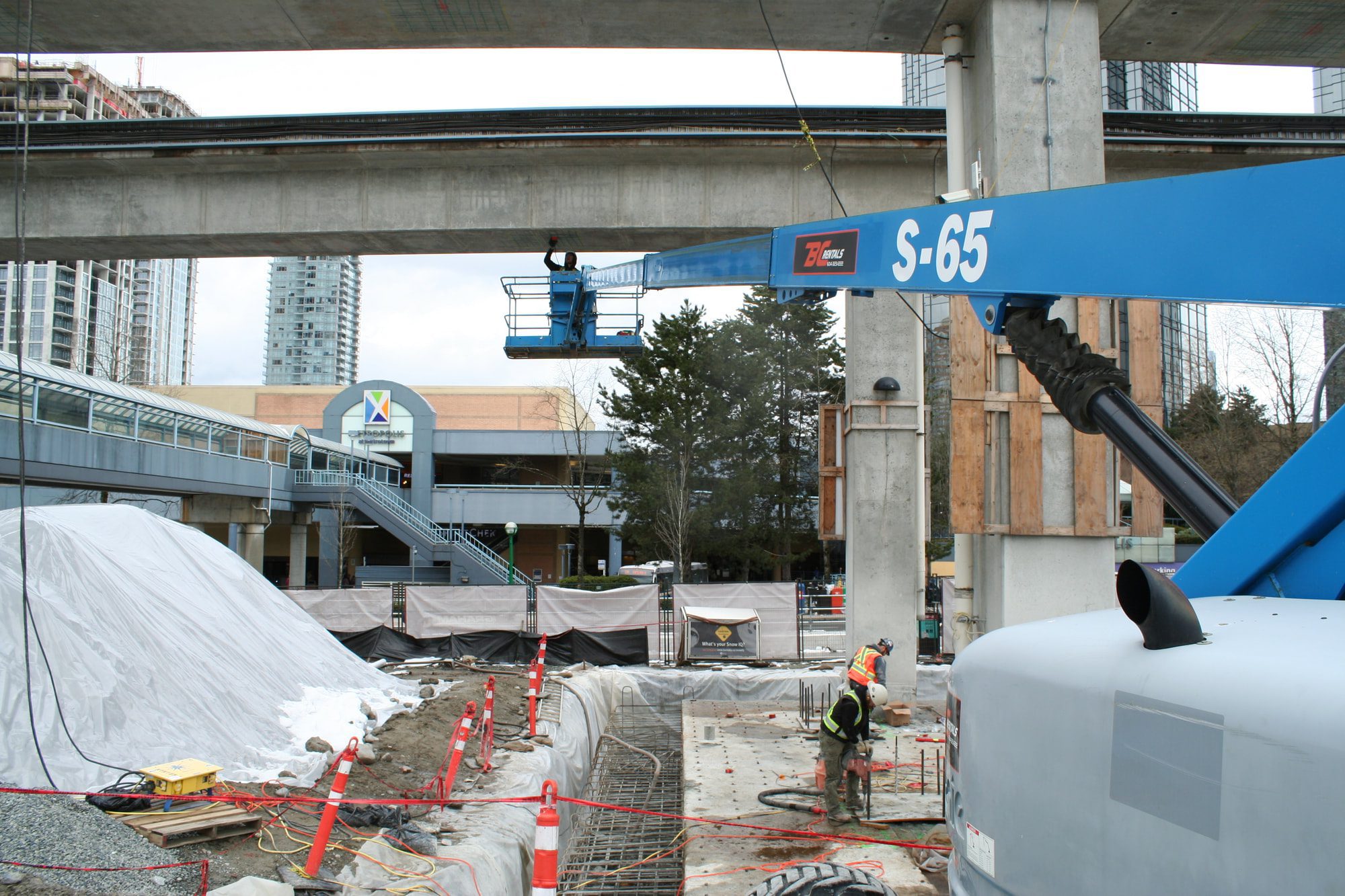
These scenarios require the use of ultrasonic non-destructive testing (NDT) such as Concrete Ultrasound.
What is a large concrete structure?
A large concrete structure is an area that is too thick or large for regular GPR and Xradar scanning, so requires a different type of scan.
These areas include slabs, beams, columns, and walls. These areas are too large to be surveyed by regular means and often require more detailed reports to showcase accurate data such as carry capacity and thickness, along with reports and drawings of rebar locations, cover measurements, and diameters.
Examples of large concrete structures are bridges, structural columns, parking lots, and buildings with thick concrete slabs and walls.
Why do you need concrete scanning?
Concrete scanning is used to detect and map hidden objects beneath the surface such as rebar and conduits. When it comes to larger concrete structures, one of the main applications of scanning is the detection of voids, along with detecting any pre-stressed tendons, conduits and other partially hollow objects.
The advantage of structural scanning is its ability to detect objects within concrete to considerable depth. Our technicians can accurately collect data up to 2.5m, even within reinforced concrete.
Further, these methods can be used through dense surface rebar mat, or other heavily reinforced structures that would normally interfere with conventional GPR.
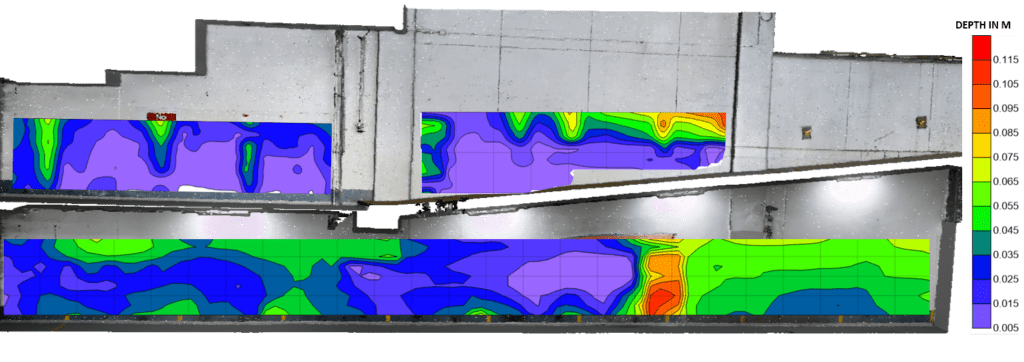
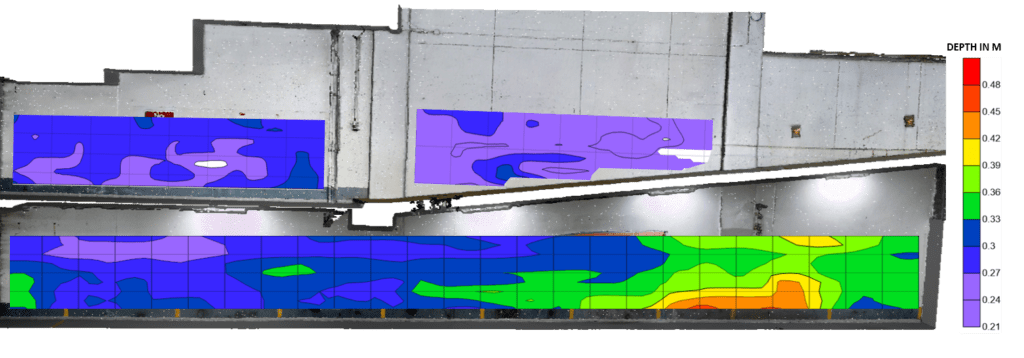
Methods for concrete structural surveys
Manufactured in Russia, the equipment we use is the MIRA tomography by ACSYS. This is the most advanced instrument of its kind today.
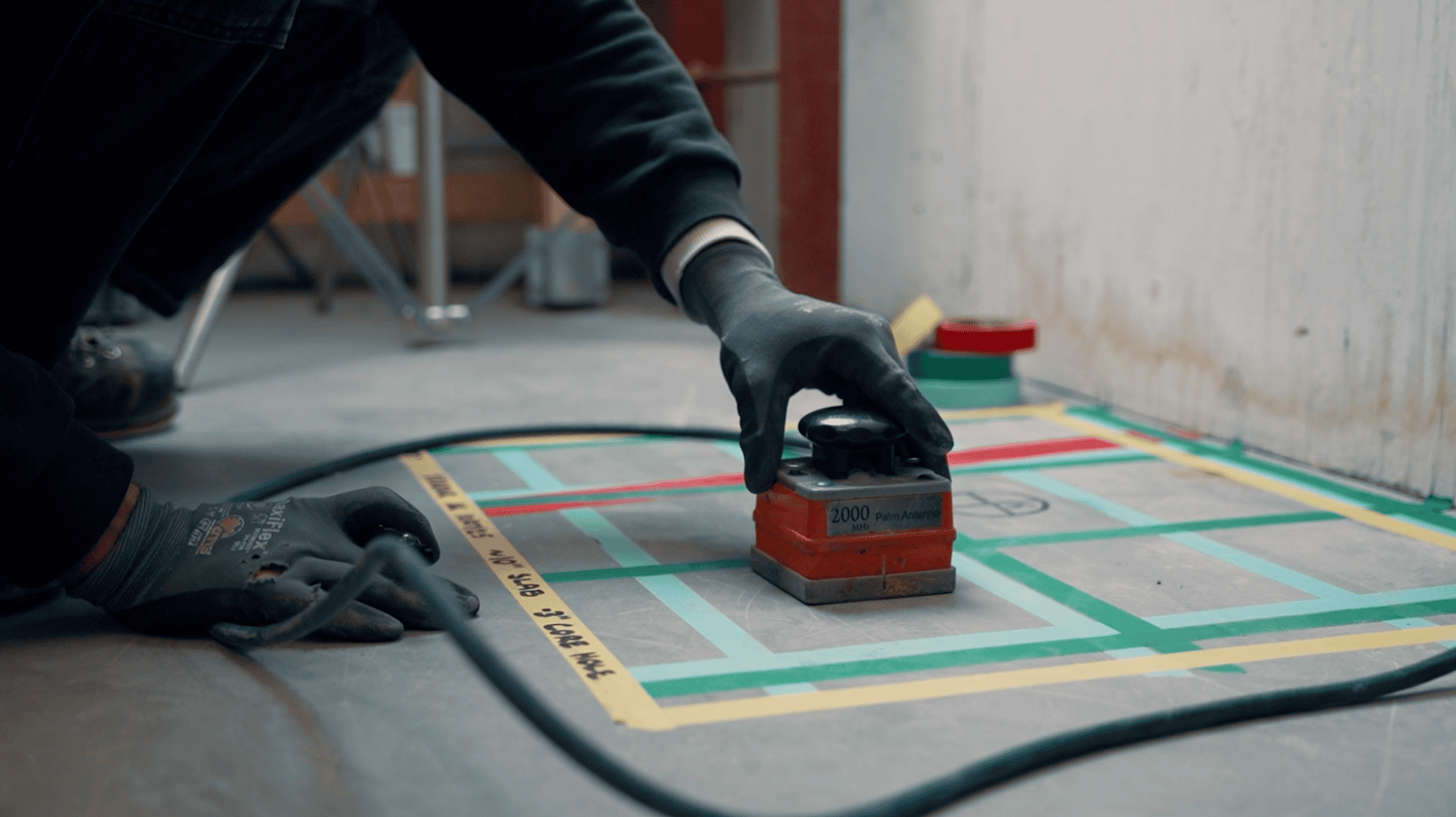
The scanner works by sending a short pulse through the concrete, produced by hitting the surface with a small metal object. The instrument then records the shear wave reflections and produces a two dimensional array of transducers then generate an image.
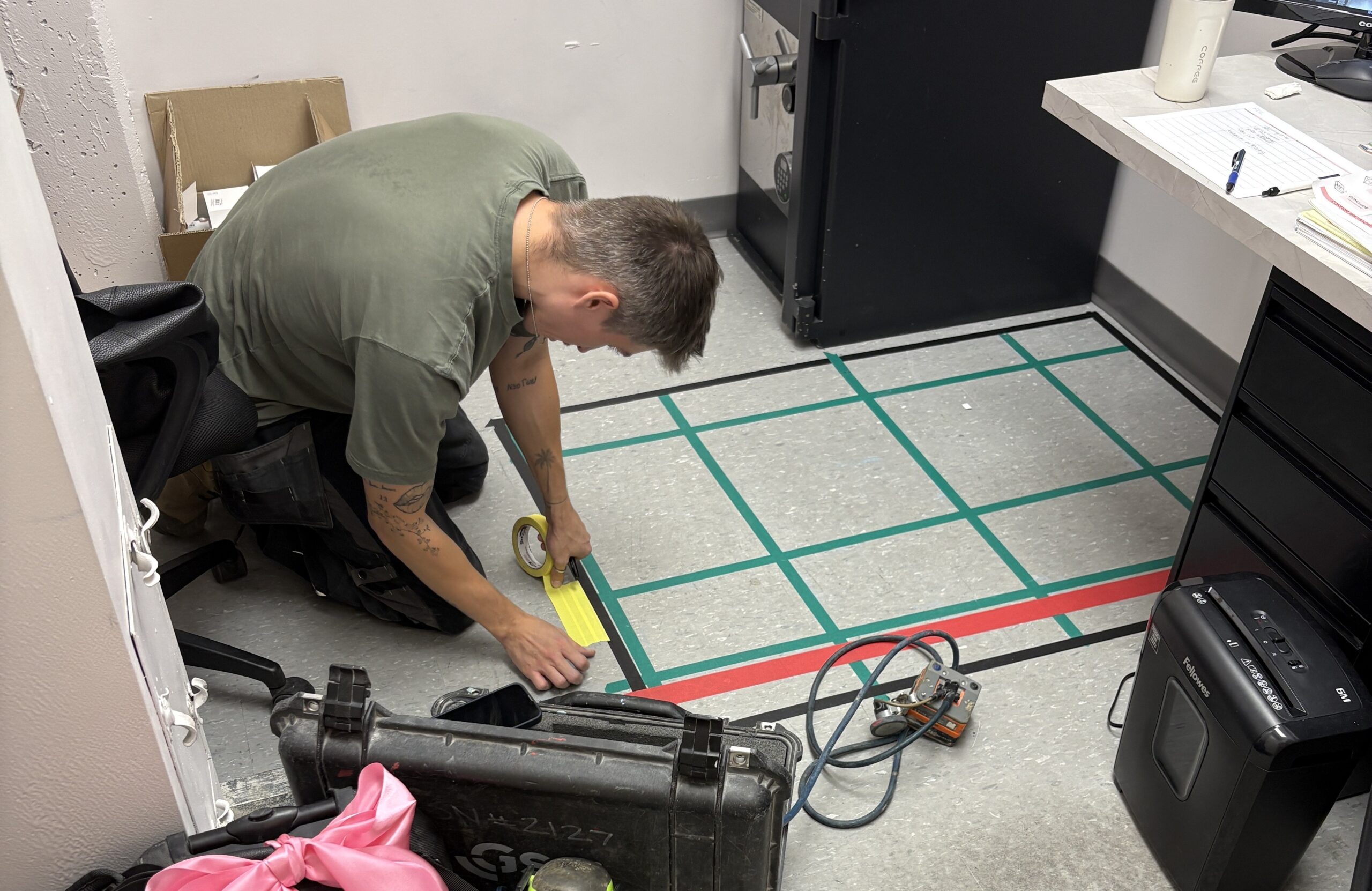
Our specially trained technicians then analyze the images to produce a report tailored to your needs.
For more information on our Concrete Structural Scanning services, get in touch today!