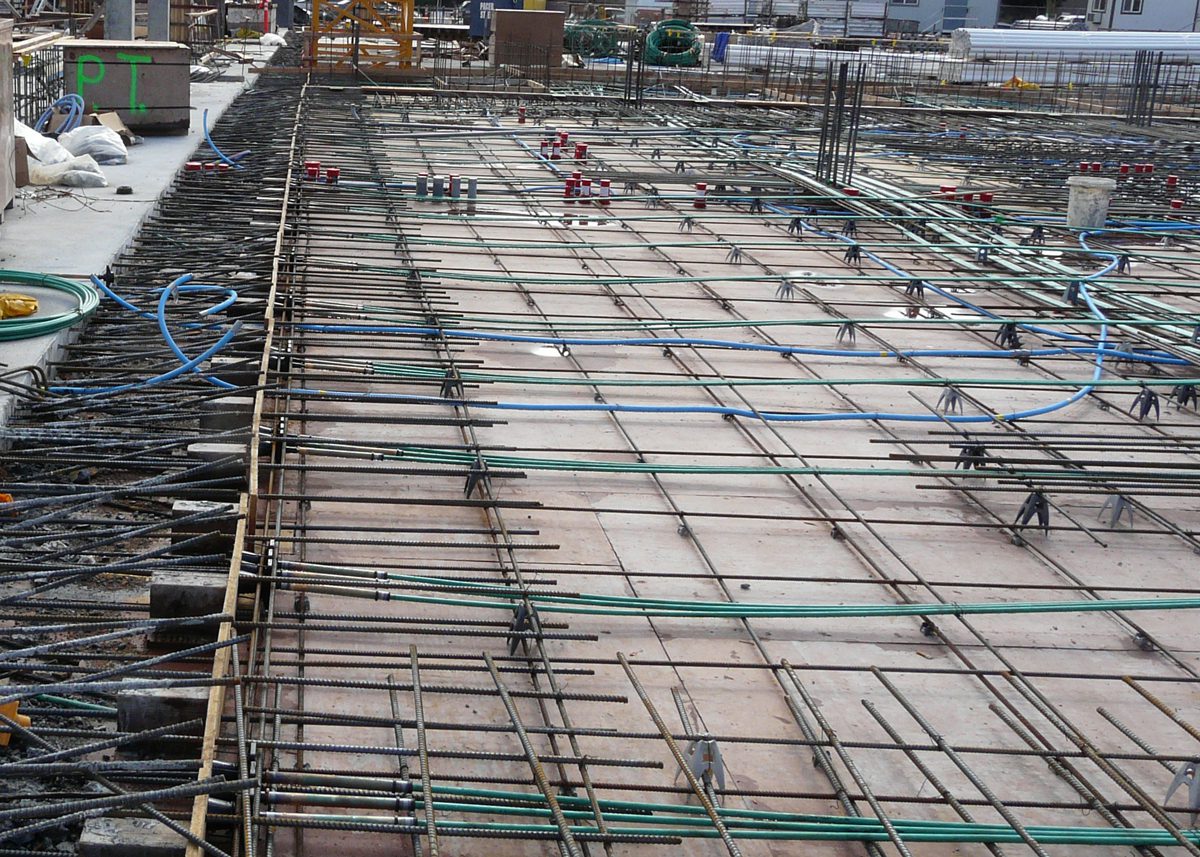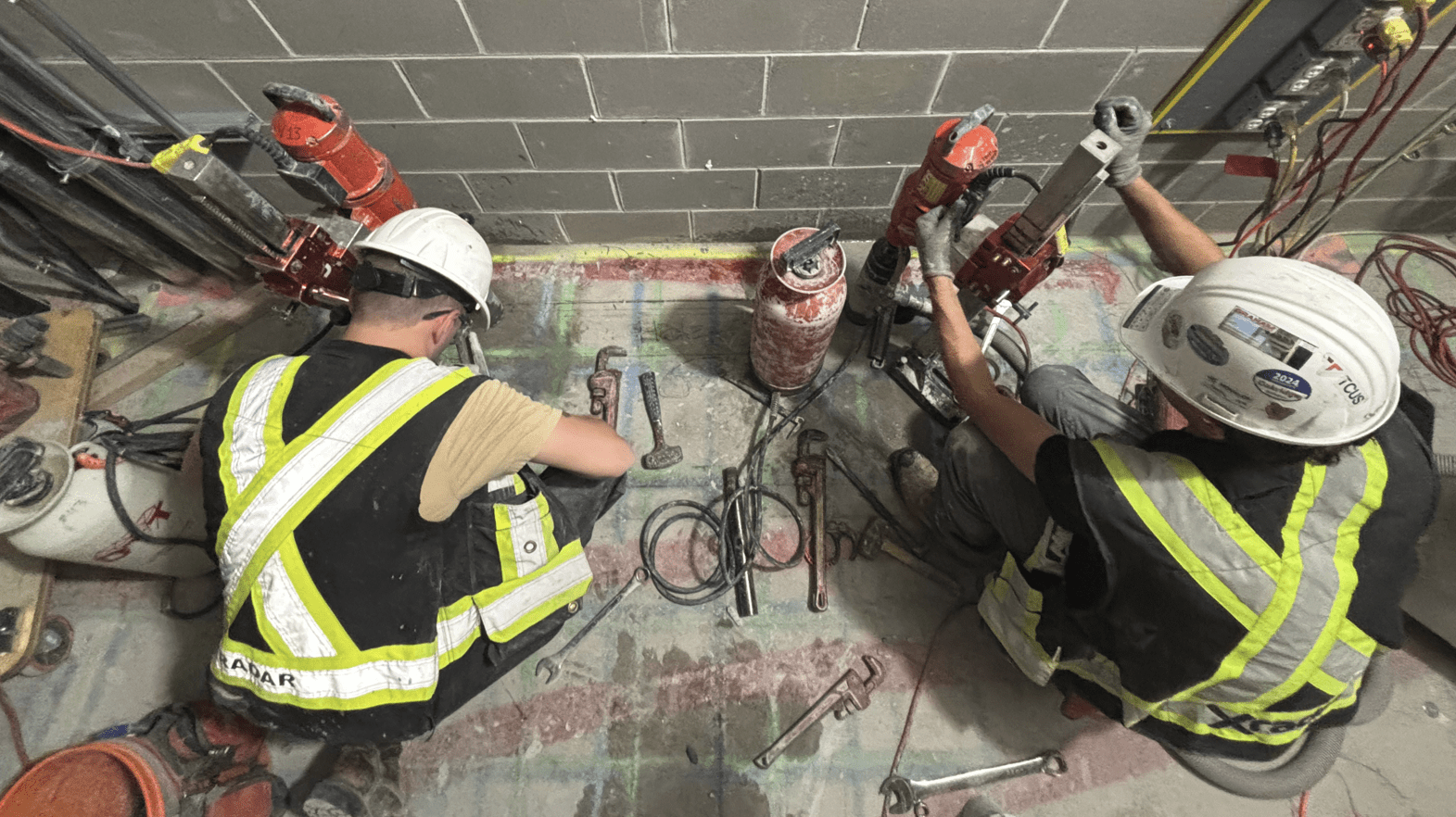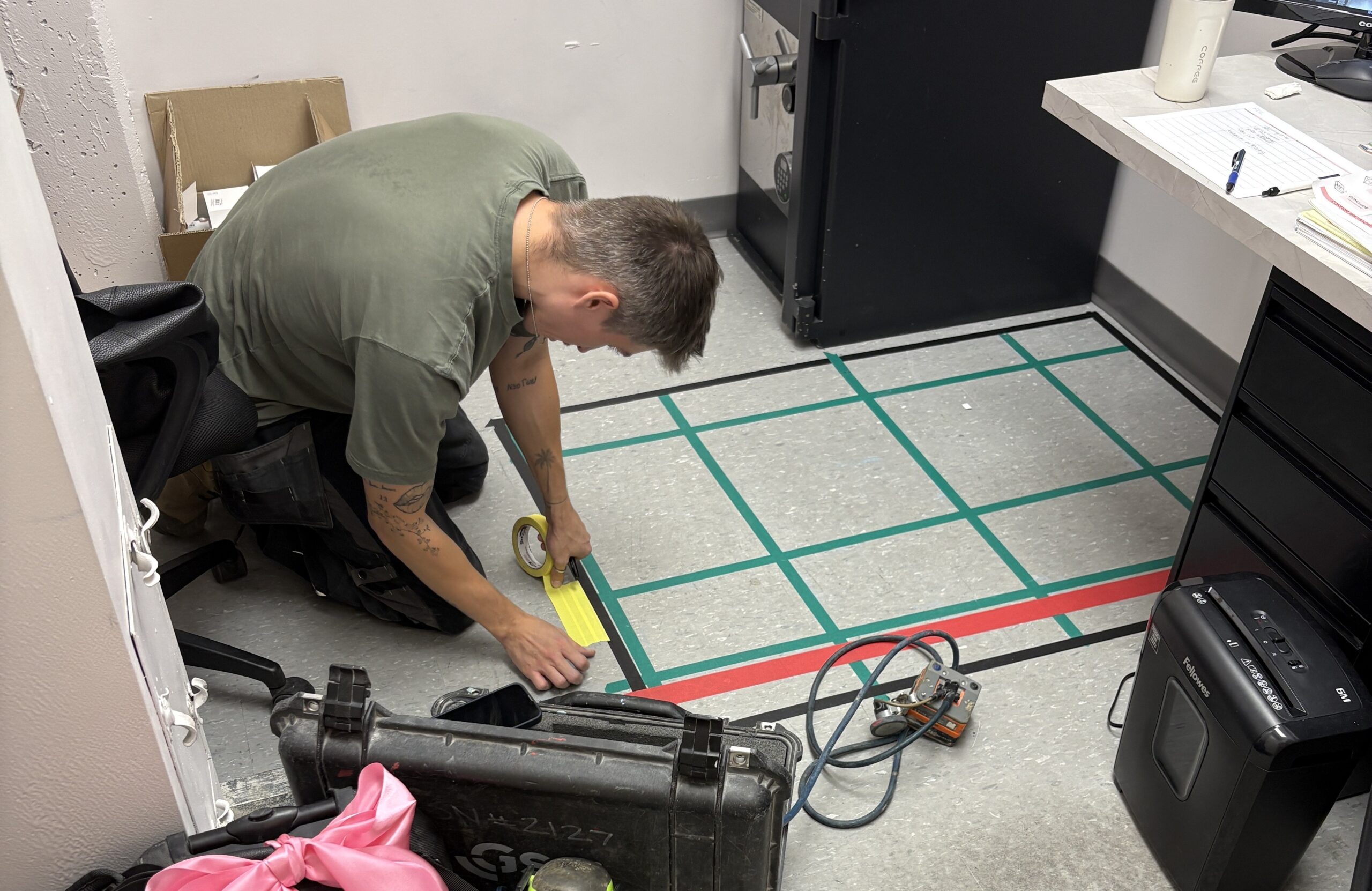
Concrete scanning through the use of concrete imaging technology such as GPR and Xradar ensures that work is carried out safely, and without damage to objects beneath the surface such as rebar and conduits.
When we complete a concrete scan we provide our clients with a detailed Engineering Report tailored to your needs, outlining the key information from our survey, allowing you to make informed decisions for your project.
How does it work?
Our reporting process starts with our specialist Xradar technicians who collect on-site data using our state-of-the-art concrete scanning technology.
This data is then transferred to our in-house team who work with the technician to prepare a detailed report, completely tailored to your specific requirements. It is then sent directly to the customer or contracted engineer, allowing them to make fast, remote decisions without the need for a site visit.
In many cases our on-site technicians are even able to assist you in real time when deciding the best location to cut or core. They will then provide a full report detailing the results for your records.
What is included?
Our reports are split into three levels – C, B, and A.
Level C – Xradar Work Order
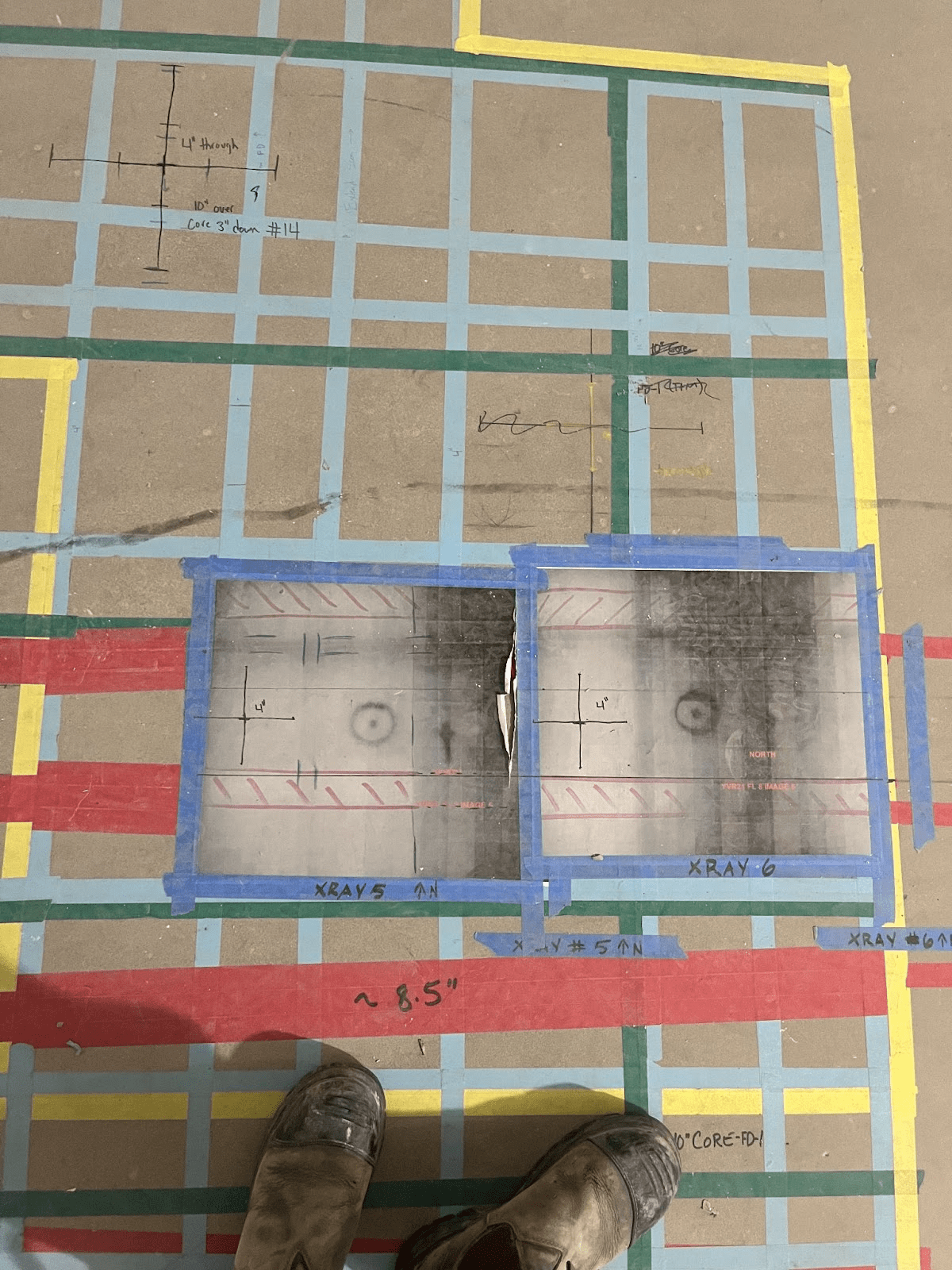
This standard digital work order is designed for all Clients or the Site Foreman and includes basic information about the job and images of the scanned locations. We also provide details and notes pertaining to your requirements.
Level B – Engineering Report
This report provides scaled overlays of the scanned locations, including the results of the survey. It is designed for Clients, Site Foreman, and Engineers, allowing them to make accurate and informed decisions about the project without the need for a site visit.
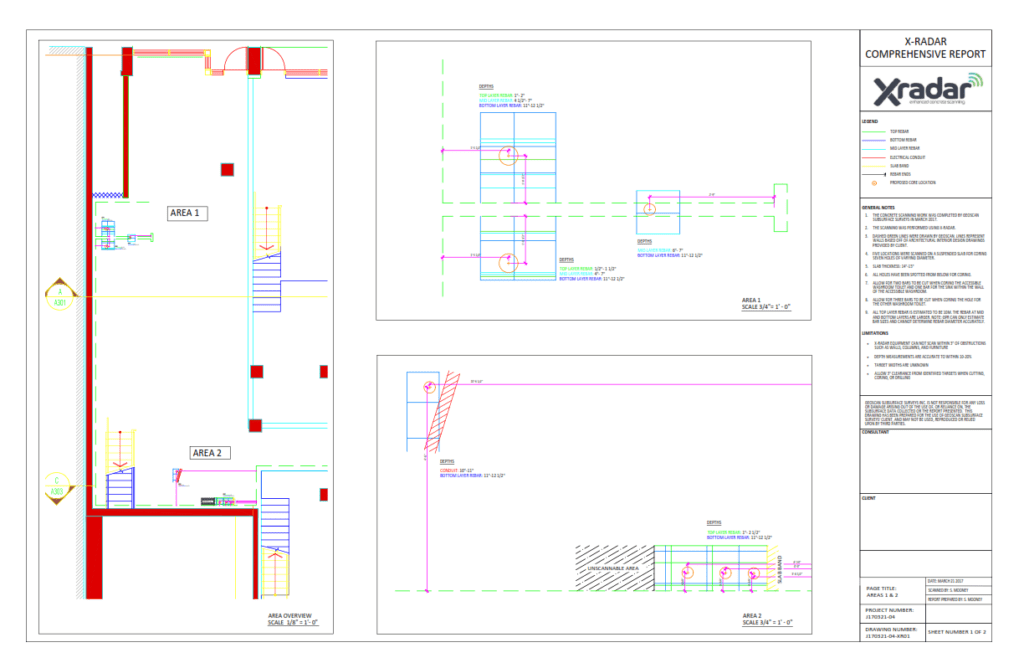
Level A – Comprehensive CAD Report
This report is designed specifically for engineer approvals and pre-design scanning. It includes a scaled auto CAD drawing of the scanned areas, complete with a full written report highlighting the purpose of the survey, methods, theory, results, and limitations.
Using your report
All of our reports are designed to be easily understandable and provide all the necessary information for your specific needs. Whatever your requirements our expert technicians can assist you throughout the process, both on-site and after the job.
Following the completion of the scan and the submission of the report, we are happy to discuss the report and any required deliverables to further help you ensure the safe and timely completion of your project.
For more information on how Xradar can help you, don’t hesitate to get in touch!