
Overview
Ultrasonic Pulse Echo is an advanced imaging technique used to detect defects within concrete structures.
Benefits
Applications of Ultrasonic Pulse Echo
When evaluating large concrete structures, such as thick slabs, thick foundations, beams, columns or tunnels, conventional Ground Penetrating Radar (GPR) can be limited by depth and embedded reinforcement. UPE can reach greater depths than GPR, and is much less affected by metal, but considerably more affected by air or voids.
As a result, UPE can be used to map out honeycombing, voids, large cracks and/or to determine the thickness of reinforced concrete structures up to 2.5m (8ft) depth. Additionally, another advantage lies in its ability to image a structure from a single side in contrast to the more traditional ultrasonic pulse velocity (UPE).
The Equipment
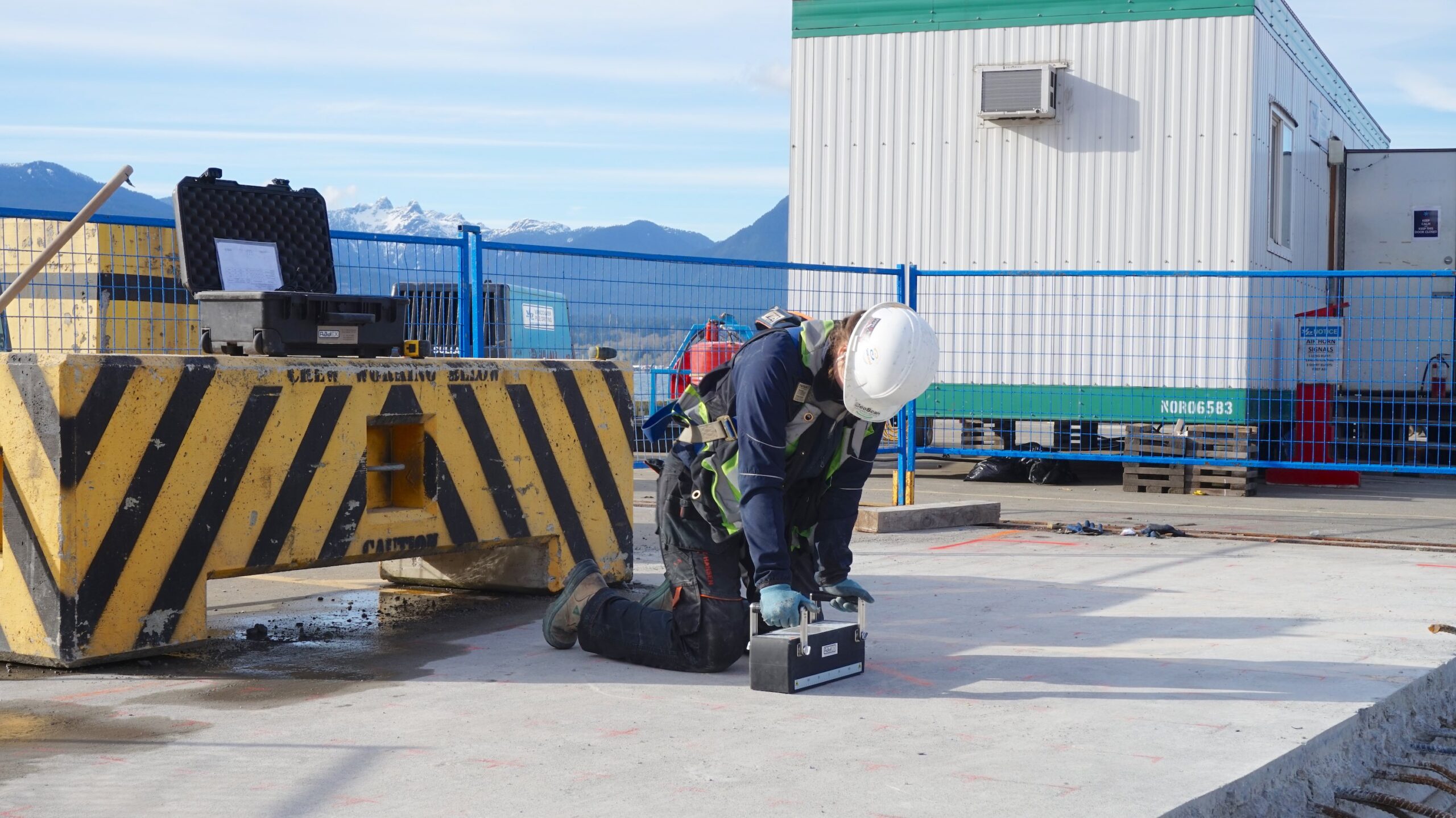
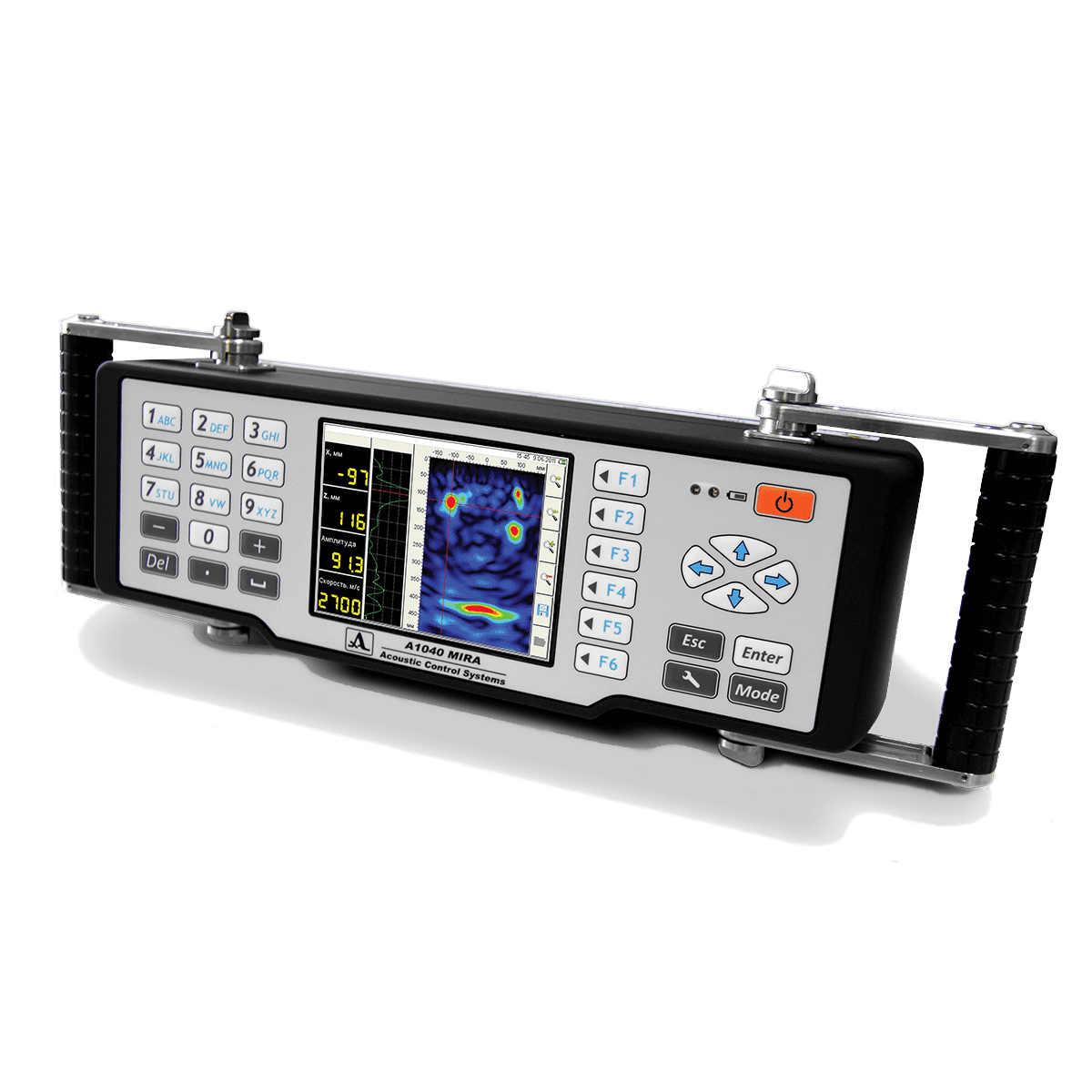
Xradar™ uses the latest technologies for non-destructive inspections, including the MIRA shear wave tomograph by ACSYS and the Proceq PD8000.
MIRA’s advanced instrument has an array of 48 transducers with dry-contact ceramic tips and uses a complex SAFT signal processing to provide a high-resolution image of the internal concrete structure. The tomograph sends a short pulse through the concrete, then records shear wave reflections in all transducers simultaneously, producing an image or scan of the reflected waves. Our technicians analyse these images to identify features and/or defects.
Proceq Pundit’s wireless inspection solution with multi-channel ultrasonic pulse echo technology, consolidates power in a single device for structural imaging, object and defect detection with ultrasound pulse echo providing real-time imaging, weight optimization and AI assistance. It’s features has superior image clarity with control of all transmission parameters and large scale 2D, 3D, heatmap and AR visualization modes.
For large areas and structures the ELOP Insight rolling UPE can be utilised for efficient data collection.
FAQS
Service FAQs
Please review these frequently asked questions about our services. If your question isn’t here, please contact our team.
More FAQs & Resources-
XRSounder geomaps delamination live to a CAD-exportable file. The device includes XRMapper post-processing software, allowing engineers and inspectors to digitally map large areas, overlay data, and historically track condition assessments over time.
-
It is built for large concrete structures, including parking garages (parkades), bridge decks, warehouse and industrial floors, and municipal infrastructure.
-
Yes. XRSounder effectively locates and maps areas where protective coatings or membranes have lost adhesion, helping to prevent costly water ingress and surface failure that traditional sounding might miss.
-
The system offers high-resolution, pinpoint detection capable of resolving concrete defects and delamination down to one square foot. This accuracy enables early intervention and helps prevent costly, widespread repairs.
Pulse Echo (UPE)
Related Services
Learn how ultrasonic testing helps detect internal defects, voids, and delaminations across multiple Xradar services.


Related Projects
Recent Examples of Our Work
A look at some of our recent projects – from small site scans to complex structural assessments. These projects show the variety of work we do, and how our accuracy keeps your project on track.
Explore Projects by Category
- Building Information Modelling (BIM)
- Concrete Coring
- Concrete Corrosion Mapping
- Concrete Cutting
- Concrete Scanning
- Delamination Detection
- GRAD
- Ground Penetrating Radar
- Indoor Utility Locating
- Pre-Design
- Pre-Design Scanning
- Pre-Pour Documentation
- Structural Investigation
- Ultrasound Investigation
- Visual Inspection
- Void and Crack Detection
- XRSounder
Related Resources
Learn More About Our Approach
Stay informed with Xradar’s collection of technical resources, industry insights, and expert guides.
Explore Our Resources-
The Importance of Hiring a Concrete Scanning Service
Concrete scanning technology has transformed the way contractors, engineers, and building owners understand what lies inside concrete structures. Whether you’re coring, cutting, drilling, renovating, or conducting structural investigations, Ground Penetrating Radar (GPR) scanning has become the preferred method for identifying embedded objects before work begins.
-
Introducing GRAD: Unlocking the Full Value of GPR Data
Ground Penetrating Radar technology has transformed the way we investigate concrete and subsurface conditions. Modern GPR systems can collect enormous amounts of high-resolution data, providing valuable insights into structural elements, embedded objects, and hidden conditions. However, the true value of that data depends on how effectively it can be processed, interpreted, and communicated.