
The Post – Scanning & Coring for Kitchenette – X-ray vs Xradar
Overview/Intro
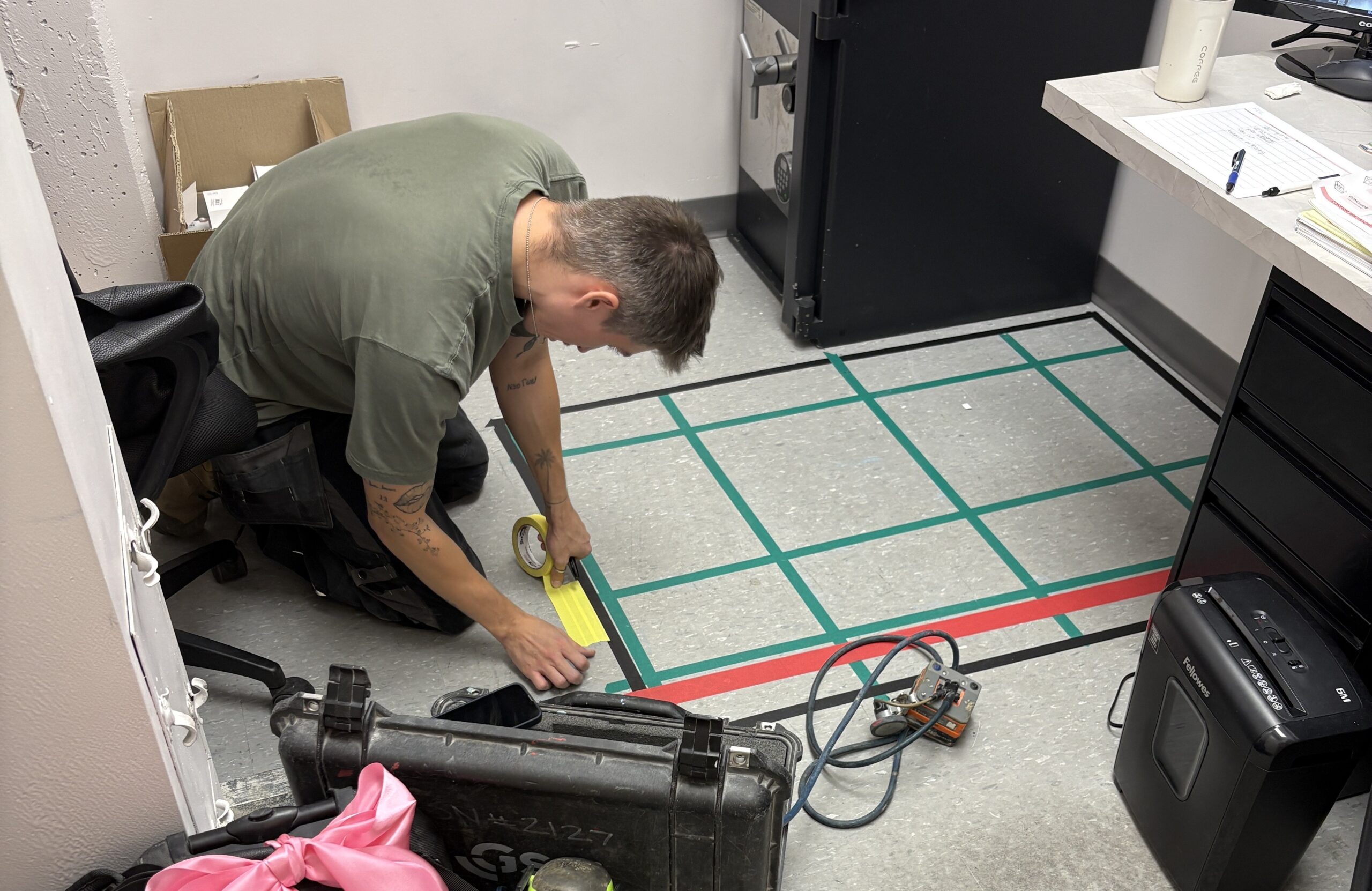
As part of a high-rise office redevelopment, a general contractor (Turner Construction Company) required accurate concrete scanning and selective coring on a high level of The Post in Downtown Vancouver, to prepare for the installation of a future kitchenette and coffee area. With the layout still under consideration, the request was for one comprehensive scan area to give maximum flexibility for later design decisions. The contractor needed reliable mapping of in-slab conditions to avoid any costly damage and delays, and then intended to propose core locations using that data.
The Challenge
Planning new services in an occupied high-rise brings significant risk: unseen conduits, rebar, and post-tension cables can easily be struck if the subsurface conditions are not properly understood. In this case, the contractor needed to:
- Map a large preliminary area without multiple mobilizations.
- Reduce risk of coring through electrical conduits & post-tension cables
- Maintain project momentum with minimal disruption to surrounding tenants.
Relying on methods such as X-ray for this scope could increase costs for multiple reasons, introduce safety hazards, and require clearing entire floors due to radiation exposure. A fast, flexible, practical, and non-disruptive approach was essential.
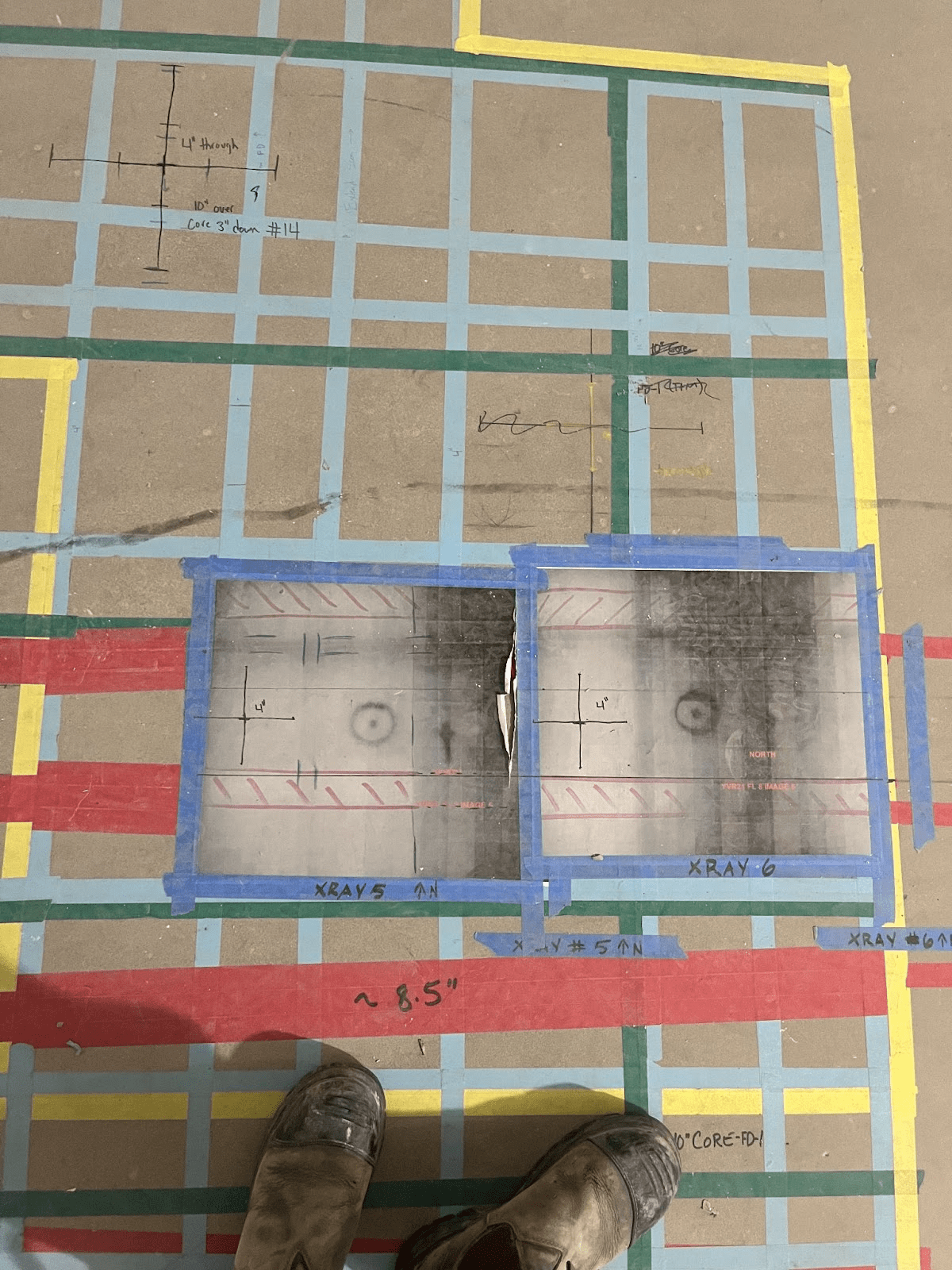
In this case, post-Xradar scan, the contractor additionally used X-ray in multiple proposed core locations in an attempt to find an area with no embedments. In turn, this then required a double check from an additional Xradar technician before they were comfortable to proceed with coring.
Scope of Work
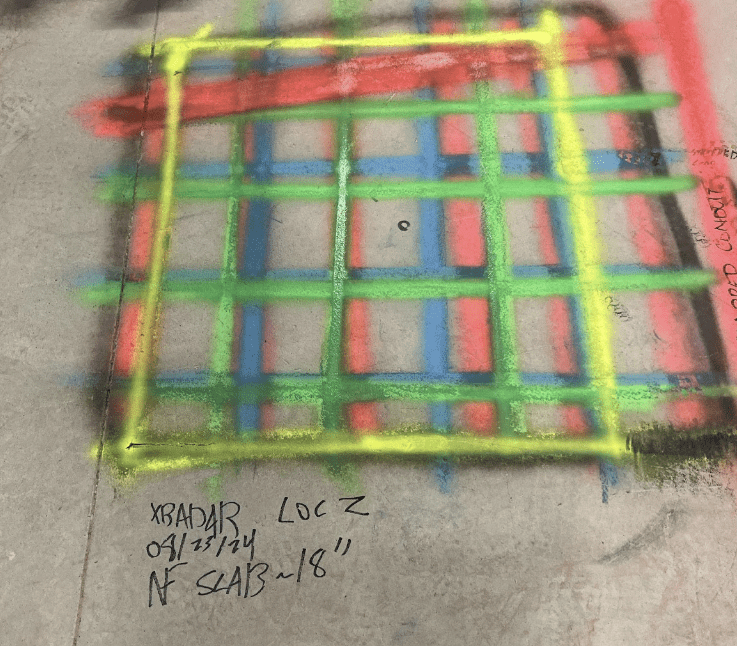
Xradar was engaged to perform a large-area subsurface scan, covering the proposed kitchenette footprint.
The objective was to identify embedded services and provide flexibility for the client’s evolving layout.
Later, Xradar was also called back with a coring crew to carry out multiple core holes in areas selected by the contractor.
Our Solution
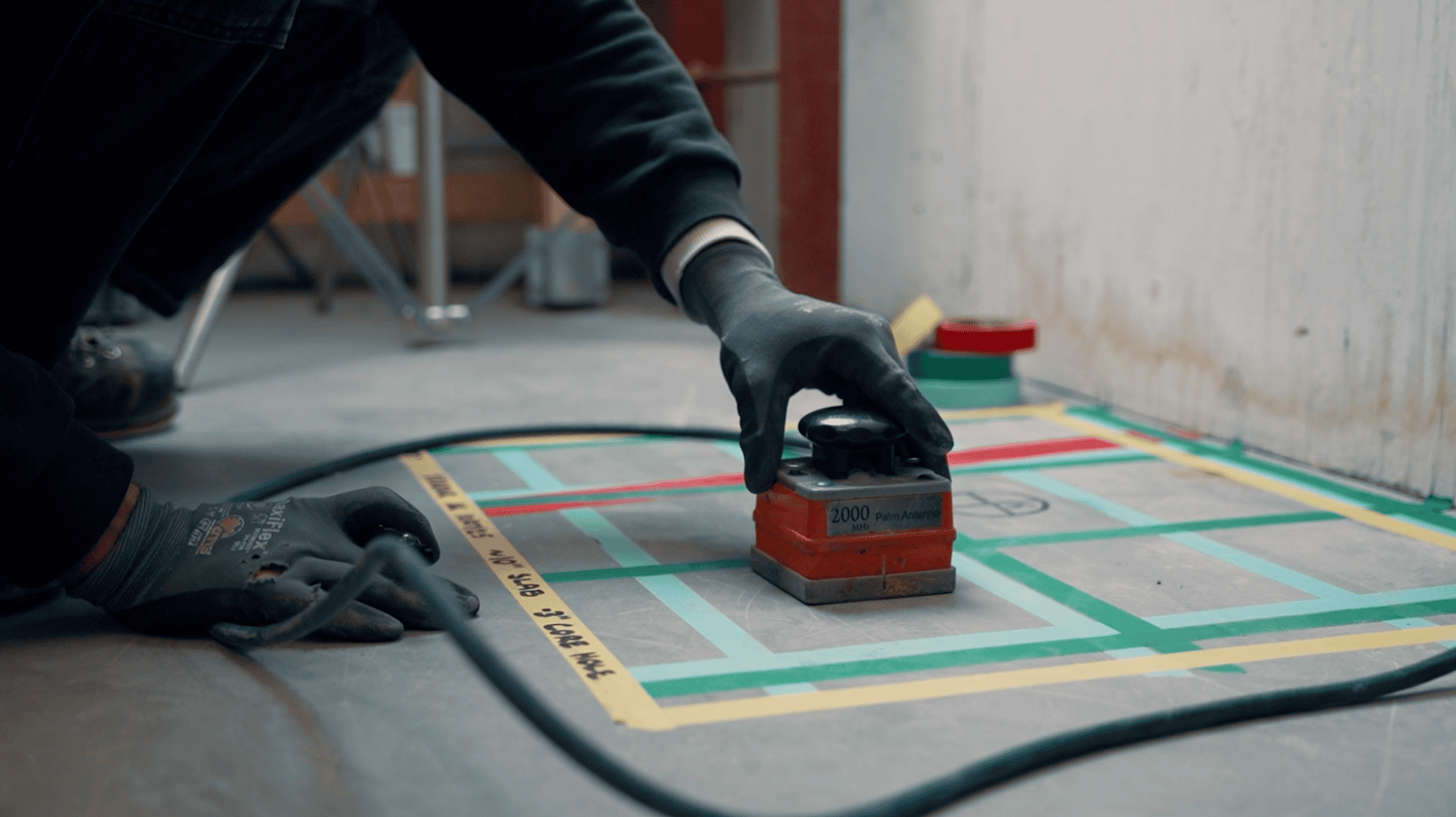
Unlike X-ray, which requires two-sided access and creates safety restrictions, Xradar uses advanced ground penetrating radar (GPR) technology – applied with survey and analysis methods unique to our team. This allows us to capture accurate subsurface data in real time, without disrupting building operations.
We’re so confident in the quality of our scanning technicians, that we will not core locations that are scanned by other companies.
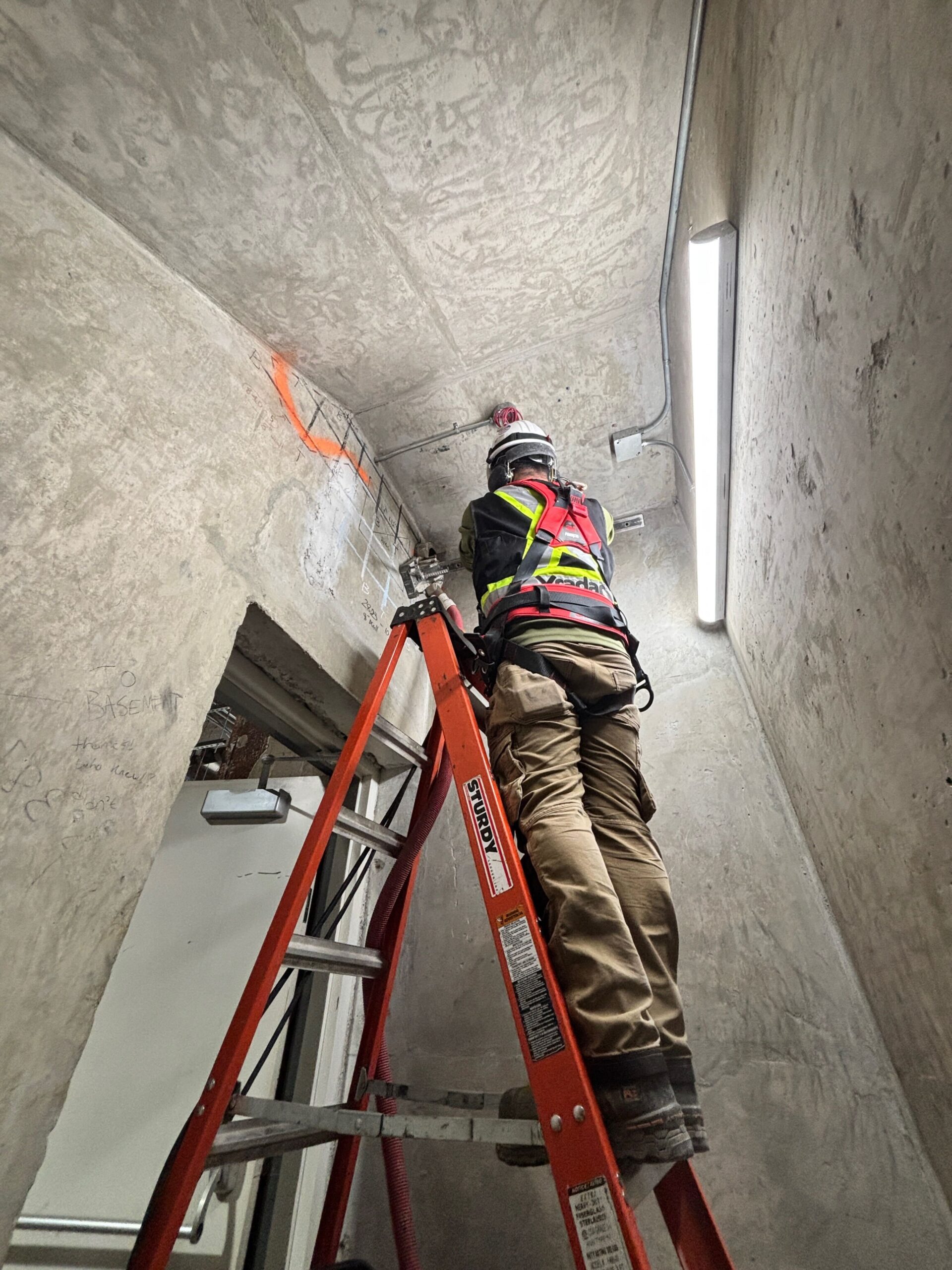
In this project, before coring, our technicians identified an area where an additional X-ray interpretation was used to ‘find’ a core location that was not in a safe area. Our team flagged the discrepancy, escalated it internally, and to be absolutely sure, proceeded to dispatch a scan technician to check the proposed area.
It was then discovered that the client’s proposed location would have struck an in-slab conduit had it followed X-ray guidance. By relying on our proven process and rescanning the suggested location, the risk of costly damage was avoided and coring could proceed elsewhere.
Methodology
- Preliminary Scan: Xradar conducted a large-format GPR scan, recording locations of post-tension cables, conduits, rebar layout, and slab thickness.
- Core Location Review: Core hole locations were later chosen by the client and marked out on slab.
- Location Verification: Upon arrival, our coring team noticed that the proposed core locations had also been X-rayed. As part of Xradar’s policy, our coring team cross-check every proposed hole against Xradar scan data before proceeding. An X-ray discrepancy was identified, re-scanned by an Xradar technician, and ultimately the X-ray interpretation was overruled.
- Core Execution: Proposed core holes were relocated, and safe coring was completed, with updated reporting provided to the contractor.
Results/ Conclusion
Conclusion
This project successfully verified subsurface conditions and avoided an embedded conduit, which would have been hit had the coring team followed the guidance of the X-ray company.
Xradar’s expertly trained technicians provided accurate scan data for the contractor’s layout adjustments, minimizing disruption, preventing costly errors, allowing the project to progress without unnecessary delays