
Investigating Deterioration of Concrete Foundations
Overview/Intro
In our recent engagement with J.L. Richards & Associates, our team was brought in to investigate signs of concrete foundation deterioration beneath an eroding base plate. Using Ultrasonic Pulse Velocity (UPV), we set out to assess the internal condition of the concrete and determine whether the observed damage extended beyond the surface.
The Challenge
The foundation exhibited visible surface wear that raised concerns about potential subsurface deterioration. Traditional inspection methods couldn’t determine the extent of internal cracking or voiding without invasive testing. Our goal was to deliver a precise, non-destructive evaluation that would inform repair strategies while maintaining the integrity of the structure.
Scope of Work
Lorem
Methodology
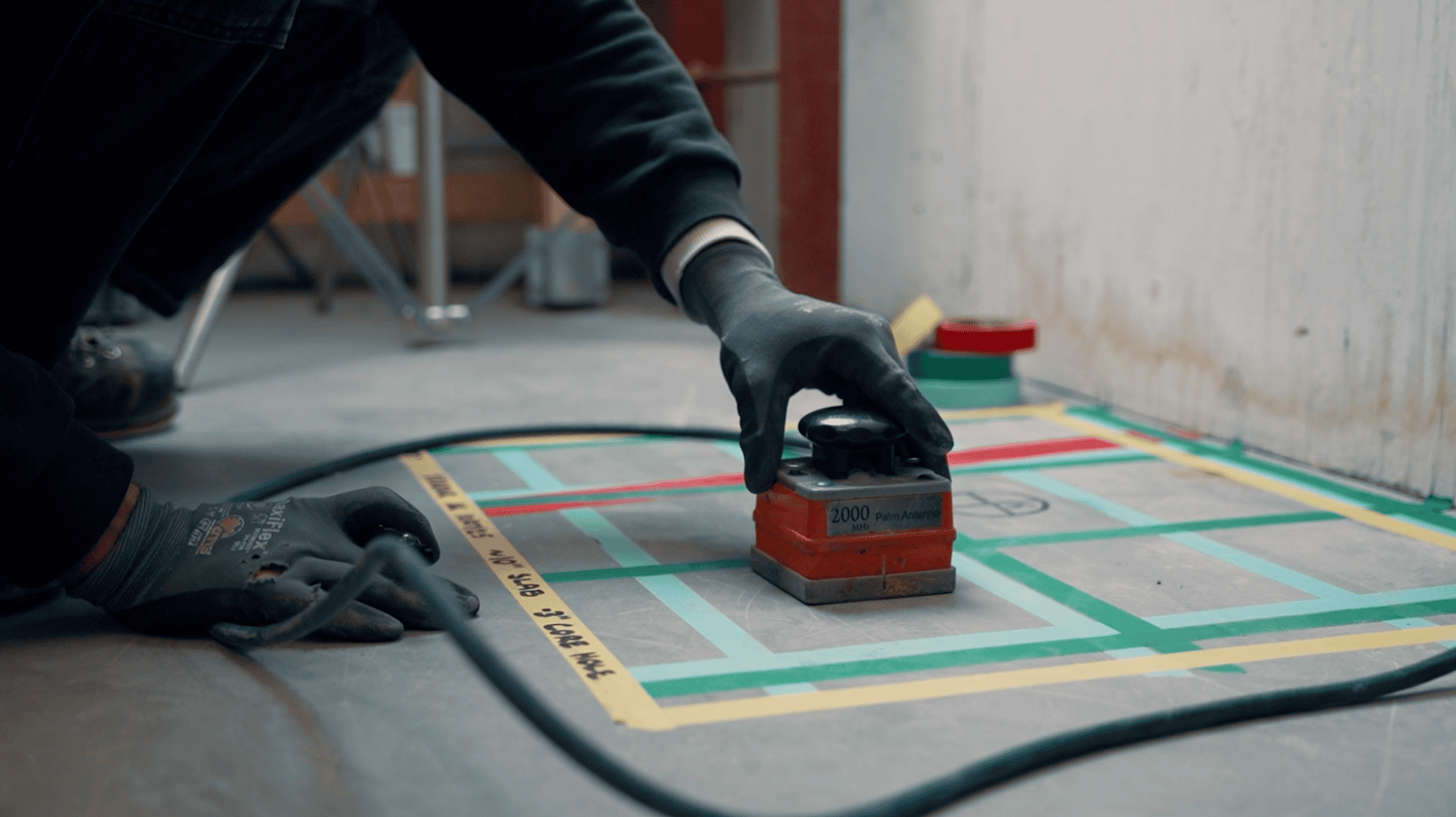
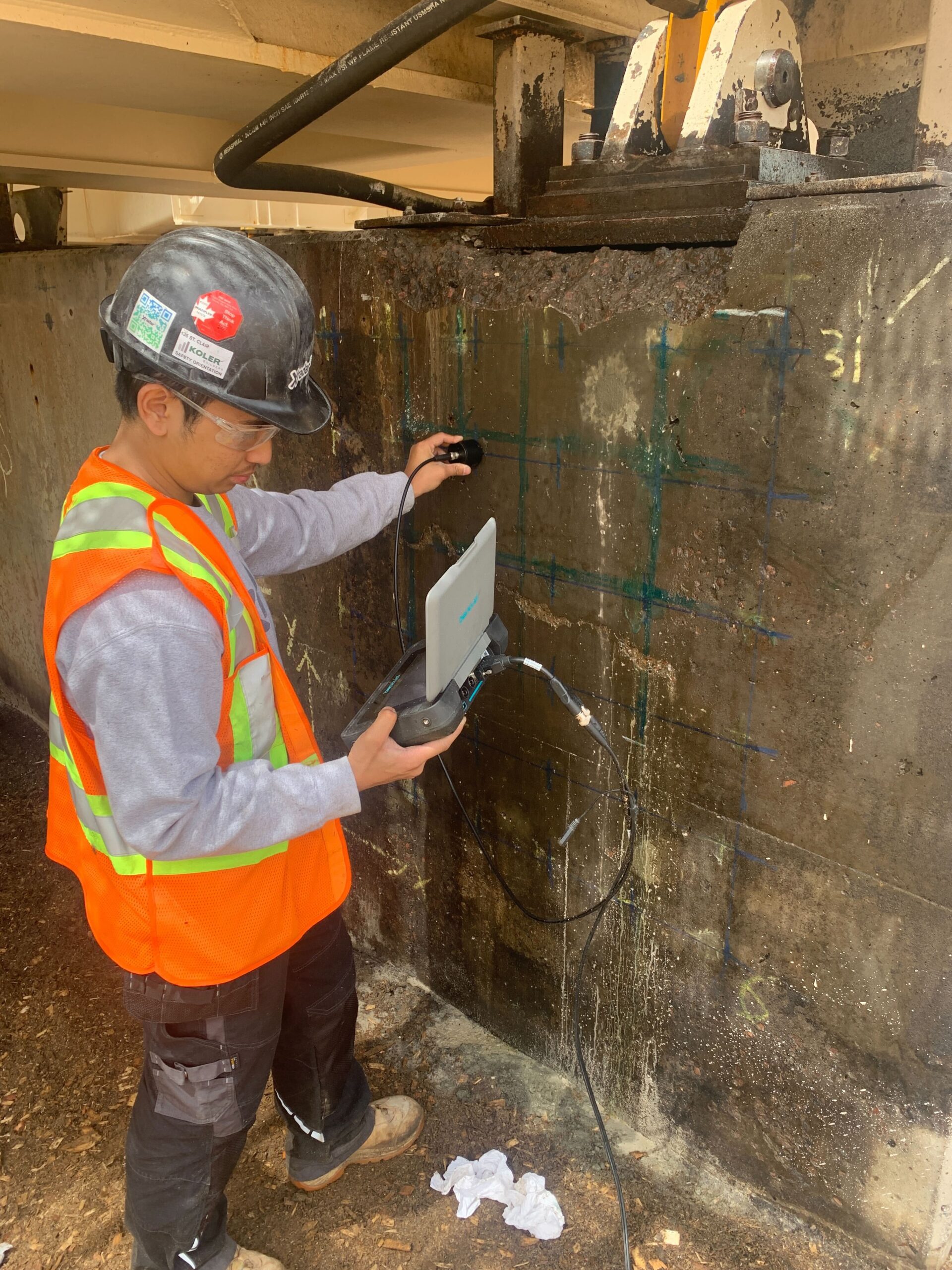
Ultrasonic pulse velocity was used to evaluate these areas for internal defects. The direct arrival of compression waves generated by a source (transmitter) on one face of a concrete structure is used in UPV. This is an effective way to estimate concrete quality by measuring the wave velocity at a receiver (on another face of the concrete structure). The presence of defects would slow the speed of ultrasonic transmission and lessen the amplitude of the received signal.

Heading
Lorem
Results/ Conclusion
Conclusion
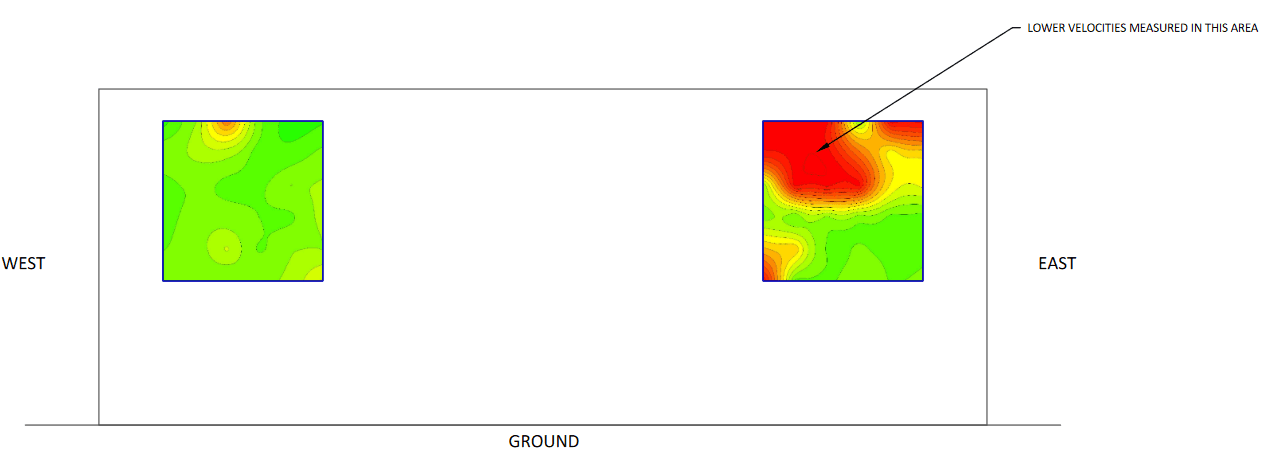
In general, the concrete in most of the surveyed areas was found to be in good condition.
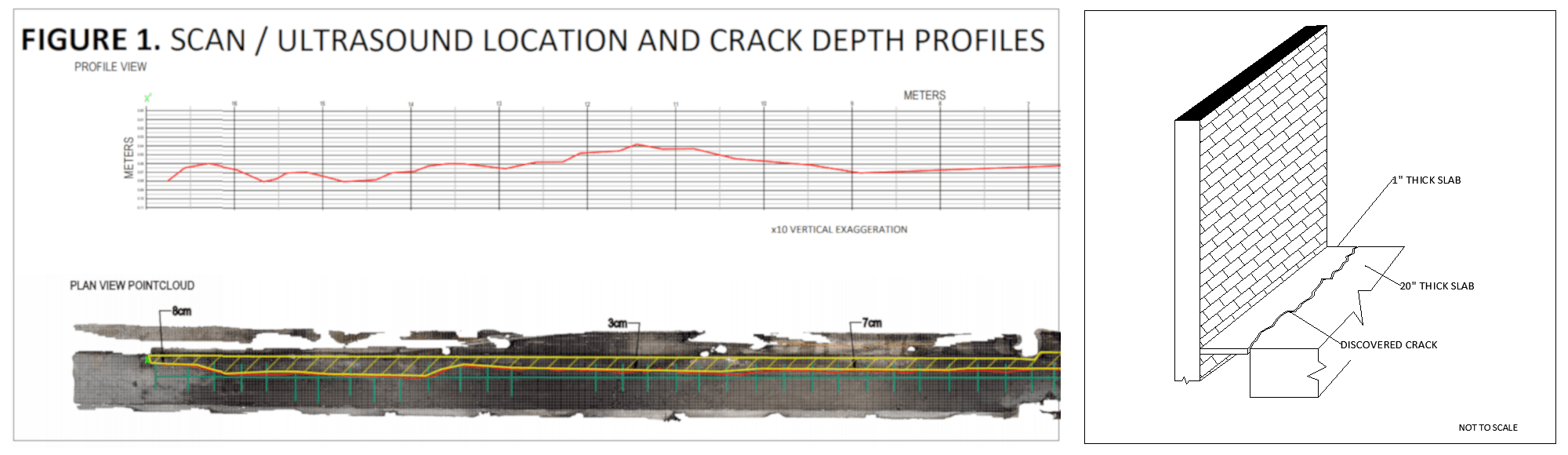
The east side of the east foundation was an exception, with a significant area of lower UPV values indicating that the concrete is in poor condition and should be targeted for further investigation. Unlike Xradar’s GPR, which collects data continuously, static points are collected over a concrete surface and then joined together to build an entire assessment model, as shown in below.