Asphalt Thickness Survey
Overview/Intro
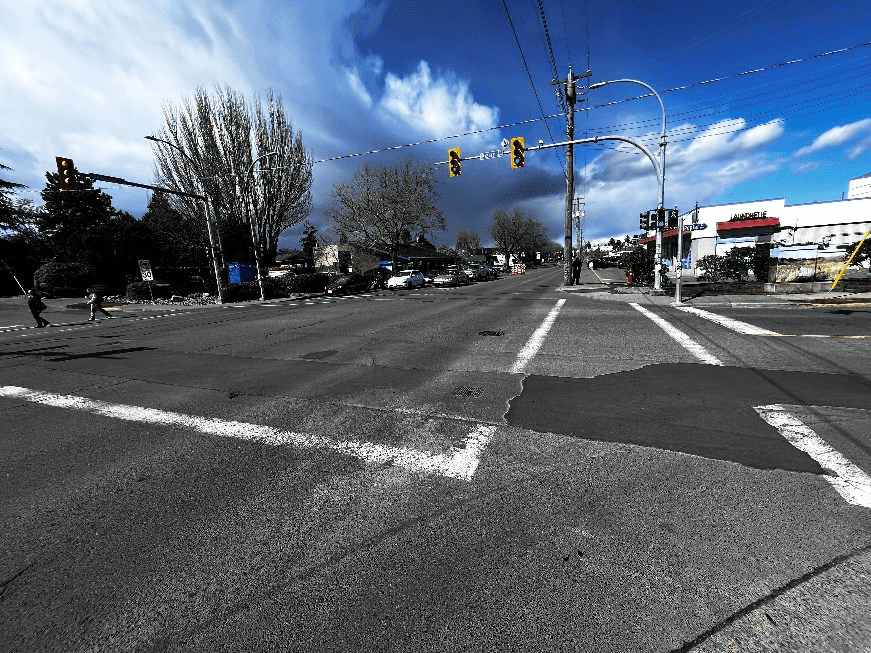
Xradar was hired to do an asphalt thickness survey on a stretch of road through a city, where multiple asphalt layers were suspected, with some appearing to overlap. These layers likely resulted from past repairs or utility-related road work. The city wanted to obtain accurate knowledge of asphalt thickness distribution in order to plan cost effectively for replacement.
Services
Methods Used
The Challenge
The primary challenge was to identify and accurately measure the varying thickness of these asphalt layers. Ensuring precise calibration of the Ground Penetrating Radar (GPR) signal velocity was essential for obtaining reliable data.
Scope of Work
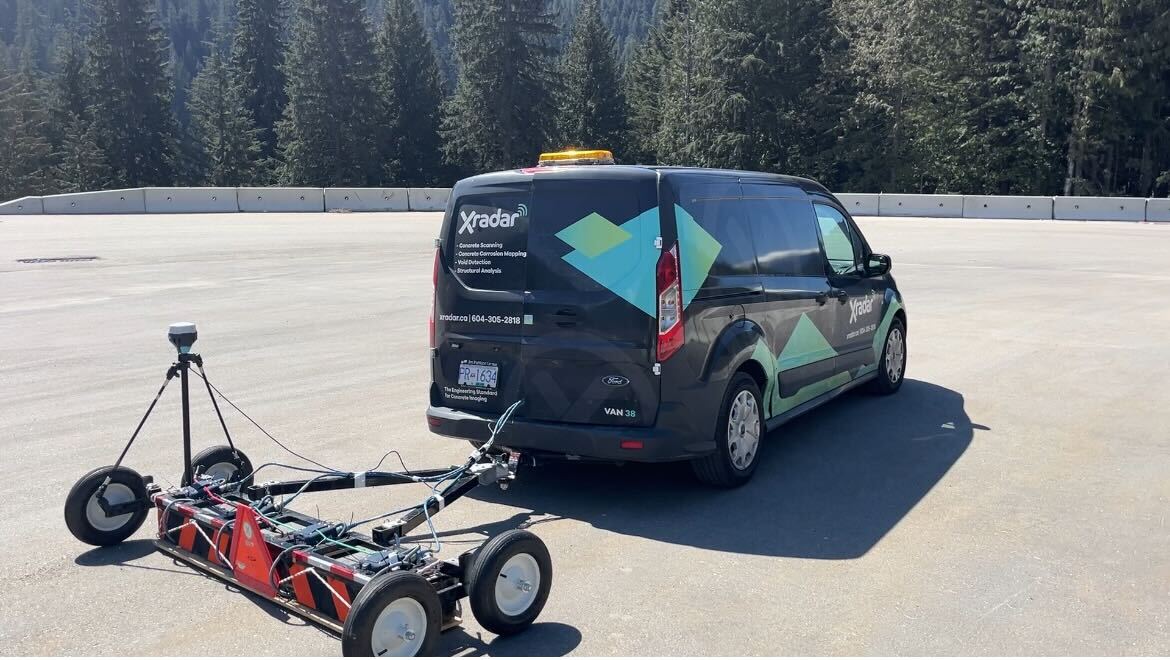
Data was collected by driving down the proposed road in different lanes, collecting shallow GPR data.
The array utilized a RTK fixed GPS from a local base station for accurate continuous positioning.
Only areas within the survey coverage boundaries were scanned.
Methodology
Xradar’s advanced equipment employs the 4 channel array with GPS for positioning, in 4 1.6GHz impulse ground-penetrating radar (GPR) antenna, GSSI SIR30 control system, and GPS Emlid Reach View 2 RTK GNSS Receiver.
Findings and Results
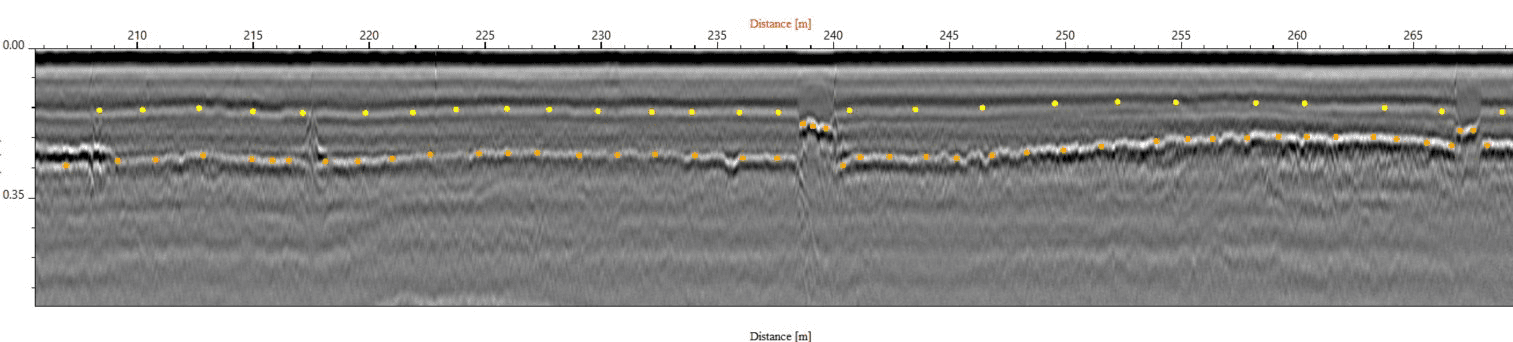
The survey results revealed a prominent layer throughout the data set, interpreted as asphalt. The variations in asphalt thickness were attributed to previous repairs, the addition of new layers, or utility-related work. These findings highlight the dynamic nature of the surveyed locations, influenced by historical maintenance and infrastructure activities.
Results/ Conclusion
Conclusion
The comprehensive asphalt thickness survey provided valuable insights into the composition and condition of the asphalt layers. By accurately measuring and calibrating the GPR signal velocity, reliable data was ensured. These findings are instrumental for planning future maintenance and infrastructure projects, contributing to improved road quality and longevity, as well as being cost effective. In some situations specific sections can be replaced versus replacing an entire road stretch at much greater costs, when not necessarily required. Xradar’s expertise and advanced equipment enable precise and efficient asphalt thickness surveys, ensuring that all project requirements are met with the highest standards of accuracy and professionalism.