Detection of structural defects using Xradar and UPV in an industrial plant
Overview/Intro
A long crack was discovered next to an existing wall in an industrial plant in Vancouver. Its cause, extent and potential impact to the overall structure of the building required investigation. Understanding these factors provides the basis for the planning and implementation of repairs.
The Challenge
Our client identified a significant crack adjacent and parallel to an existing wall in an industrial plant. The plant had undergone a major renovation not long before the discovery. The main slab had been removed and replaced, supposedly with a 20″ thick reinforced slab throughout the whole area. The appearance of the crack raised concerns as the source of the flaw was not understood. Usually, especially after a new construction, calculated hairline cracks appear in concrete, but this newly discovered crack was too significant to ignore and far beyond a simple ‘planned’ hairline crack.
Our Solution
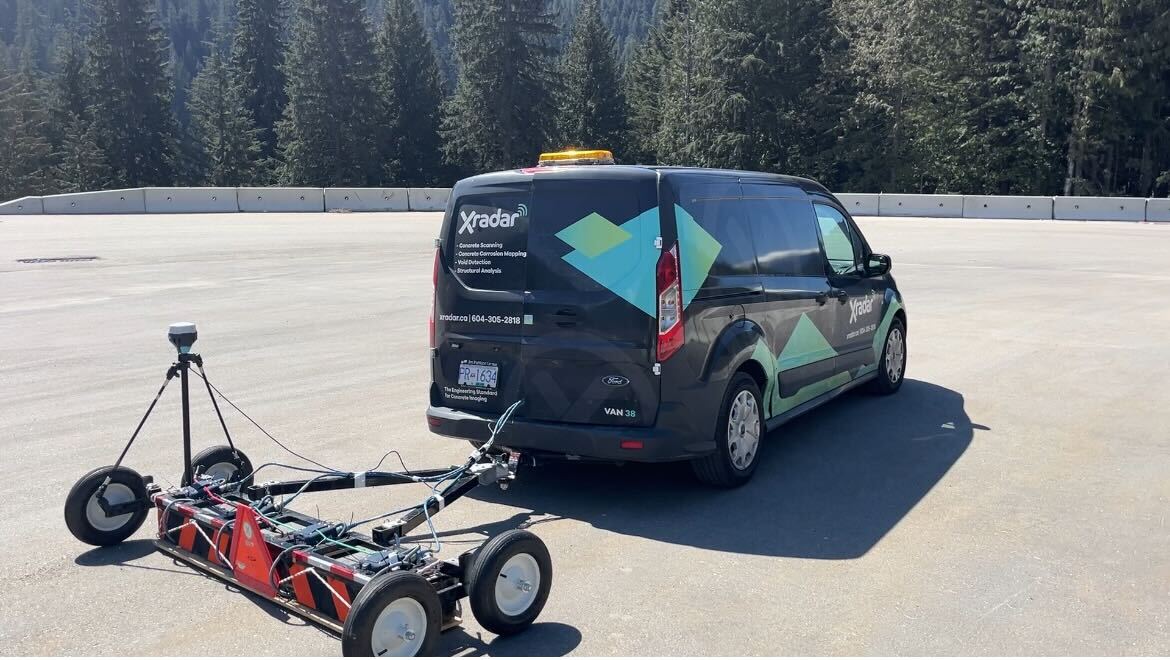
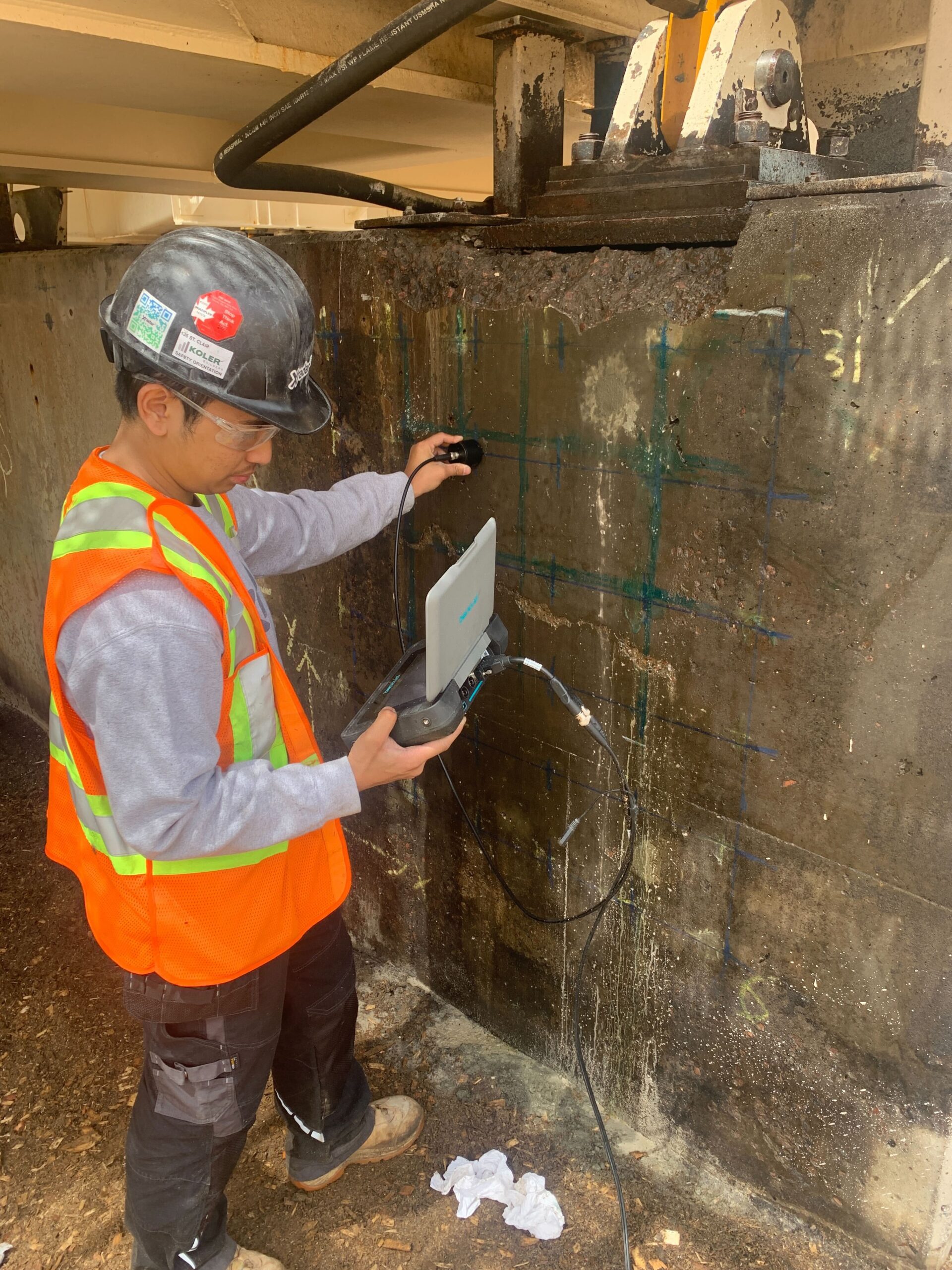
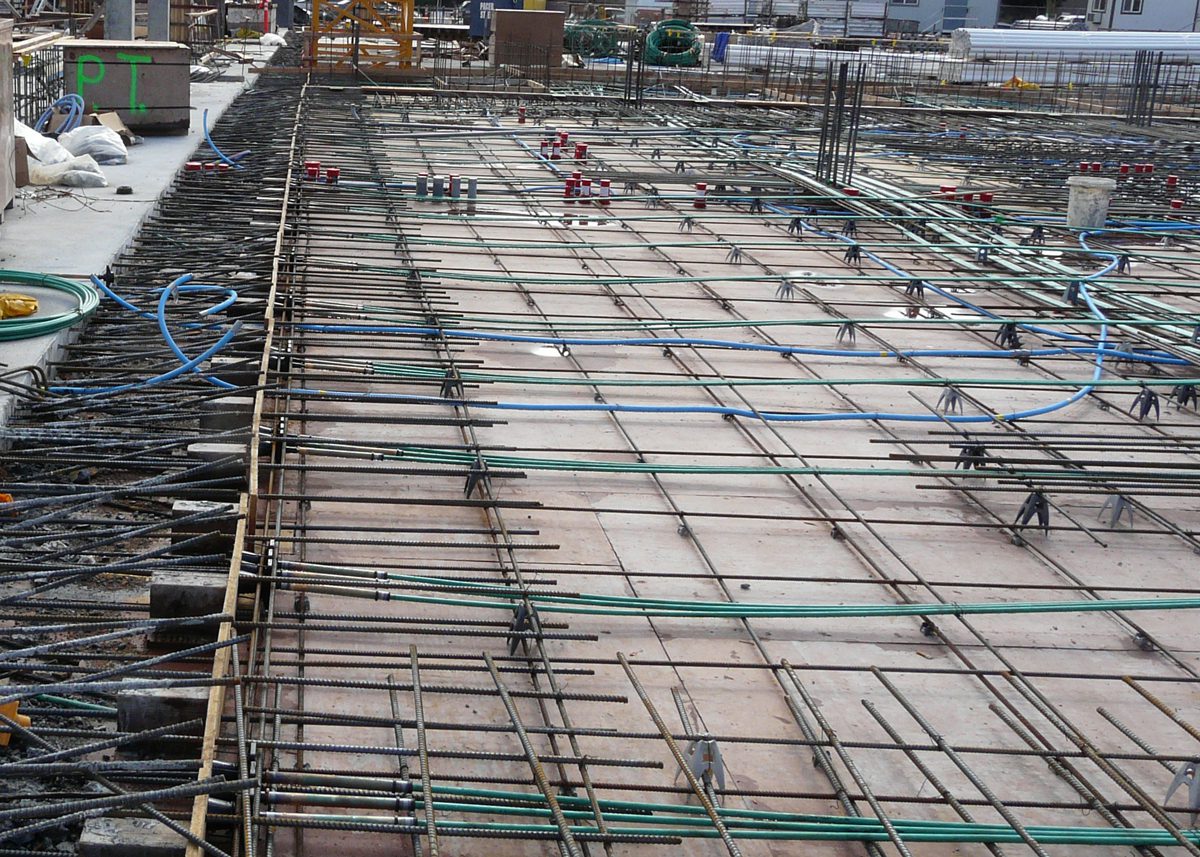
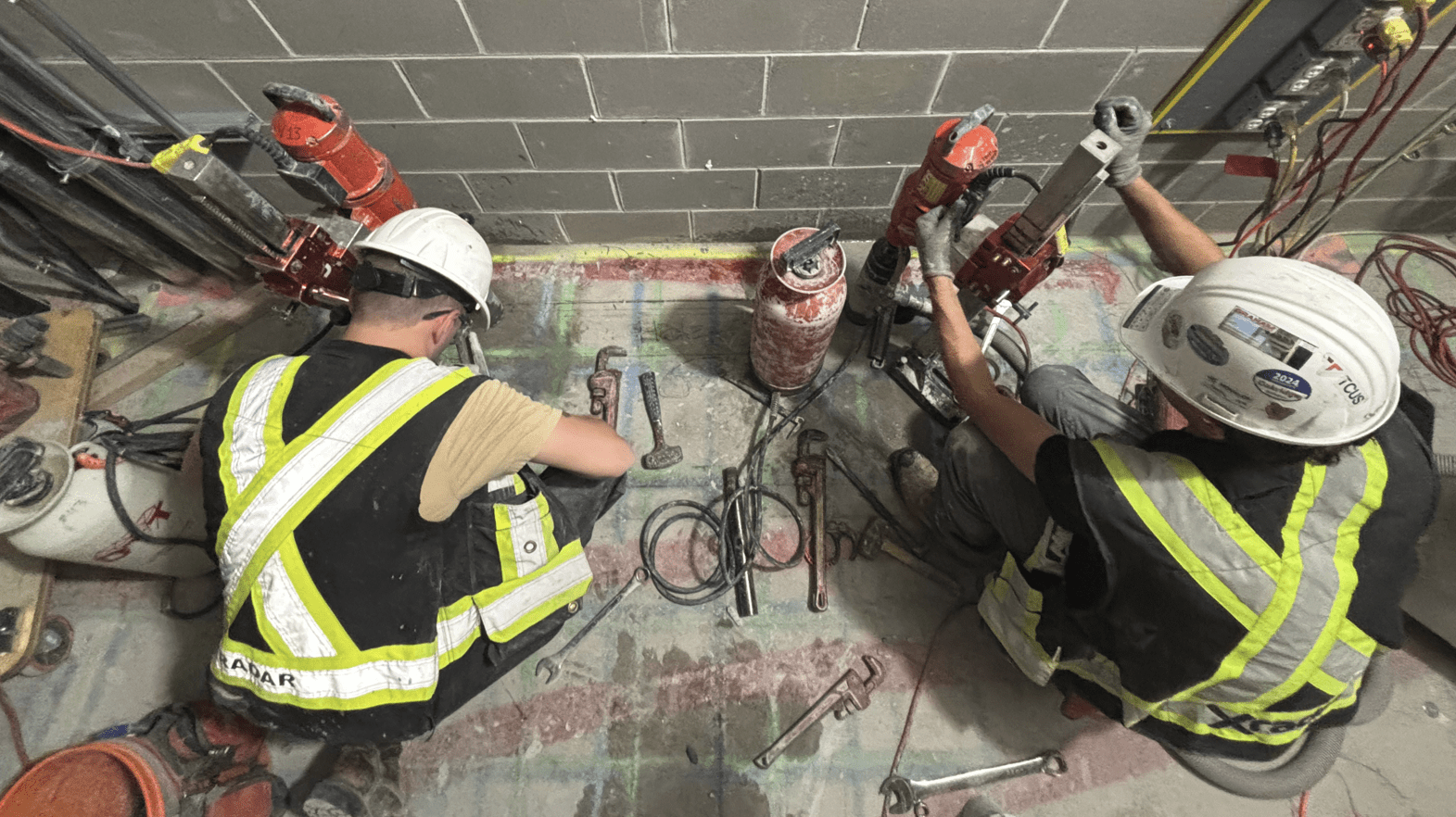
Xradar was hired to undertake a detailed structural investigation with all available techniques to gain understanding and identify the root cause of the crack. Due to the nature of the project, we decided to use Xradar concrete scanning to map out the reinforcement and verify the overall thickness of the slab prior to implementing ultrasound pulse velocity (UPV) to measure the depth of the crack. It is always recommended to use Xradar before ultrasound surveys to identify the layout of embedded objects within the slab, particularly to anticipate potential sources of interference, such as rebar and slab bands.
Results/ Conclusion
Conclusion
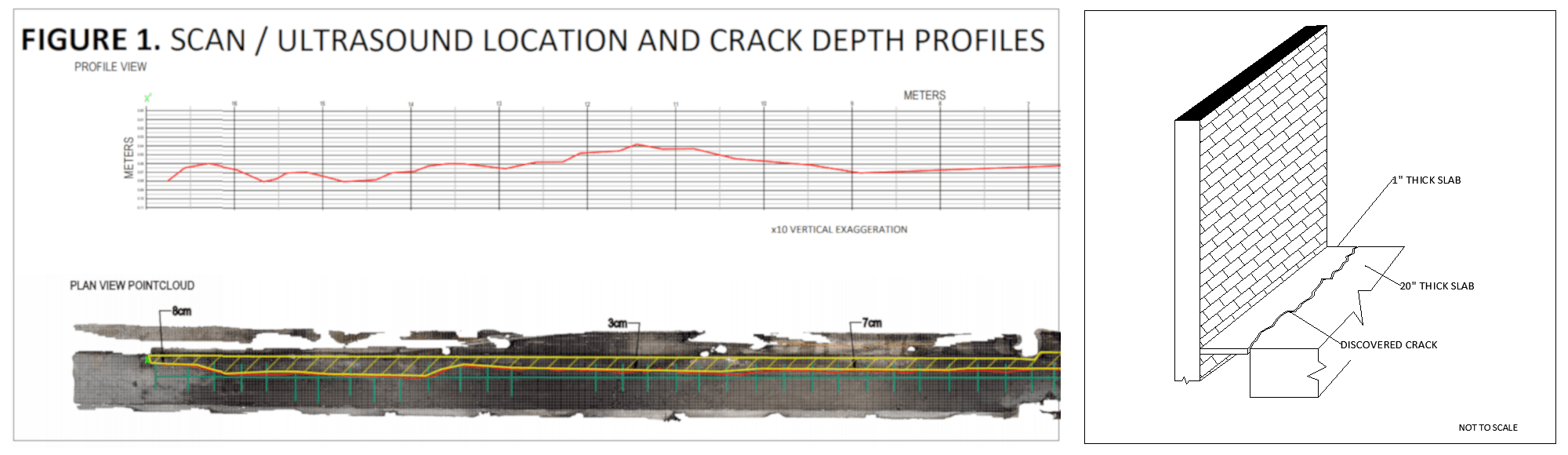
In this particular instance, the Xradar survey revealed a significant flaw that occurred during the recent renewal of the existing slab. The concrete slab located between the crack and the wall was only only 1″ thick with a clear void beneath! Further from the wall it jumped to 20″ average without any rebar connection between these two adjacent and seemingly independent slabs.
The ultrasound pulse velocity survey confirmed the depth of the crack at several locations, but for the most part the two slabs were entirely unconnected. This clearly showed a grossly insufficient and potentially dangerous installation of the new slab. The Xradar/UPV survey uncovered the detailed evidence of this hidden risk and provided the initial information needed to develop a mitigation plan.