Precise Scanning Solution After Missed Conduits and Risky Alternatives
Overview/Intro
A contracting company brought us in to scan a 14″ slab that had previously been scanned by both a GPR company and an X-ray company. Both of the prior scans missed conduits, resulting in coring through them. We were contacted as a final option, based on a referral from another client who praised our accuracy and attention to detail as the best in the city.
The Challenge
The client had already tried two methods of concrete scanning—GPR and X-ray—both of which resulted in hit conduits. They had planned to bring in a cobalt X-ray to complete the job, but this would require closing off city blocks due to radiation concerns. Instead, the engineers on-site, familiar with the quality of our previous work, recommended Xradar. This decision offered a safer and more effective solution – reducing risk, whilst saving time and money.
Scope of Work
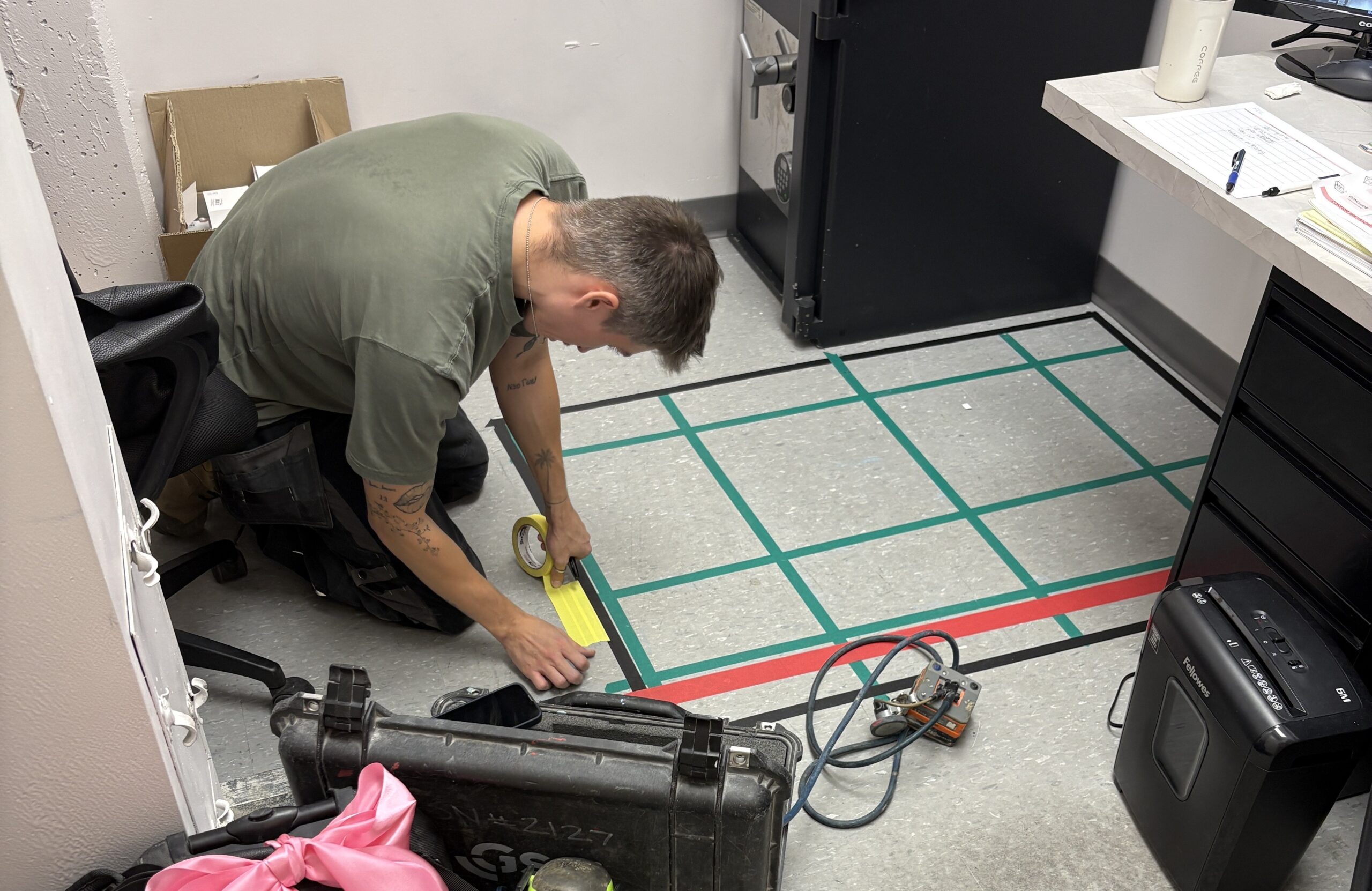
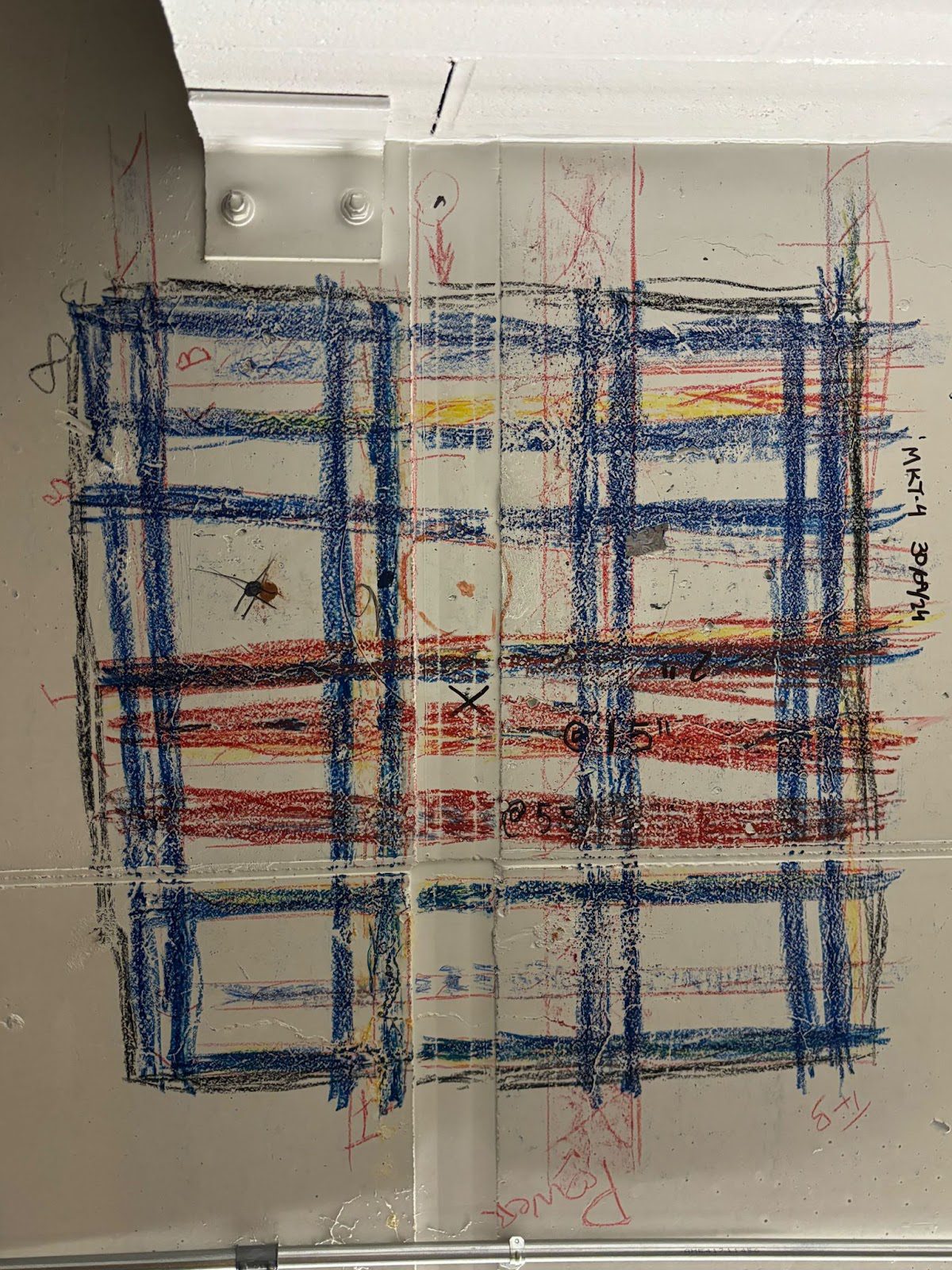
We were tasked with scanning five locations on the 14″ slab, performing both topside and underside scans to ensure full coverage.
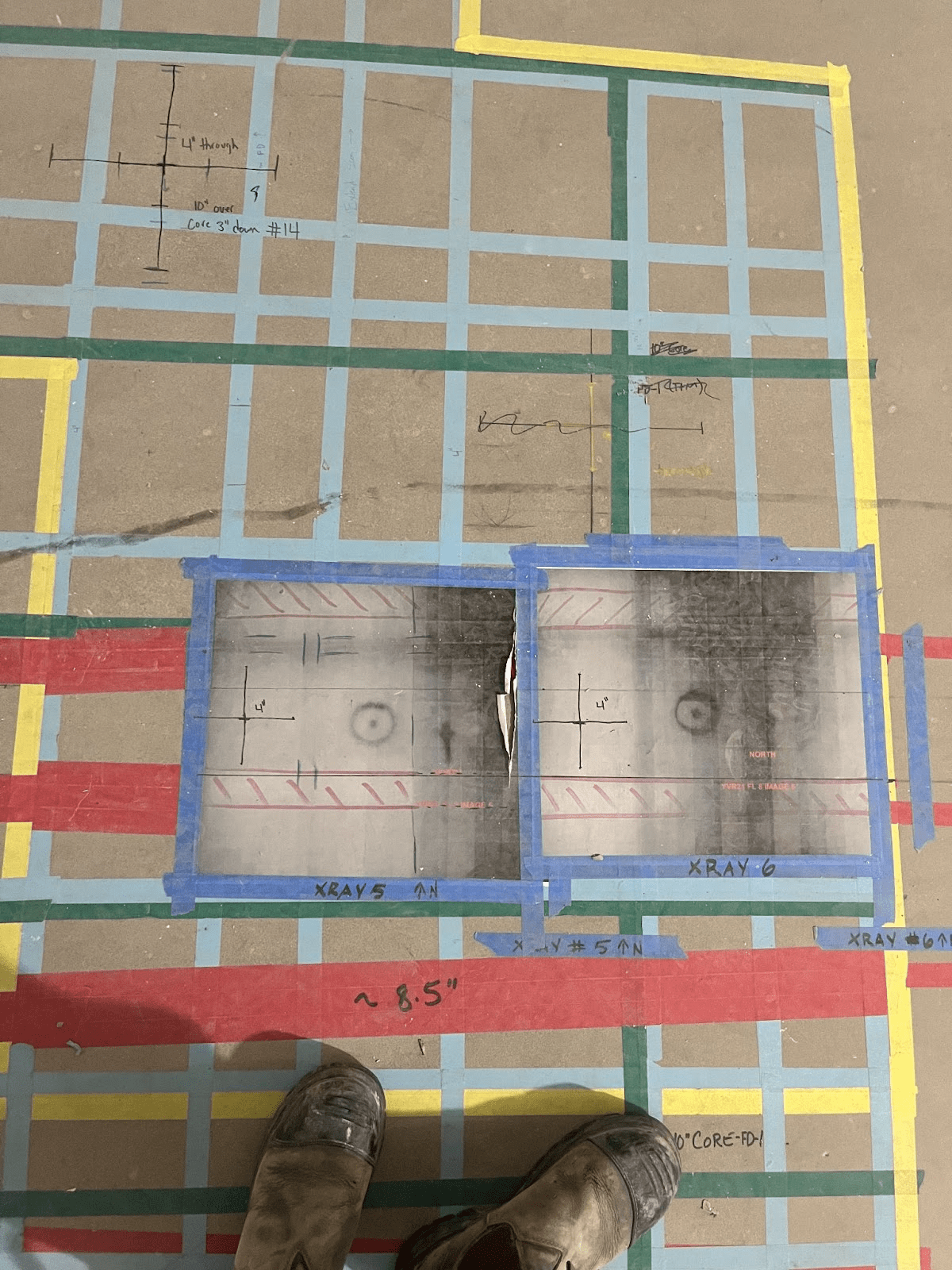
The underside markings were carefully transferred to the topside of the slab to maintain precise alignment and prevent any further mistakes.
Our Solution
As a GPR company, you might wonder why the initial GPR provider missed targets that we were then able to detect? The difference lies in both the expertise of our technicians and the advanced techniques we employ. At Xradar, our team undergoes extensive in-house training that ensures mastery of the equipment and scanning methods, giving us a distinct edge over competitors. Our technicians are put through their paces for 6+ months before they are authorized to approve a completed scan alone. Our commitment to precision and meticulous attention to detail sets us apart, enabling us to accurately identify and map subsurface targets that others miss. We always work closely with our clients to ensure they are satisfied with the results, and give them the honest information they need to proceed safely.

Methodology
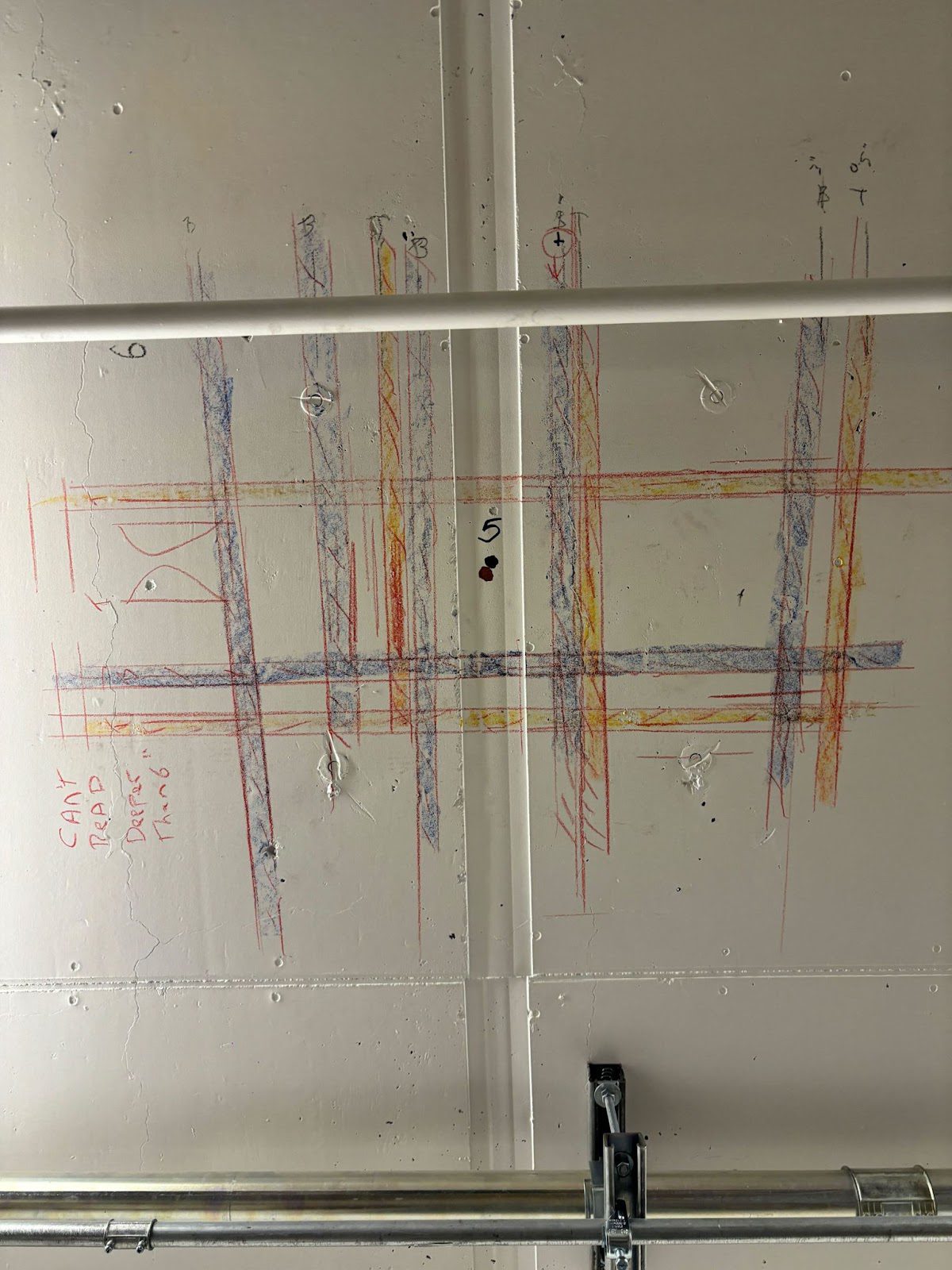
This slab presented a higher level of difficulty compared to a typical 8-10″ slab, as it was 14″ thick and required both topside and underside scanning. Underside scanning brings additional challenges for the technician, such as ensuring spotters are placed correctly (avoiding placement on top of rebar), taking precise measurements for accurate transfer, double-checking from the topside, and maintaining proper orientation when transferring marks. Moreover, the topside scans in this case were conducted in very limited space, adding to the complexity. To overcome this, a larger scan was performed on the underside, providing more room for accurate placement and results.
Results/ Conclusion
Conclusion
In conclusion, the project was a success, with a satisfied client and all project goals achieved. We focused on collaborating closely with our client to ensure their needs were fully met, understanding the stress they were under from the previous two incidents. We maintained clear communication throughout the process, explaining our steps and helping to ease their concerns. As a result, we’re very happy that the client was able to proceed with their project safely without any further delays. Our client was extremely satisfied with the results of our on-site service and the performance of our team. They mentioned that “everything went flawlessly”. As a result of our work, other contractors on-site have also chosen to partner with us for their upcoming projects.