
Concrete Corrosion Mapping
REQUEST PROJECT ESTIMATE
Discuss your project scope with our Estimating team, for a free estimated cost.
Project EstimateLocations Offered
VANCOUVER
CALGARY
TORONTO
OTTAWA
halifax
Malaysia & Singapore
SERVICE OVERVIEW
Detect corrosion before it becomes structural damage. Enable targeted repairs, supporting preventative maintenance and asset management. This is a key step in a comprehensive condition assessment.
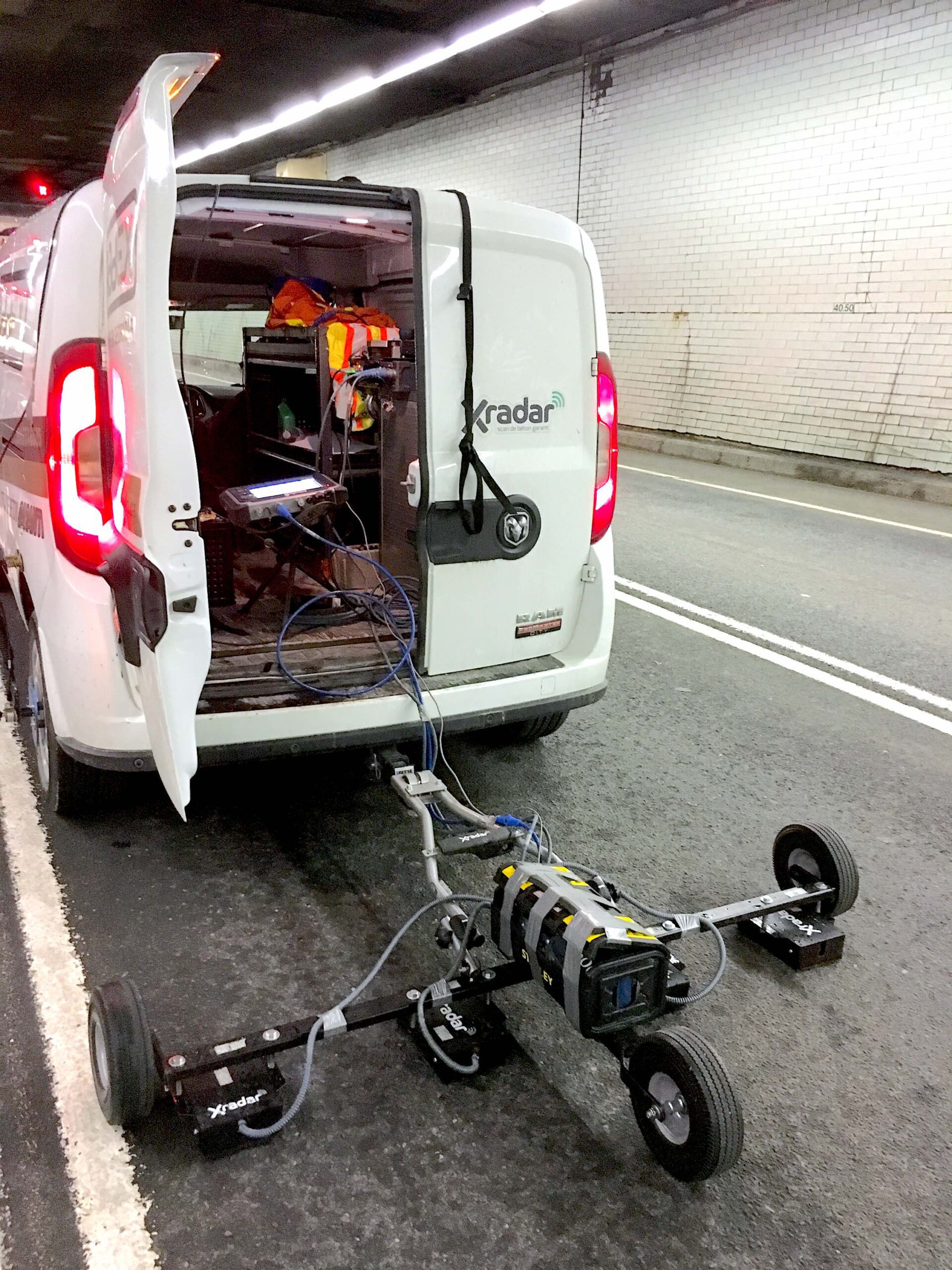
Xradar™ offer an innovative approach to Concrete Corrosion Mapping, utilizing computer-assisted Xradar image analysis, that has greatly improved both the accuracy and speed of corrosion mapping in concrete.
Methods & Technology
XRSounder™ – Concrete Delamination
XRSounder™ detecs delamination in concrete slabs using non-destructive method
Discover XRSounder™Xradar™ Enhanced Concrete Scanning
Xradar™ is an advanced imaging capability, utilizing GPR (Ground Penetrating Radar) technology that provides high-resolution subsurface imaging for safe, precise concrete scanning and utility detection.
Learn About Xradar™Half Cell Potential
Half Cell Potential testing identifies corrosion activity before visible damage occurs.
Explore Corrosion TestingLaser Scanning
Laser Scanning captures exact as-built conditions for design, analysis, and documentation
Explore Laser ScanningBenefits
Key Advantages of Corrosion Mapping
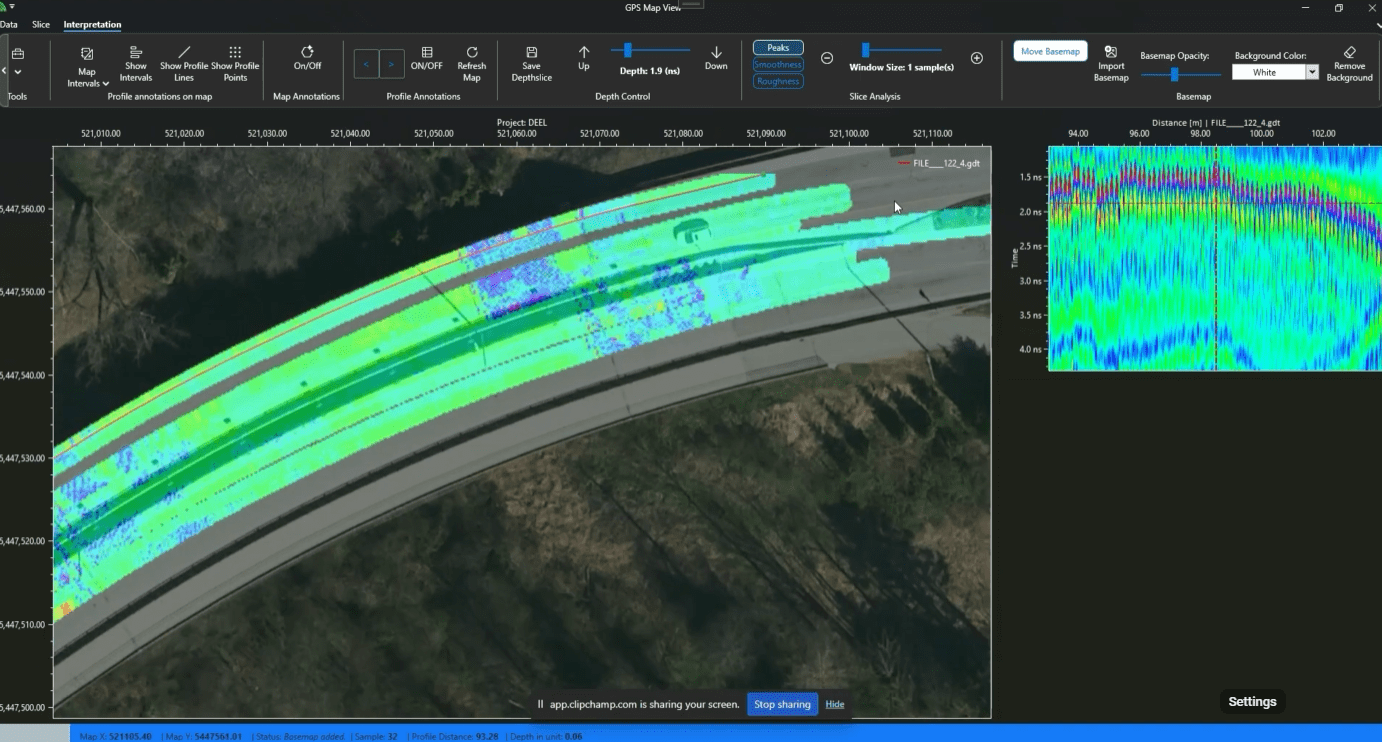
Create reinforcement cover and asphalt thickness maps within the same collected data set
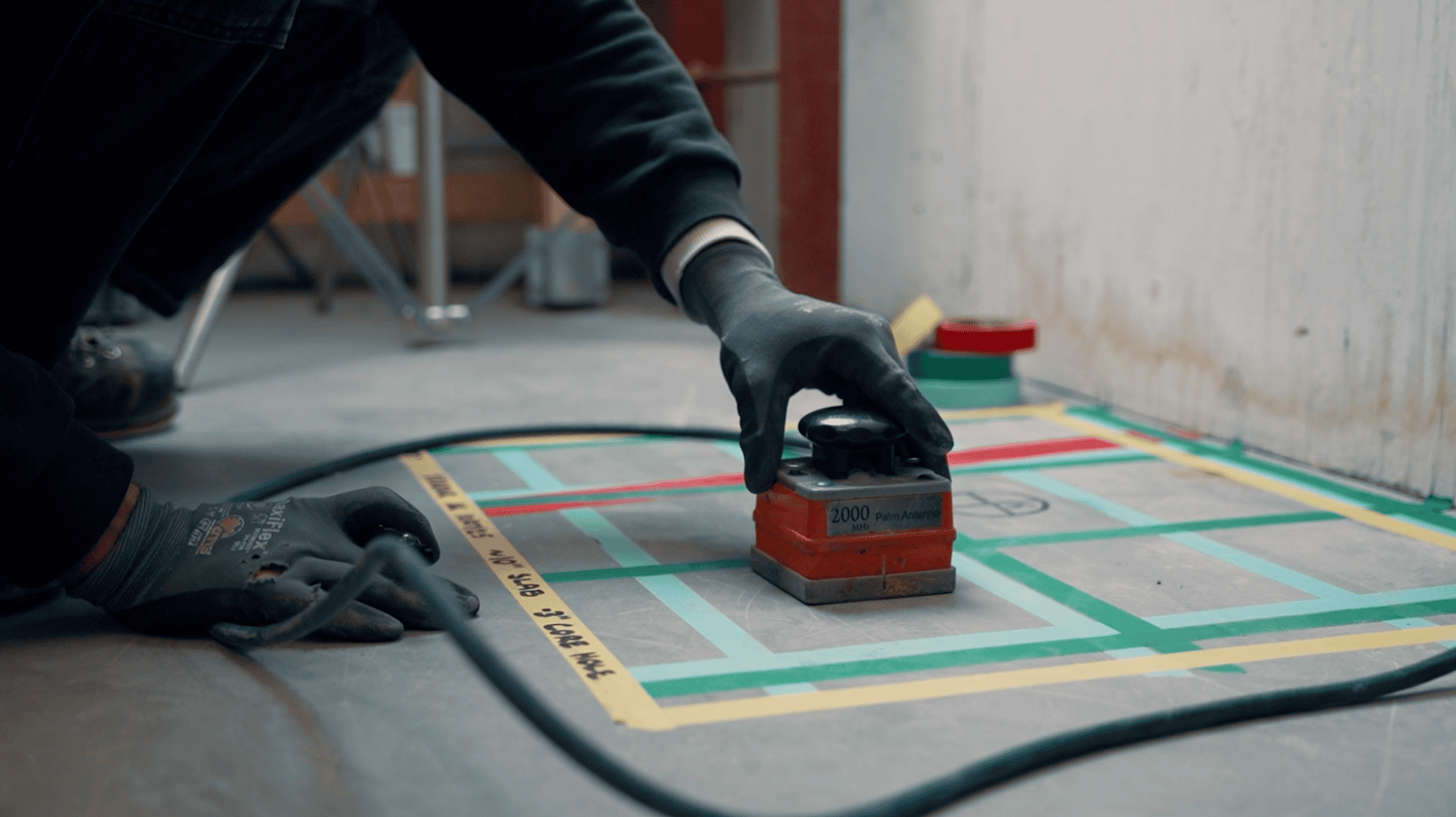
No need for full lane closures. Fast data collection using our custom Xradar system. Subsequent analysis via our in-house proprietary software.
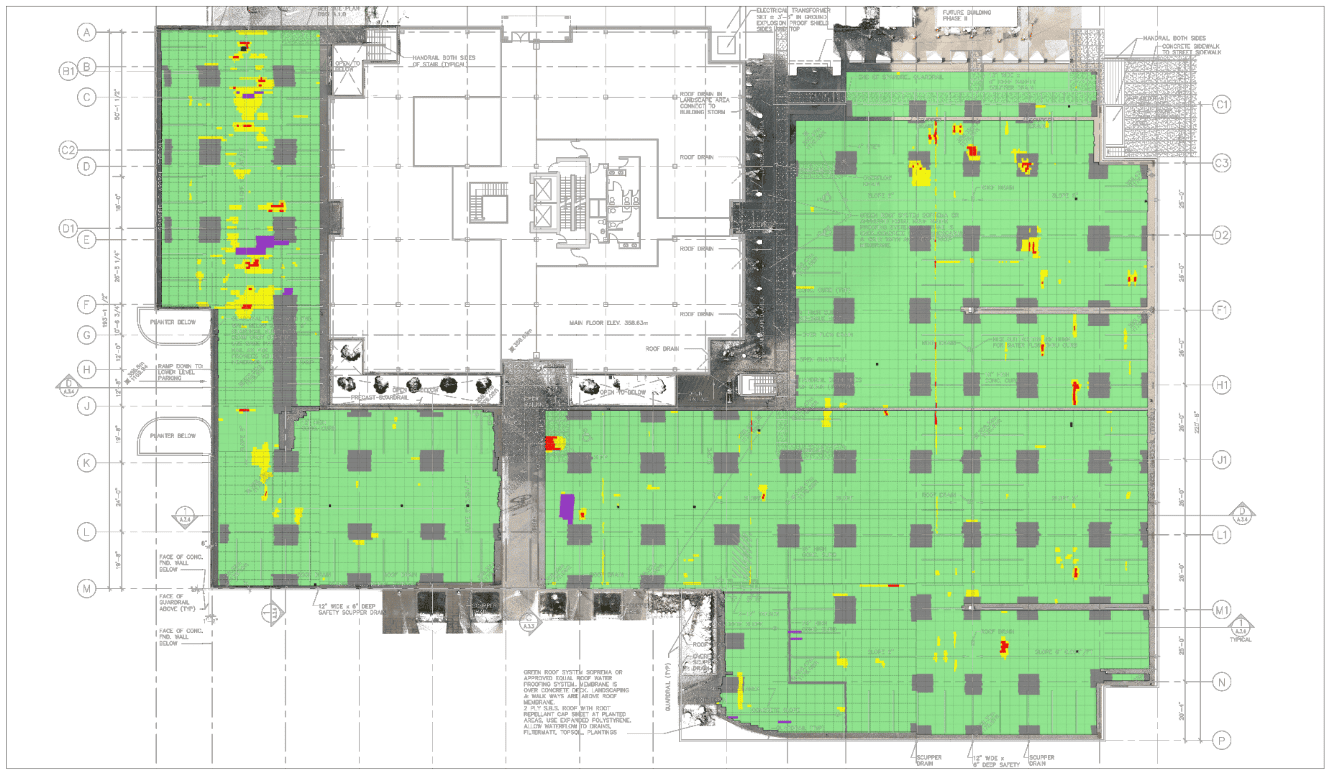
A spatially referenced drawing detailing corroded zones
Quantifiably evaluate the corrosion state of top or bottom reinforcement bars in a concrete structure
Proven results, eliminating the need for older, less efficient techniques such as chain drag and half cell potential
Computer-assisted image analysis of Xradar™ data is the latest method for processing and determining corrosion of concrete.
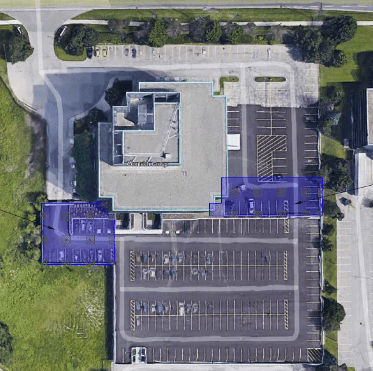
Using our in house proprietary software our specialist analysts can detect corrosion in large structures using multiple criteria for mapping. Data collection can be carried out on a variety of concrete sources, including asphalt-covered concrete, along with roads, runways, bridges and car parks with assessment results overlaid onto existing drawings.
The Concrete Deterioration Process
There are many factors that lead to the corrosion of steel in concrete. Environmental factors are the greatest concern when dealing with concrete near marine environments, such as bridges and dams. Elements such as wind, water, river current, temperature change, and deicing salt are all corrosion causing agents affecting the strength of reinforced concrete. In addition, the lowering of the concrete’s pH level due to chlorides, carbonation, and acids within the slab are also factors contributing to the corrosion of reinforcing steel.
The deterioration of concrete begins out of sight, well within the slab. As rust starts to form, it occupies more space than the steel originally took up, resulting in the formation of small cracks and eventually delamination occurs.
Routine investigation is necessary to prevent the reinforced steel from getting to these later stages of deterioration. Although repairing deteriorating concrete may not be cheap, the price of repairs will only go up exponentially over time.