
Mapping Concrete Corrosion in a Parking Garage
Overview/Intro
Xradar was hired to provide a corrosion analysis of a large two level parking garage. The client was concerned about two specific areas that had noticeable signs of spalled concrete. These areas were 600m² and 525m² respectively.
The Challenge
Concrete corrosion is a natural occurrence within aging concrete structures. It occurs when water and oxygen find their way into concrete pores and/or voids. This causes a chemical reaction, resulting in the decay and deterioration of steel present in the concrete. As it occurs within the structure, it is undetected by the naked eye. Monitoring corrosion often falls by the wayside – as the old saying goes ‘out of sight, out of mind’.
Fortunately our clients were proactive and brought Xradar in as a preventative measure. In fact, the client had previously repaired some concrete on site. By surveying the potentially problematic areas, our technicians were able to determine the condition of the parking garage. Here’s how we did it.
Methodology
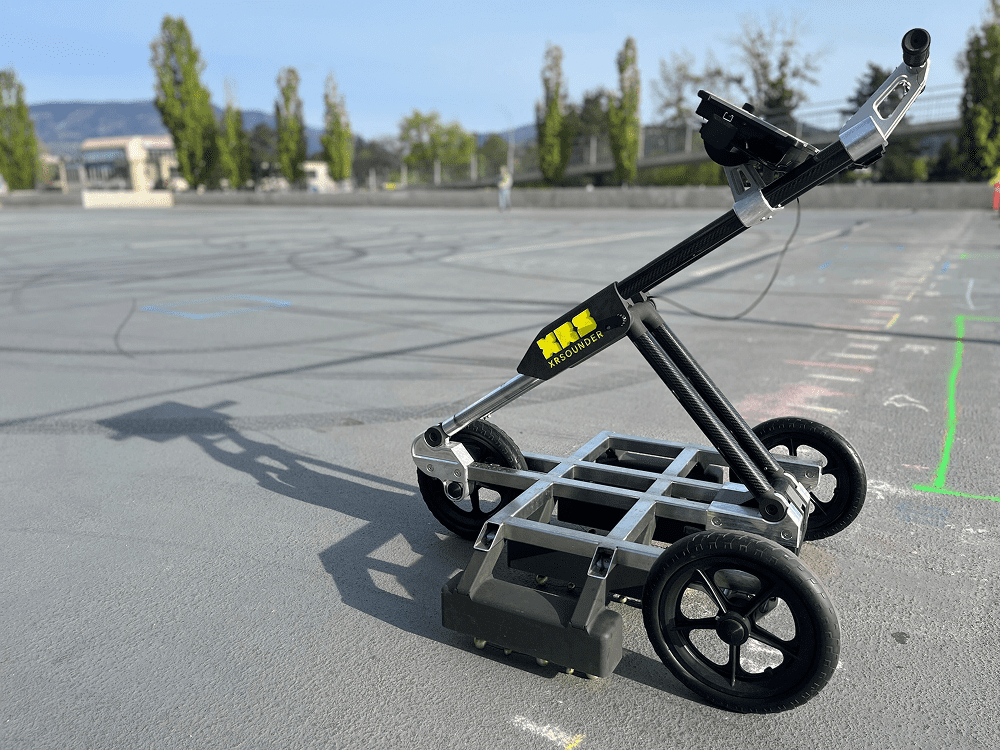
Using the Xradar™️Ground Penetrating Radar survey method, our technicians surveyed the top side of the suspended concrete slab. This area was mostly free of obstructions which allowed us to collect the majority of our data. There were however two garden beds that prevented our technicians from getting a clear scan of the areas. In each instance we surveyed the underside of the slab.
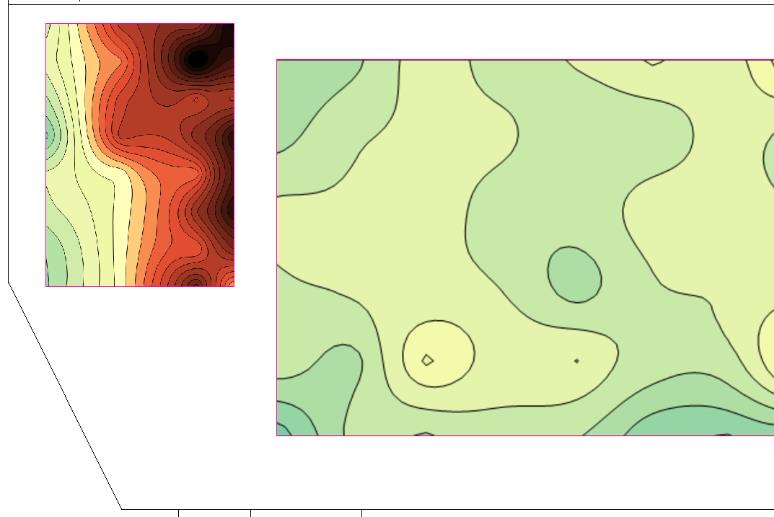
Following the onsite survey, Xradar then compiled metric scaled corrosion maps of the inspected zone indicating both areas of corrosion and undamaged concrete zones.
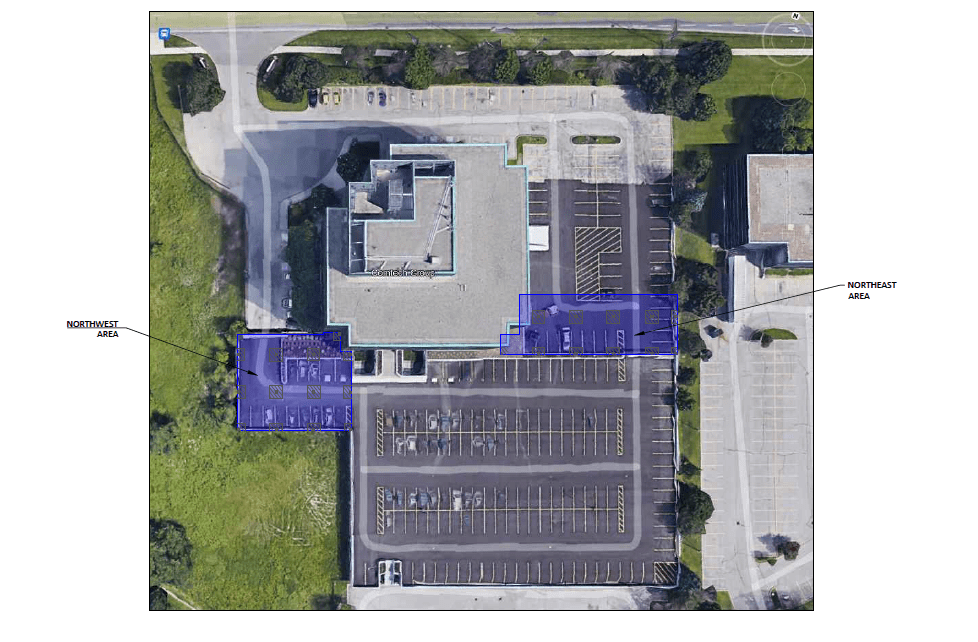
Figure 1. Nominated Areas outlined in blue.
Corrosion Mapping Findings
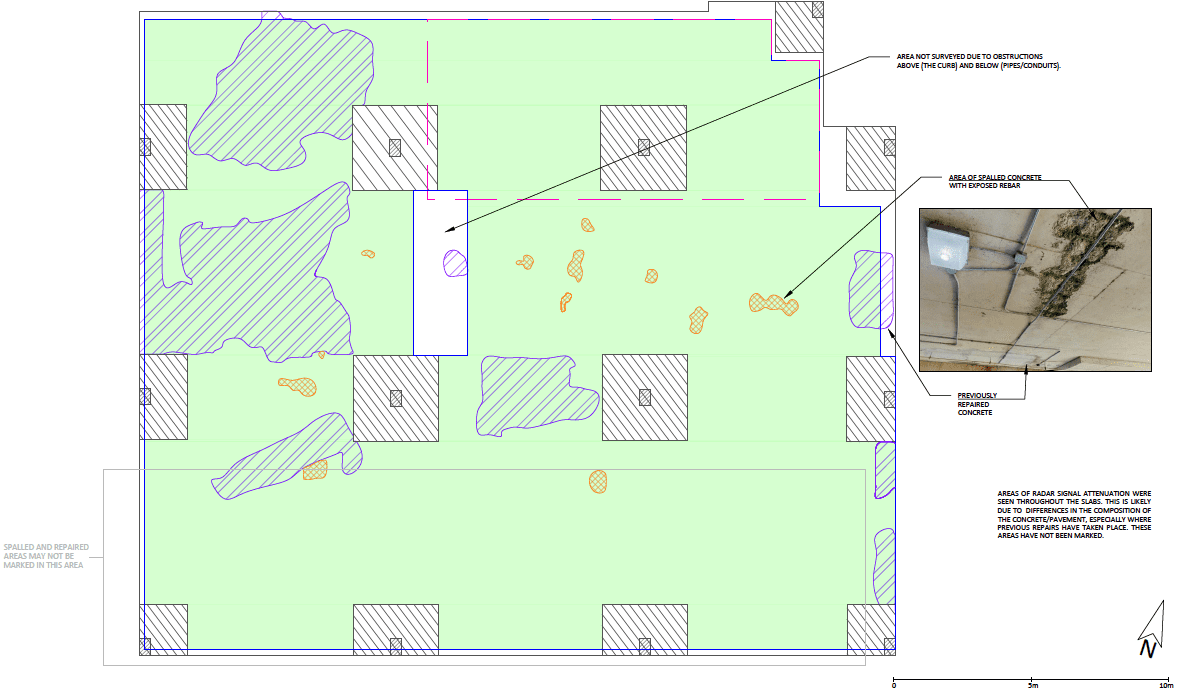
The survey of the two areas showed no significant corrosion in the surveyed areas of the garage. Only moderate corrosion was detected within the northeast lot (see figure above).
Originally, the client had some concern surrounding the area underneath the garden beds. The thought was that corrosion was leading to spalling, but our technician ruled this out as only minimal corrosion was found.
Results/ Conclusion
Conclusion
In some of the areas where spalling was observed, the technician located bottom reinforcement with only 20mm concrete cover. This, along with natural weathering, may have contributed to the spalling.
The results of our survey came as a relief to our clients. If they choose to undertake further repairs, they can refer back to our comprehensive examination report.