
Void detection survey using radar and ultrasound
Overview/Intro
Xradar was engaged to use Ground Penetrating Radar (GPR) and Ultrasound Pulse Velocity (UPV) to locate and map voids within a series of beams and columns that potentially originated during the concrete pouring phase of a key infrastructure facility.
Services
Methods Used
Methodology
Using Xradar’s GPR, the requested beams were surveyed onsite and GPR results then analysed using Xradar’s proprietary RADXpert software for void detection and mapping.
Ultrasonic Pulse Velocity was additionally used to analyze critical beam/column areas for internal voids (honeycombing, cracks, etc.). UPV as a technology uses the direct arrival of compression waves generated by a source (transmitter) on one face of the concrete structure. UPV is an effective method of estimating the quality of concrete by measuring the wave velocity measured at a receiver (on another face of the concrete structure). Figure 1 below shows an example for how UPV sends signals for measurements across different geometry surfaces and concrete faces.
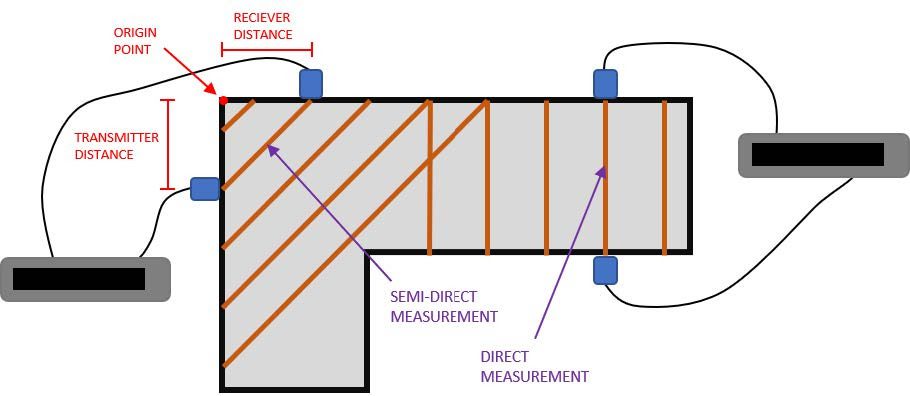
Figure 1: UPV measurement configurations that can be used for a void survey
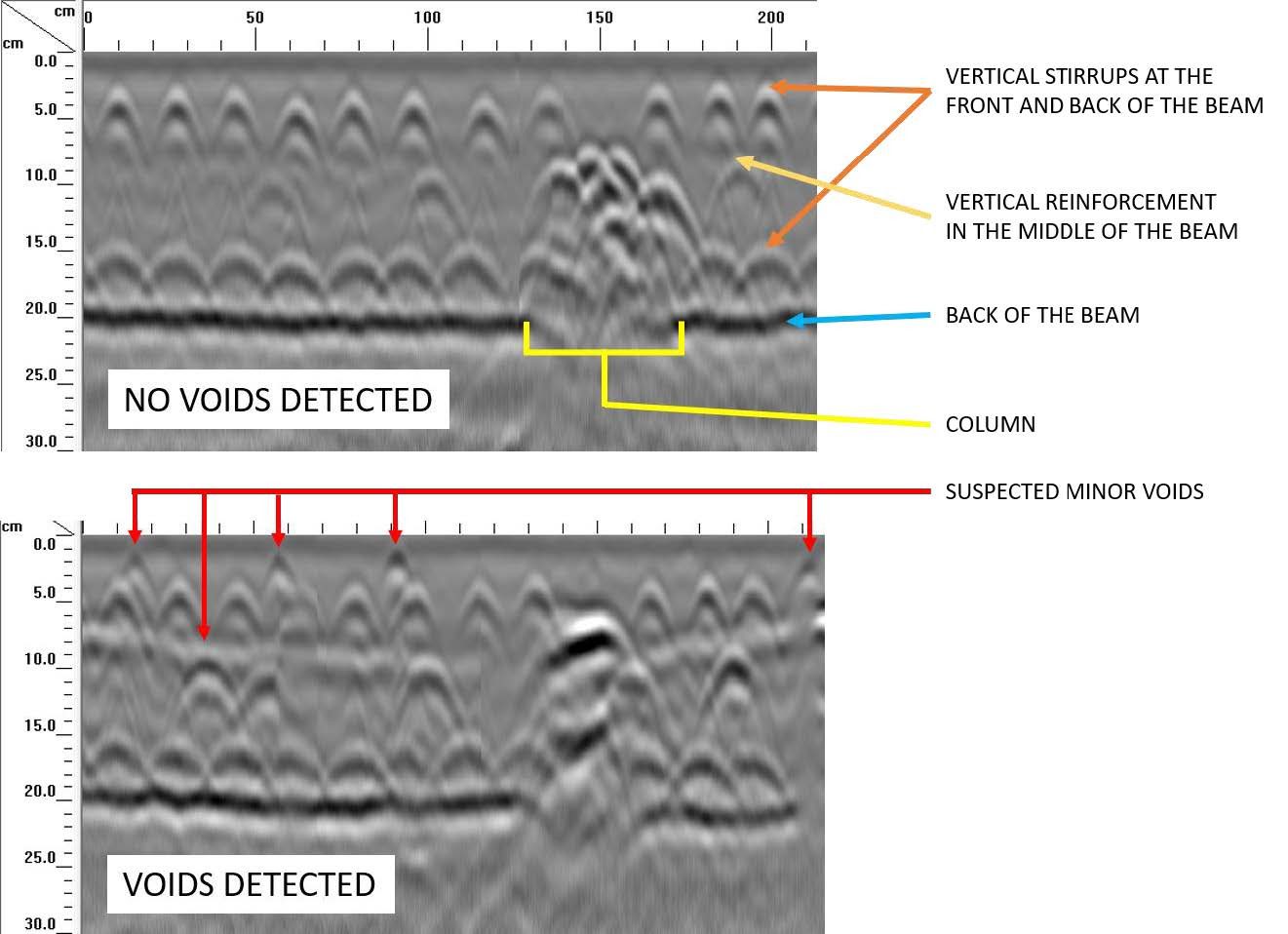
Figure 2: Radargram comparison without and with the presence of voids
GPR Survey Results
Xradar was able to use our GPR technology to assess and identify voids/honeycombing within the majority of beams & columns inspected that were 2mm or greater in diameter. These results were then mapped onto scaled CAD outputs for the customer to undertake localised repair of the beams/columns. An ultimate cost saving for the customer compared to complete replacement/bracing of the beams/columns.
Figure 2 evidences a radar profile example of what internal voiding could look like within an inspected concrete surface.
UPV Survey Results
Analysis of Xradar’s UPV measurements revealed locations of severe voiding within the surveyed areas. Unlike Xradar’s GPR which allows for continuous data collection, for UPV engagements, static points are collected over a concrete surface and then joined together to build an entire assessment model.